EASA Regulatory Change Impact Review: Finding Affected Manuals, Procedures, And Evidence
Regulatory change is document work. When EASA publishes a new rule, amendment, AMC, GM, FAQ, or template, the hard question is rarely "what does this page say?" The hard question is: which internal manuals, procedures, checklists, matrices, training files, supplier records, and evidence folders are affected?
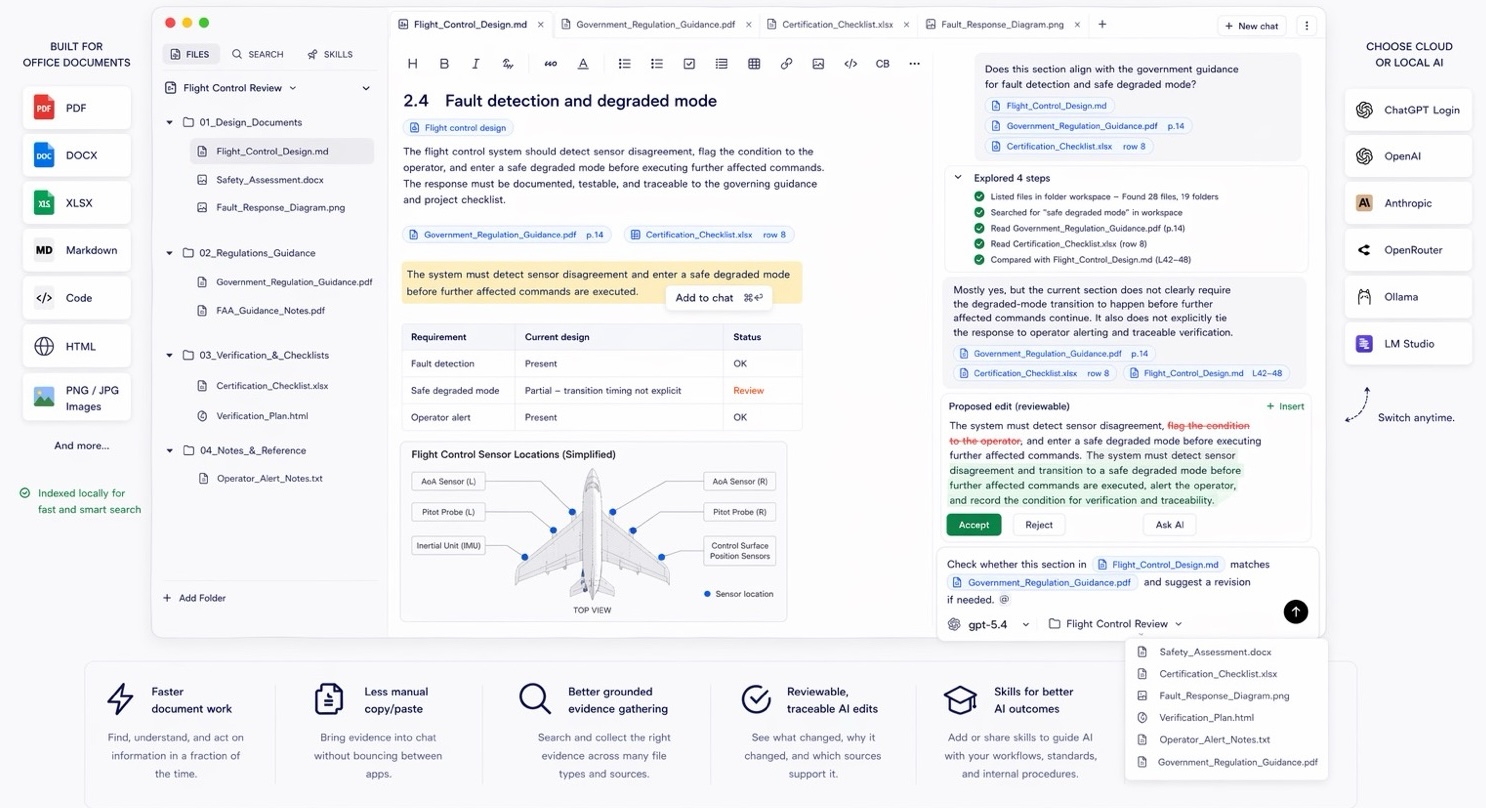
Aviation.Bot is useful for this because it treats the work as a source-backed workspace, not as a one-off chat answer.
Why Change Impact Gets Messy
An aviation organisation may need to compare a regulatory update against:
- operations manuals
- MOE, CAME, SMS, CMS, ISMS, or training material
- compliance monitoring checklists
- existing compliance matrices
- supplier procedures and evidence files
- internal interpretations and previous audit responses
- draft controlled-document changes
The value is not simply summarising the rule. The value is finding the internal documents that may need review and making the proposed next step traceable.
A Practical Workspace
Start with a folder that separates official sources from company material:
sources/easa/for official EASA pages, PDFs, Easy Access Rules, and amendment materialcompany/manuals/for controlled manuals and procedurescompany/registers/for risk, compliance, training, and supplier registersoutputs/for generated impact notes and review worklists
Keep a source manifest with canonical URLs, access dates, file versions, and checksums when the source file matters.
Useful public starting points include:
Prompt Pattern
Ask for a bounded review artifact, not an approval opinion.
Review the EASA source update and compare it with the company workspace.
Identify affected manuals, procedures, checklists, compliance matrices,
training records, supplier evidence, and open human-review questions.
Draft a source-backed change-impact note and save it in outputs.
The useful output should separate:
- source update summary
- applicability assumptions
- direct internal-document matches
- indirect downstream impact
- missing evidence
- proposed controlled-document updates
- reviewer questions
- owners and next actions
Where Aviation.Bot Fits
Aviation.Bot helps the reviewer move through the loop:
- find all relevant references across the workspace
- inspect the original source and internal document
- group affected documents by workflow owner
- draft reviewable change notes or proposed wording
- keep the final approval with accountable humans
The goal is not to certify compliance. The goal is to reduce the search tax and make the impact review easier to inspect.
Related examples:
- From a Part-145 amendment to an MOE review matrix
- FAA–EASA maintenance approval document review
- EASA Part-IS readiness: finding cybersecurity gaps across aviation manuals, suppliers, risk registers, and training records
- How to find gaps in an EASA SORA application before submission
Learn more at aviation.bot.