EASA Part-145 Requirements and MOE Review: A Source-to-Manual Checklist
An EASA Part-145 maintenance organisation exposition is not one document in isolation. It points into procedures, forms, competence records, supplier controls, audit findings, corrective actions, and training material. That makes MOE review a high-recall document problem.
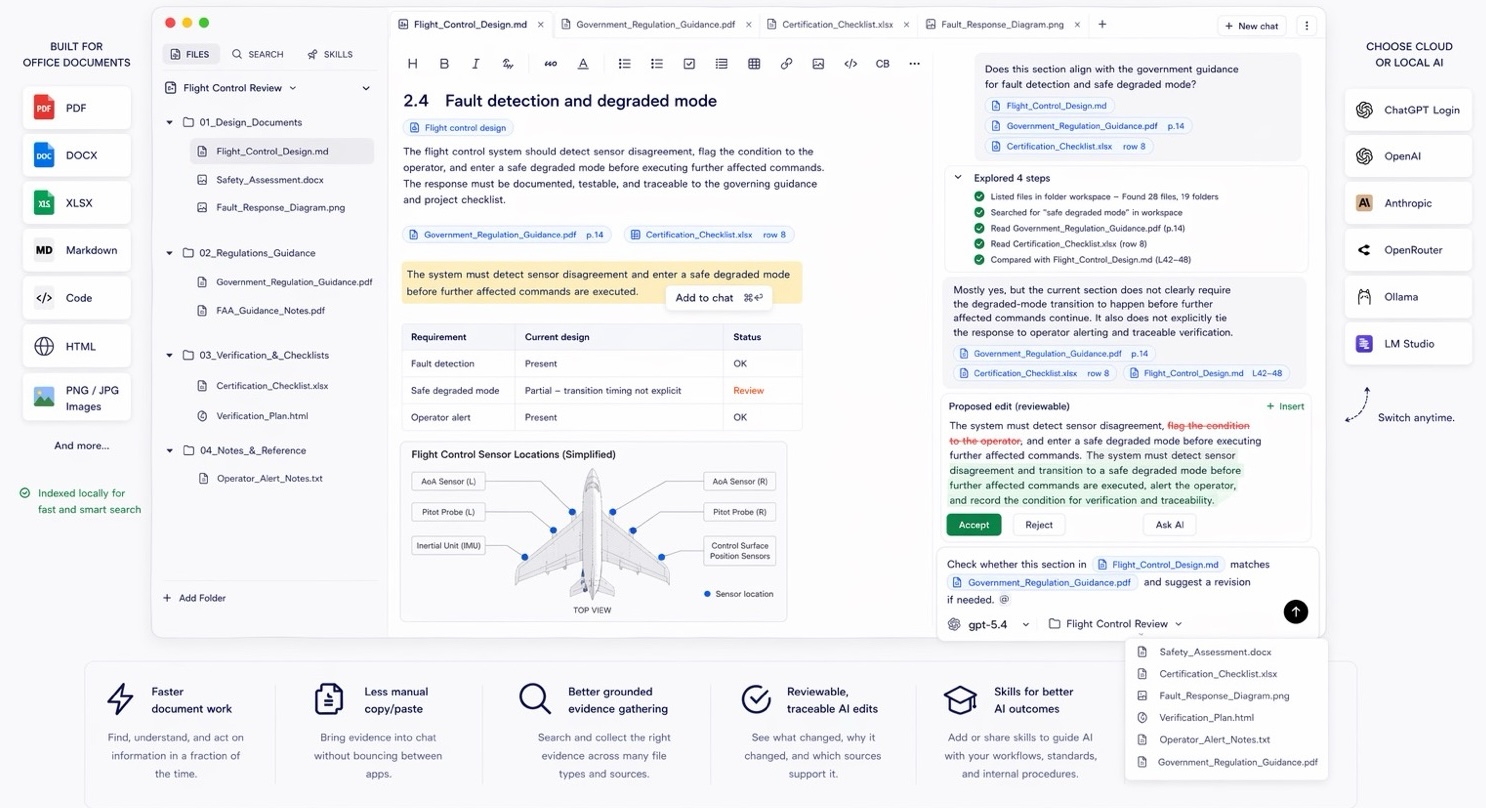
Product status, September 2026: The new Aviation.Bot external regulatory library and joined web/desktop document workflow are in development. The method below describes the intended workflow, not a capability available in the current legacy beta.
What Is An MOE In Aviation?
A Maintenance Organisation Exposition (MOE) describes how a maintenance organisation implements the requirements relevant to its approval. Reviewing it means checking both the manual and the procedures and evidence it points to. This is not a complete approval checklist or a substitute for applicable rules and competent authority guidance.
Which Part-145 Sources Should An MOE Reviewer Use?
Start with the applicable Part-145 provisions in Regulation (EU) No 1321/2014, relevant AMC/GM and the competent authority's MOE guidance. The Easy Access Rules for Continuing Airworthiness consolidate rules and associated material for navigation. Record the edition and exact provision behind each conclusion, and check later amendments and applicability.
For the exposition itself, inspect 145.A.70 and relevant AMC/GM in that source. Requirements, acceptable means of compliance, guidance and internal procedures have different roles; keep them distinguishable in the matrix.
A Practical MOE Review Checklist
For one selected section:
- Identify the applicable source provision and edition.
- Check the MOE's procedure references and responsible roles.
- Inspect linked procedures, forms and records for currency and consistency.
- Record supporting evidence and unresolved questions.
- Identify possible downstream document or training impacts.
- Assign human review and approval through the organisation's change process.
This is a bounded review method, not an exhaustive Part-145 compliance checklist.
| Connection to review | Material to inspect | Review output |
|---|---|---|
| Selected provision and relevant AMC/GM | MOE section and linked procedure | Exact source-to-section reference and applicability question |
| Process described in the MOE | Procedure, form and authorised sample record | Consistency observation or evidence request |
| Candidate procedure change | Related manual sections and training material | Possible downstream impacts for owners to confirm |
| Proposed action | Change record and approval workflow | Named owner, review status and decision rationale |
See the worked Part-145 amendment-to-MOE matrix for a fictional occurrence-reporting example. Its rows are candidate impacts, not mandatory changes for every maintenance organisation.
What Makes MOE Review Hard
Worked Example: An Outdated Reference, Not An Automatic Rewrite
A fictional component-maintenance team selects its receiving-inspection procedure for review. Its MOE names the current procedure, but the sample receiving record still refers to an older revision. The reviewer records both references, checks the selected source provision and applicable edition, and asks the procedure owner whether the record is historical evidence or a form still in active use. Those two explanations lead to different actions.
If it is a historical record, preserve it and document why no change is needed. If the obsolete form remains in use, propose a controlled form/reference update and let the responsible reviewers decide its impact. Do not infer a regulatory finding from a revision mismatch alone. This is a synthetic document-review example, not authority-approved advice or a customer result.
MOE work often requires the reviewer to connect:
- the current MOE section
- EASA Part-145 requirements
- AMC and GM material
- internal maintenance procedures
- compliance monitoring checklists
- competence and authorisation records
- supplier and subcontractor controls
- previous audit findings or authority comments
The risk is not that someone cannot read a clause. The risk is missing a downstream document or accepting a proposed change without source evidence.
A Practical Workspace
For a narrow review, start with one MOE section and the documents that support it.
Example structure:
sources/easa/part-145/company/moe/company/procedures/company/compliance-monitoring/company/training-and-authorisations/outputs/
Useful public starting points include:
- EASA regulations page
- Easy Access Rules for Continuing Airworthiness
- EASA Continuing Airworthiness domain
Prompt Pattern
For the planned workflow, ask for a review artifact, not final controlled text. Supply a verified official source pack until the managed library is available.
Review this MOE section and supporting procedure folder against the Part-145
source material. Identify direct requirement coverage, missing procedure
references, inconsistent terminology, evidence gaps, and proposed updates
that need human approval. Save a review worklist in outputs.
A useful output includes:
- source hierarchy
- MOE sections inspected
- related procedures found
- missing or stale references
- compliance-matrix updates
- draft wording suggestions
- evidence requests
- human-review questions
What To Avoid
Do not ask any AI tool to approve an MOE, certify compliance, or replace the accountable maintenance or quality function. The tool should make review faster and more complete; it should not collapse source material, internal policy, and authority judgement into one unverified answer.
The practical promise is narrower: find affected material, preserve the evidence trail, and create a worklist a qualified reviewer can inspect.
Related examples:
- A worked Part-145 amendment-to-MOE review matrix
- EASA Regulatory Change Impact Review
- AI Document Workflows For Aviation Compliance Teams
For an identified amendment and selected internal documents, see Aviation.Bot's regulatory change-impact workflow. The new library workflow is in development; sign up on Aviation.Bot to stay up to date about upcoming releases.