MOC VTOL.2515 Electrical
and electronic system lightning protection
n/a
1. Unlikely Exposure to Lightning
It is stated in VTOL.2515 that sub paragraphs (a) and (b) are applicable “unless it is shown that the exposure to lightning is unlikely”. The demonstration on this condition should be based on reliable meteorological reports and/or on-board means to detect lightning, directly or indirectly (e.g. Lightning Detector, Weather Radar). Therefore, an accepted means to avoid the compliance demonstration with electrical and electronic system lightning protection requirements is to establish the following operational limitations:
(a) VFR Day with reliable weather reports stating the absence of significant clouds before and/or during the flight for departure, enroute, terminal and diversion vertiports, or
(b) VFR with means to detect lightning or storm cells via a certified onboard system, and/or ground base support plus appropriate communication with the pilot. The qualification of such ground-based system should be ensured by the operator.
When VTOL.2515 (a) and (b) are applicable, this MOC proposes simplified methods for addressing the Indirect Effects of Lightning (IEL) compliance demonstration on VTOL capable aircraft. These methods vary depending on the VTOL capable Aircraft categories; Basic 1 (0 to 1 passenger), Basic 2 (2 to 6 passengers), Basic 3 (7 to 9 passengers) and Enhanced.
2. Reference Documents
The following references are quoted in different sections of this MOC as a source of additional information or to provide accepted methods and practices:
(a) Industry Standards
(1) ASTM
|
F3061/F3061M |
Specification for Systems and Equipment in Small Aircraft |
|
F3230 |
Standard Practice for Safety Assessment of Systems and Equipment in Small Aircraft |
|
F3309 |
Standard Practice for Simplified Safety Assessment of Systems and Equipment in Small Aircraft |
(2) EUROCAE/SAE/RTCA
|
ED-81/ARP5413A |
Certification of an Aircraft Electrical/Electronic Systems for the Indirect Effect of Lightning |
|
ED-84/ARP5412B |
Aircraft Lightning Environment and Related Test Waveforms |
|
ED-91/ARP5414B |
Aircraft Lightning Zoning |
|
ED-105/ARP5416A |
Aircraft Lightning Test Methods |
|
ED-158/ARP5415B |
User/s Manual for Certification of Aircraft Electrical/Electronic Systems for the Indirect Effect of Lightning |
|
ED-14()/DO-160() |
Environmental Conditions and Test Procedures for Airborne Equipment |
(b) Authorities Guidance
(1) FAA
|
PS-ACE-23-10 |
HIRF/Lightning Test Levels and Compliance Methods for 14 CFR Part 23 Class I, II, and III Aircraft Note: only partially recognised by EASA |
|
AC 23.1309-1E |
System Safety Analysis and Assessment for Part 23 Aircraft |
|
AC 20-136B |
Aircraft Electrical and Electronic System Lightning
Protection |
(2) EASA
|
Acceptable Means of Compliance for VTOL System Safety Analysis and Assessment |
|
|
AMC 20-136 |
Aircraft Electrical and Electronic System Lightning Protection |
3. Definitions
For the purpose of this MOC the following definitions apply:
(a) Actual Transient Level (ATL): The level of transient voltage or current that appears at the equipment interface circuits due to the external environment. This level may be less than or equal to the transient control level, but should not be greater.
(b) Adverse Effect: A response of a system that results in an undesirable and/or unexpected operation of an aircraft system, or undesirable and/or unexpected operation of the function performed by the system.
(c) Ceiling And Visibility are OK (CAVOK): statement in meteorological report indicating that there are no clouds below 5000 ft AGL (or Minimum Sector Altitude whichever is greater), no presence of Towering Cumulus (TCU) and/or Cumulonimbus (CB) and visibility above 10 km.
(d) Equipment: A component of an electrical or electronic system with interconnecting electrical conductors.
(e) Equipment Transient Design Level (ETDL): The peak amplitude of transients to which equipment is qualified.
(f) Hazard related to lightning exposure: Comparison between the probability to be struck by Lightning and the failure from another internal cause.
(g) IEL Group: Group of VTOL categories having the same methodology for their Indirect Effects of Lightning compliance demonstration. 3 Groups have been identified; Group I for VTOL Category “Basic 1” (0-1 passenger), Group II for VTOL Category “Basic 2” (2-6 passengers) and Group III for VTOL Categories “Basic 3” (7-9 passengers) and Enhanced.
(h) Immunity: Capacity of a system or piece of equipment to continue to perform its intended function, in an acceptable manner, in the presence of an electrical transient.
(i) Indirect effects: Electrical transients induced by lightning in aircraft electrical or electronic circuits.
(j) Internal environment: The potential fields and structural voltages inside the aircraft that are produced by the external environment.
(k) Lightning Certification Level (LCL): Level of an electrical or electronic system performing a function whose most critical Failure Condition is catastrophic, hazardous or major.
(l) Margin: The difference between the equipment transient design levels and the actual transient level.
(m) No Significant Cloud (NSC): statement where CAVOK information is not met but ensures no presence of Towering Cumulus (TCU) and/or Cumulonimbus (CB).
(n) Normal Operation: A status where the system is performing its intended function. When addressing compliance with VTOL.2515 (a) (2), the function whose failure would prevent the continued safe flight and landing for Category Enhanced or a controlled emergency landing for Category Basic should be in the same undisturbed state than before exposure to the Lightning threat. Other functions, performed by the same system, subject to VTOL.2515 (b), are not required to be recovered.
(o) System: An electrical or electronic system includes all electrical and electronic equipment, components and electrical interconnections that are required to perform a particular function.
(p) Transient Control Level (TCL): The maximum allowable level of transients that appear at the equipment interface circuits because of the defined external environment.
(q) Upset: Impairment of system operation, either permanent or momentary. For example, a change of digital or analogue state that may or may not require a manual reset.
4. Means of Compliance:
(a) Minimum Design Considerations
(1) In order to utilise the methods described in this practice, the following minimum design considerations should be addressed. If deviations from these minimum design considerations are desired, the acceptability of the methods described should be agreed by the Agency.
(2) The airframe should incorporate low impedance electrical conductors to allow lightning current to flow through the aircraft. The low impedance conductors should be incorporated into the basic structure of the aircraft.
(i) For aircraft with primarily metal structure, the metal skin provides a low impedance electrical conductor. Standard rivets and bolts should provide adequate electrical bonding between permanent structural joints. Electrical bonding straps or jumpers should be installed on moving parts or for removable panels or parts.
(ii) For aircraft with primarily carbon fibre or fiberglass structure, metal mesh, metal foil, or expanded metal foil should be incorporated onto the external surfaces of the aircraft composite structure. This mesh or foil should be joined together electrically and provide a continuous electrical conductor between the extremities of the aircraft. Metallic components that are internal to the structure of the aircraft may also be used to provide similar shielding for equipment and its wiring.
(iii) For aircraft constructed of tube and fabric, the tube skeleton can be considered to be the low impedance electrical path through the aircraft. The bonding also may be achieved by the use of bonding straps or jumpers where required to electrically bond other metallic sub-structure that might be relied upon to provide bonding for equipment.
(3) Electrical bonding specifications and verifications should be developed and implemented on the production drawings and instructions for continued airworthiness.
Additional considerations for wiring protection can be found in ED-158 A (User’s Manual for certification of aircraft electrical/Electronic Systems for the Indirect Effect of Lightning).
(b) IEL Group Determination
The IEL Group should be identified by using Table 1; the relevant Group will determine the IEL Compliance Verification method given in paragraph (d).
|
|
VTOL Categories |
|||
|
Basic (max passenger seating configuration) |
Enhanced |
|||
|
0-1 |
2-6 |
7-9 |
||
|
IEL Group |
I |
II |
III |
III |
Table 1 – IEL Group Allocation
(c) IEL Safety Assessment
(1) Aircraft systems that require an IEL Safety Assessment should be identified. The elements of the system that perform a function should be defined, considering redundant and/or backup equipment that constitutes the system. The process used for identifying these systems should be similar to the process used for showing compliance with VTOL.2510. This requirement addresses any system failure that may cause or contribute to an effect on the safety of flight of an aircraft. The effects of a Lightning Strike should be assessed to determine the degree to which the aircraft and its systems safety may be affected. The operation of the aircraft systems should be assessed separately and in combination with, or in relation to, other systems. This assessment should cover:
(i) All normal aircraft operating modes, stages of flight, and operating conditions;
(ii) All failure conditions and their subsequent effect on aircraft operations and the flight crew; and
(iii) Any corrective actions required by the flight crew.
(2) A safety assessment related to IEL should be performed to establish and classify the equipment or system failure condition. Table 2 provides the corresponding Failure Condition classification and system IEL certification level for VTOL.2515. The IEL safety assessment determines the consequences of failures, due to IEL, for the aircraft functions that are performed by the system. The Lightning Certification Level (LCL) classification assigned to the system and functions can be different from the Design Assurance Levels assigned for equipment function and/or item (software, and complex electronic hardware). This is because operation in Lightning environment can cause common cause effects. The term ‘Design Assurance Level’ should not be used to describe the Lightning Certification Level because of the potential differences in assigned classifications for software, complex electronic hardware, and equipment function
|
IEL Requirements VTOL.2515 |
MOST CRITICAL FAILURE CONDITION OF THE FUNCTION |
SYSTEM LIGHTNING CERTIFICATION LEVEL (LCL) |
|
Unless it is shown that exposure to lightning is unlikely: (a) Each electrical or electronic system that performs a function, the failure of which would prevent continued safe flight and landing for Category Enhanced, or a controlled emergencylanding for Category Basic, must be designed and installed such that: (1) The function at the aircraft level is not adversely affected during and after the time the aircraft is exposed to lightning; and (2) The system recovers normal operation of that function in a timely manner after the aircraft is exposed to lightning unless the system’s recovery conflicts with other operational or functional requirements of the system. |
Catastrophic |
A |
|
(b) The Each electrical and electronic system that performs a function, the failure of which would reduce the capability of the aircraft or the ability of the flight crew to respond to an adverse operating condition, must be designed and installed such that the system recovers normal operation of that function in a timely manner after the aircraft is exposed to lightning. |
Hazardous/Major |
B/C |
Table 2 – IEL Failure Conditions and System Lightning Certification Level
(i) The IEL safety assessment should consider all potential adverse effects due to system failures; loss, malfunctions or misleading information caused by IEL threat. The IEL safety assessment may show some systems have different failure conditions in different phases of flight; therefore, the LCL corresponds to the most critical Failure Condition
(ii) In addressing the Failure Condition in Table 2, the nature of IEL should be considered. The potential for common cause of failures across multiple equipment/systems performing the same or different functions due to the simultaneous exposure to the IEL threat should be considered. Additionally, the inherent immunity of mechanical systems with no electrical circuitry should also be considered.
(iii) In addressing the Failure Condition in Table 2, the indirect effects of lightning should not be combined with random failures that are not the result of the IEL threat.
(iv) Due to the similar approach in the safety assessment process related to IEL and HIRF, the System Certification Levels for HIRF and Lightning are usually the same.
(d) IEL Compliance Verification
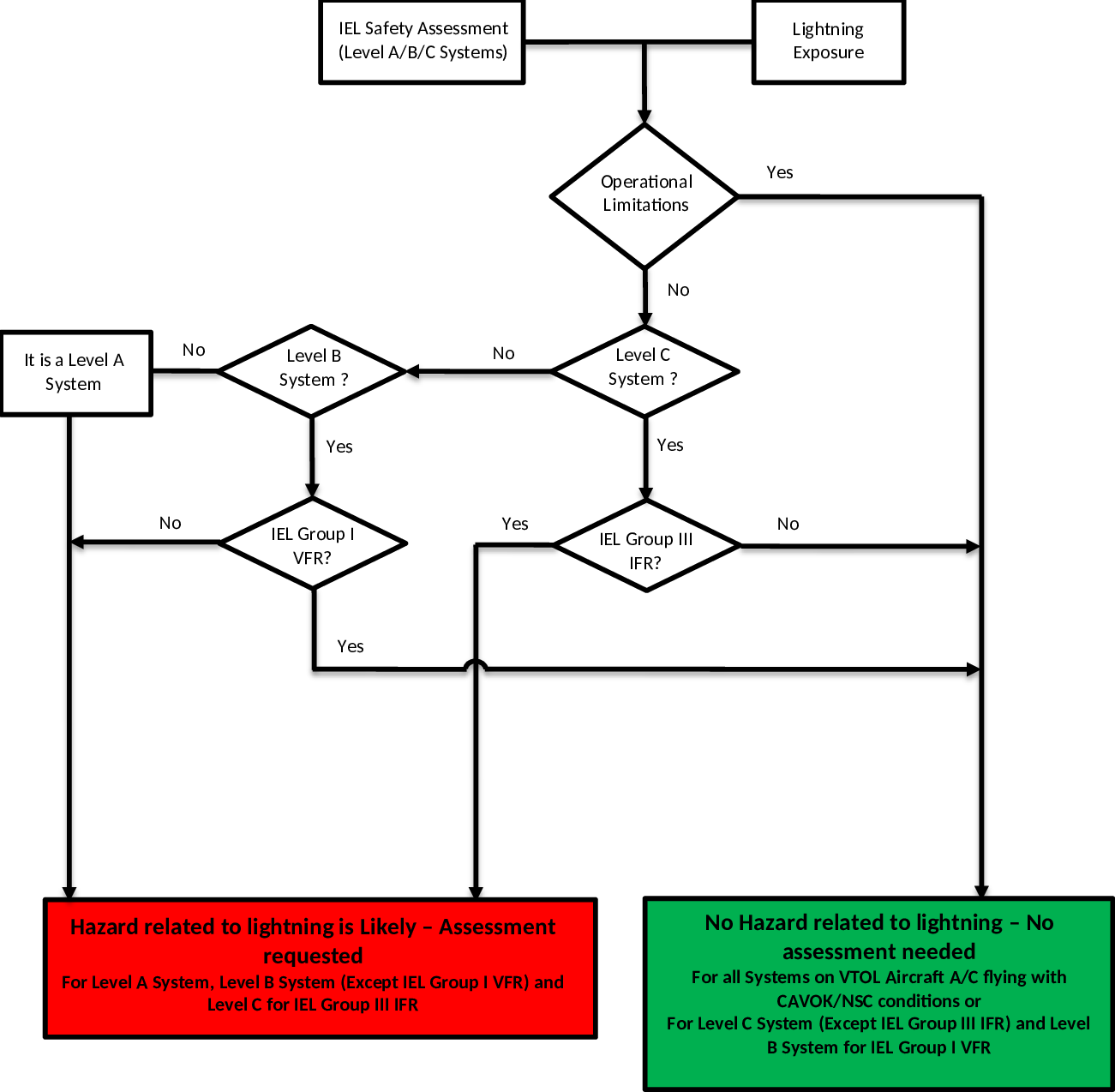
(1) Unless operational limitations are implemented to only allow operation in VFR Day with reliable weather reports on the absence of significant clouds, or the Operation in VFR is permitted with certified VTOL systems to detect the lightning strike or storm cells, then the likelihood of exposure to lightning in VMC condition has to be considered (see Figures 1 and 2 in Section 5). Nevertheless, the Hazard related to this exposure on VTOL capable aircraft could be assessed by comparing the Rate of lightning strike to Aircraft and the Safety objectives at Aircraft Level (see Table 3 in Section 5); in some cases, the probability of having a lightning strike to an aircraft is lower than the probability of having a failure from another technical cause. In such cases, the Hazard associated with a lightning strike can be considered to be unlikely and therefore for lower IEL Groups and the IEL Groups operating in VFR, VTOL.2515 (b) is not applicable for Level B and/or C systems that can be removed from the verification (see Section 6).
(2) IEL Group I
(i) For level A Systems (Display and Non-Display)
(A) Follow the AMC 20-136; or
(B) Conduct Equipment/System testing using the following categories:
(a) According to the VTOL capable aircraft primary structure and wiring type, choose the appropriate Category/Waveform at Level 3 in EUROCAE ED-14G section 22.
(b) Fail/Pass Criteria: when subjected to the Lightning Environment, it could be acceptable that equipment is/are subject to adverse effect, provided that the Level A function is maintained at the aircraft level and all the Equipment/Systems that are required in normal operation recover manually or automatically, in a timely manner, this function after the threat.
(ii) For Level B Systems on aircraft approved for IFR Operation
Conduct Equipment/System testing using the following categories:
(A) According to the VTOL capable aircraft primary structure and wiring type, choose the appropriate Category/Waveform at Level 2 in EUROCAE ED-14G 22.
(B) Fail/Pass Criteria; when submitted to the Lightning Environment, it could be acceptable that redundant equipment is/are subject to adverse effect, provided that the Level B function is recovered manually or automatically, in a timely manner, after the threat.
(3) IEL Group II
(i) For level A Systems (Display and Non-Display)
(A) Follow the AMC 20-136; or
(B) Conduct Equipment/System testing using the following categories:
(a) According to the VTOL capable aircraft primary structure and wiring type, choose the appropriate Category/Waveform at Level 3 in EUROCAE ED-14G section 22.
(b) Fail/Pass Criteria; when submitted to the Lightning Environment, it could be acceptable that equipment is/are subject to adverse effect; provided that the Level A function is maintained at the aircraft level and all the Equipment/System, required in normal operation, recover manually or automatically, in a timely manner, this function after the threat.
(ii) For Level B Systems
Conduct Equipment/System testing using the following categories:
(A) According to the VTOL capable aircraft primary structure and wiring type, choose the appropriate Category/Waveform at Level 2 in EUROCAE ED-14G 22.
(B) Fail/Pass Criteria; when submitted to the Lightning Environment, it could be acceptable that redundant equipment is/are subject to adverse effects, provided that the Level B function is recovered manually or automatically, in a timely manner, after the threat.
(4) IEL Group III
(i) For Level A Non-Display Systems:
(A) Follow the AMC 20-136; or
(B) Determine the aircraft Actual Transient Level (ATL) (by test, analysis, combination of both or by similarity); and
(C) Conduct Equipment/System testing using the following categories:
(b) Fail/Pass Criteria; when submitted to the Lightning Environment, it could be acceptable that equipment is/are subject to adverse effect, provided that the Level A function is maintained at the aircraft level and all the Equipment/Systems that are required in normal operation, recover manually or automatically, in a timely manner, this function after the threat.
(c) Verify the positive margin between the default levels applied during the Equipment/System testing (EDTL as defined in (a)) and the Transient Control Level (TCL, maximum expected aircraft ATLs). If a positive margin is not established, corrective measures should be implemented in line with AMC 20-136.
(ii) For level A Display Systems:
(iii) Conduct Equipment/System testing using the following categories:
(A) For VTOL capable aircraft with primarily metal structure, EUROCAE ED-14G section 22 category A3J3L3.
(B) For VTOL capable aircraft with primarily carbon fibre, fiberglass or non-conductive material structure, EUROCAE ED-14G section 22 category B3K3L3.
(C) Fail/Pass Criteria; when submitted to the Lightning Environment, it could be acceptable that equipment is/are subject to adverse effect, provided that the Level A function is maintained at the aircraft level and all the Equipment/Systems required in normal operation recover manually or automatically, in a timely manner, this function after the threat.
(iv) For level B Systems:
(v) Conduct Equipment/System testing using the following categories:
(A) For VTOL capable aircraft with primarily metal structure, EUROCAE ED-14G 22 category A2J2L2.
(B) For VTOL capable aircraft with primarily carbon fibre, fiberglass or non-conductive material structure, EUROCAE ED-14G section 22 category B2K2L2.
(C) Fail/Pass Criteria; when submitted to the Lightning Environment, it could be acceptable if redundant equipment is/are subject to adverse effect, provided that the Level B function is recovered manually or automatically, in a timely manner, after the threat.
(vi) For Level C Systems on aircraft approved for IFR Operation:
(vii) Conduct Equipment/System testing using the following categories:
(A) For VTOL capable aircraft with primarily metal structure, EUROCAE ED-14G 22 category A1J1L1.
(B) For VTOL capable aircraft with primarily carbon fibre, fiberglass or non-conductive material structure, EUROCAE ED-14G section 22 category B1K1L1.
(C) Fail/Pass Criteria; when submitted to the Lightning Environment, it could be acceptable that redundant equipment is/are subject to adverse effect, provided that the Level C function is recovered manually or automatically, in a timely manner, after the threat.
(5) IEL Testing for Level A Systems considerations;
(i) The Test Levels for upper IEL Group could also be used for lower IEL Group; for instance, the use of the level for Level A Non-Display System for IEL Group III can be used for Level A System of IEL Groups I/II.
(ii) Equipment testing is acceptable when it is shown that the interdependencies between equipment performing a function are understood and each equipment is tested and monitored to verify there is no unacceptable upset of the function.
(iii) If similar equipment are used to perform the same function, the test can be limited to a single equipment.
(6) Level A System architecture consideration: when a level A system is composed of redundant channels/equipment that perform the same level A function, it is permitted to limit the system to the channels/equipment that are required in normal operation provided that they are not susceptible when they comply with VTOL.2515(a); for instance if it is demonstrated that the primary channels comply with VTOL.2515(a) without the support of the back-up channel, the equipment of this channel is/are not required to be qualified to Level 3/4, however this back-up channel should be considered to be as a level B system (Level 2).
5. Rate of
Lightning strike to small aircraft and Failure Condition Likelihood
(a) Rates of Lightning strike in General Aviation
Research on lightning strikes to aircraft has shown that the rate of lightning strikes per flight cycle is closely correlated to several parameters: the size, the cruise altitude and the ratio of VMC/IMC conditions. This correlation provides a method for estimating the likelihood of lightning strikes to smaller aircraft.
Table 3 provides estimated small aircraft lightning strike rates based on this correlation.
|
A/C Class |
Class I |
Class II |
Class III |
|
Percentage of operations in instrument meteorological conditions |
10% |
27% |
38% |
|
Rate of lightning strikes per flight cycle |
7. 10-6 |
2.10-5 |
7.10-5 |
|
Hours per flight cycle |
0.73 |
0.80 |
1.41 |
|
Rate of lightning strikes per flight hour |
10-5 |
3.10-5 |
5.10-5 |
Table 3 - Estimated small aircraft lightning strike rates
(b) Environmental Condition and Aircraft Position
A Lightning strike database has been established for the FAA; it compiles all the lightning strikes reports involving small aircraft.
Figure 1 shows, from this Lightning Strike database shows the position of the aircraft when it was struck by lightning. It can be seen from this figure that this mainly occurs when the aircraft is in clouds where intra-clouds flashes are intercepted by the Aircraft. In a few cases, below clouds, it is possible that Cloud-to-ground Lightning strikes are intercepted or triggered by the Aircraft.
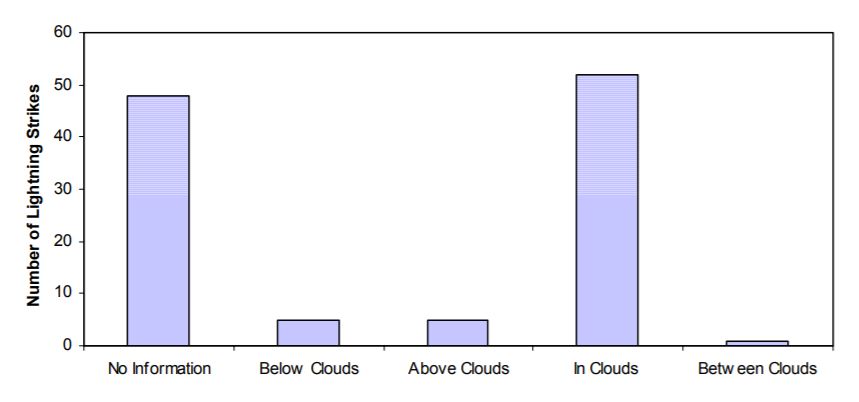
Figure 1 - Number of Lightning Strikes vs Aircraft Position
Figure 2 shows, from this Lightning strike database, the environmental conditions of the aircraft when it was struck by lightning. It can be seen from this figure that Lightning Strike mainly occurs under rain or hail conditions but in 30% of the cases there was no precipitation.
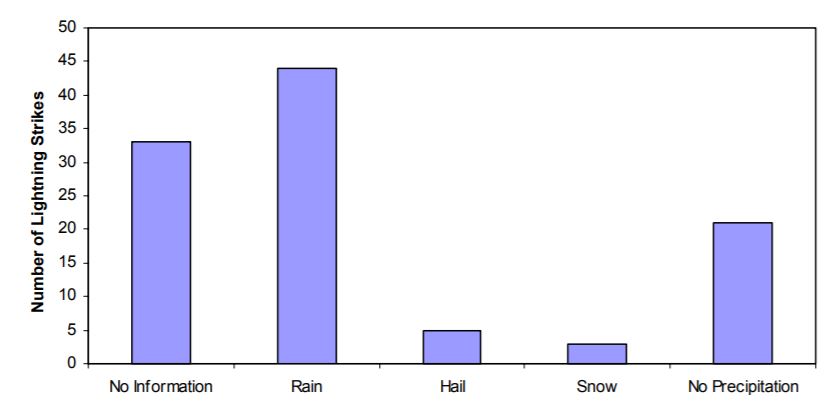
Figure 2 - Number of Lightning Strikes vs Environmental Conditions
Table 4 presents the Rates of lightning strike to Aircraft according to the IEL Group; these Rates are the results of the data from the Table 1 and Figures 1 and 2 extrapolated to VTOL Groups.
|
A/C Group |
IEL Group I VFR (1)(2) |
IEL Group I IFR (1)(2) |
IEL Group II VFR (1)(2) |
IEL Group II IFR (1)(2) |
IEL Group III VFR (1)(2) |
IEL Group III IFR(1)(2) |
|
R Lightning Strike /FH |
5.10-6 |
5.10-5 |
8.10-6 |
8.10-5 |
10-5 |
10-4 |
Table 4 - IEL Group Lightning Strike Rates
(1) For simplification it has been assumed that aircraft flying under VFR are in VMC and aircraft flying under IFR are in IMC for 50% and VMC for 50% of the flight time (so same order of magnitude between IMC and IFR)
(2) A factor 10-1 has been applied to the Rate of Lightning Strike to aircraft between IFR and VFR operations (according to data from Figures 1 and 2).
(c) Hazard on VTOL capable aircraft
By comparing the Rate of Lightning Strike and the Safety Objective at Aircraft Level, we can determine its associated Hazard category.
Table 5 provides the likelihood of the Hazard due to Lightning Strike for a given IEL Group.
|
Failure Condition A/C Group |
Catastrophic (Level A) |
Hazardous (Level B) |
Major (level C) |
|
IEL Group I VFR |
Likely (Safety Objectives 10-6) |
Unlikely (Safety Objectives 10-5) |
Unlikely (Safety Objectives 10-4) |
|
IEL Group I IFR |
Likely (Safety Objectives 10-6) |
Likely (Safety Objectives 10-5) |
Unlikely (Safety Objectives 10-4) |
|
IEL Group II VFR |
Likely (Safety Objectives 10-7) |
Likely (Safety Objectives 10-6) |
Unlikely (Safety Objectives 10-4) |
|
IEL Group II IFR |
Very Likely (Safety Objectives 10-7) |
Likely (Safety Objectives 10-6) |
Unlikely (Safety Objectives 10-4) |
|
IEL Group III VFR |
Very Likely (Safety Objectives 10-8) |
Likely (Safety Objectives 10-6) |
Unlikely (Safety Objectives 10-4) |
|
IEL Group III IFR |
Very Likely (Safety Objectives 10-8) |
Likely (Safety Objectives 10-6) |
Likely (Safety Objectives 10-4) |
Table 5 - Likelihood of Hazard due to Lightning Strike
P Hazard = R Lightning Strike / S Safety Objective
P Hazard < 1: Hazard is Unlikely, 1 ≤ P Hazard ≤ 102: Hazard is Likely, P Hazard > 102: Hazard is Very Likely
6. Decisional Flow Chart on the Hazard related to Lightning Exposure to Aircraft