ED Decision 2016/010/R
(See AMC 25.963)
(a) Each fuel tank must be able to withstand, without failure, the vibration, inertia, fluid and structural loads that it may be subjected to in operation. (See AMC 25.963(a).)
(b) Flexible fuel tank liners must be approved or must be shown to be suitable for the particular application.
(c) Integral fuel tanks must have facilities for interior inspection and repair.
(d) Fuel tanks must, so far as it is practicable, be designed, located and installed so that no fuel is released in or near the fuselage or near the engines in quantities sufficient to start a serious fire in otherwise survivable emergency landing conditions, and:
(1) Fuel tanks must be able to resist rupture and to retain fuel under ultimate hydrostatic design conditions in which the pressure P within the tank varies in accordance with the formula:
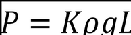
where:
P = fuel pressure in Pa (lb/ft2) at each point within the tank
L = a reference distance in m (ft) between the point of pressure and the tank farthest boundary in the direction of loading.
r = typical fuel density in kg/m3 (slugs/ft3)
g = acceleration due to gravity in m/s2 (ft/s2)
K = 4.5 for the forward loading condition for fuel tanks outside the fuselage contour
K = 9 for the forward loading condition for fuel tanks within the fuselage contour
K = 1.5 for the aft loading condition
K = 3.0 for the inboard and outboard loading conditions for fuel tanks within the fuselage contour
K = 1.5 for the inboard and outboard loading conditions for fuel tanks outside of the fuselage contour
K = 6 for the downward loading condition
K = 3 for the upward loading condition
(2) For those (parts of) wing fuel tanks near the fuselage or near the engines, the greater of the fuel pressures resulting from subparagraphs (i) and (ii) must be used:
(i) the fuel pressures resulting from subparagraph (d)(1) above, and:
(ii) the lesser of the two following conditions:
(A) Fuel pressures resulting from the accelerations as specified in CS 25.561(b)(3) considering the fuel tank full of fuel at maximum fuel density. Fuel pressures based on the 9.0g forward acceleration may be calculated using the fuel static head equal to the streamwise local chord of the tank. For inboard and outboard conditions, an acceleration of 1.5g may be used in lieu of 3.0g as specified in CS 25.561(b)(3); and:
(B) Fuel pressures resulting from the accelerations as specified in CS 25.561(b)(3) considering a fuel volume beyond 85% of the maximum permissible volume in each tank using the static head associated with the 85% fuel level. A typical density of the appropriate fuel may be used. For inboard and outboard conditions, an acceleration of 1.5g may be used in lieu of 3.0g as specified in CS 25.561(b)(3).
(3) Fuel tank internal barriers and baffles may be considered as solid boundaries if shown to be effective in limiting fuel flow.
(4) For each fuel tank and surrounding airframe structure, the effects of crushing and scraping actions with the ground should not cause the spillage of enough fuel, or generate temperatures that would constitute a fire hazard under the conditions specified in CS 25.721(b).
(5) Fuel tank installations must be such that the tanks will not rupture as a result of an engine pylon or engine mount or landing gear, tearing away as specified in CS 25.721(a) and (c).
(See AMC 25.963(g).)
(e) Fuel tanks must comply with the following criteria in order to avoid hazardous fuel leak:
(1) Fuel tanks located in an area where experience or analysis indicates a strike is likely, must be shown by analysis supported by test, or by test to address penetration and deformation by tyre and wheel fragments, small debris from uncontained engine failure or APU failure, or other likely debris (such as runway debris).
(2) All fuel tank access covers must have the capacity to withstand the heat associated with fire at least as well as an access cover made from aluminium alloy in dimensions appropriate for the purpose for which they are to be used, except that the access covers need not be more resistant to fire than an access cover made from the base fuel tank structural material.
(See AMC 25.963(e).)
(f) For pressurised fuel tanks, a means with failsafe features must be provided to prevent the build-up of an excessive pressure difference between the inside and the outside of the tank.
(g) (Reserved)
[Amdt 25/3]
[Amdt 25/14]
[Amdt 25/18]