GM1
ATM/ANS.OR.B.005(a)(3) Management system
ED Decision 2017/001/R
SAFETY PERFORMANCE MONITORING AND MEASUREMENT — ATS PROVIDER
(a) The means to monitor performance is often through one or more leading or lagging indicators.
(b) Indicators and performance measures provide feedback on what is happening so that the air traffic services provider can take appropriate actions to respond to changing circumstances. The indicators provide information on:
(1) what is happening around the air traffic services provider;
(2) how well the air traffic services provider is doing;
(3) what has happened so far; and
(4) warning of impending problems or dangers that the air traffic services provider may need to take action to avoid.
(c) Although ‘lagging’ performance indicators that measure the final outcomes resulting from the air traffic services provider’s activities are often considered as the most interesting, lagging indicators themselves may not provide enough information to guide the air traffic services provider’s actions and ensure success.
(d) By measuring the inputs to a process, leading performance indicators can complement the use of lagging indicators and compensate for some of their shortcomings. Leading indicators can be used to monitor the effectiveness of control systems and give advance warning of any developing weaknesses before problems occur. One purpose of leading performance indicators is, therefore, to show the condition of systems before accidents, incidents, harm, damage or failure occurs. In this way, they can help to control risks and prevent mishaps.
(e) There is good evidence that when leading performance indicators are used correctly, they are effective in improving performance. However, there is also good evidence that they can be misused.
(f) For leading performance indicators to play an effective role in the improvement process, there should be an association between the inputs that the leading performance indicators measure and the desired lagging outputs. There needs to be a reasonable belief that the actions taken to improve leading performance indicators will be followed by an improvement in the associated lagging output indicators.
(g) The process for effective use of leading performance indicators can be summarised as:
(1) Identify where there are potential weaknesses or opportunities for improvement;
(2) Identify what can be done to counter weaknesses or deliver improvement;
(3) Set performance standards for the actions identified;
(4) Monitor performance against the standards;
(5) Take corrective actions to improve performance; and
(6) Repeat the process by using the following continuous improvement model:
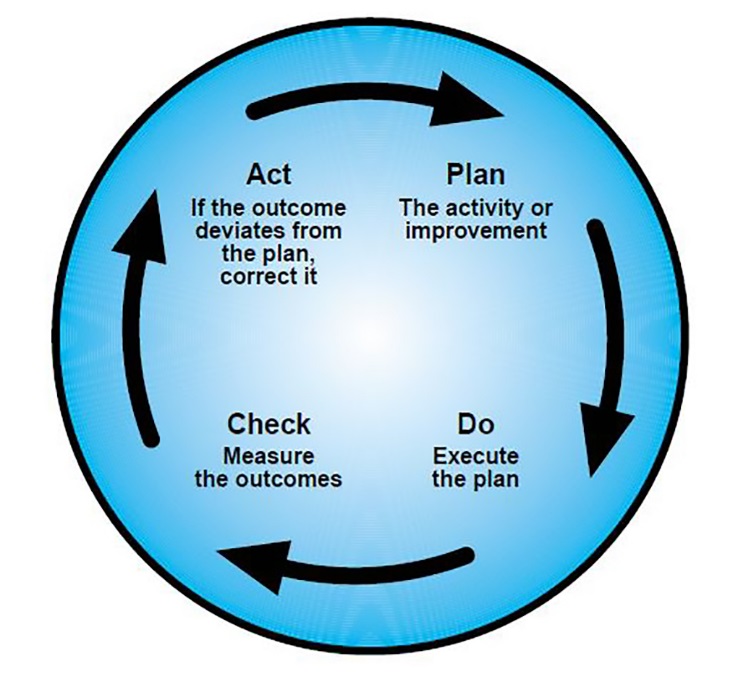
(h) For any performance indicator to be effective, it is important that it is:
(1) objective and easy to measure and collect;
(2) relevant to the air traffic services provider whose performance is being measured;
(3) capable of providing immediate and reliable indications of the level of performance;
(4) cost-efficient in terms of the equipment, personnel and additional technology required to gather the information;
(5) understood and owned by the air traffic services provider whose performance is being measured;
(6) related to activities considered to be important for future performance;
(7) amenable to intervention/influence by the air traffic services provider whose performance is being measured;
(8) related to something where there is scope to improve; and
(9) a clear indication of a means to improve performance.