Light
Dark
System
Log In
Loading...
Compare / EASA/
Incorporated Amendments
/
Compare & Highlight Differences
Available versions for ERULES-1963177438-9854
Regulation (EU) 2016/1185
found in: SERA (923/2012) Standardised European Rules of the Air (Feb 2023)
Regulation (EU) 2024/1111
found in: SERA (923/2012) Standardised European Rules of the Air (Dec 2024)
From
SERA - Standardise... (Aug 2025)
SERA (923/2012) St... (Dec 2024)
SERA (923/2012) St... (Feb 2023)
From section
To
SERA - Standardise... (Aug 2025)
SERA (923/2012) St... (Dec 2024)
SERA (923/2012) St... (Feb 2023)
To section
No visible text changes
0 removals
0 additions
View
Rich
Plain
Sync scrolling
Share
From
Show details
Hide details
To
Show details
Hide details
Version
Show side by side
Regulation (EU) 2016/1185 1. DISTRESS AND URGENCY SIGNALS 1.1. General 1.1.1. Notwithstanding the provisions in 1.2 and 1.3, an aircraft in distress shall use any means at its disposal to attract attention, make known its position and obtain help. 1.1.2. The telecommunication transmission procedures for the distress and urgency signals shall be in accordance with [Section 14](#_DxCrossRefBm918188172). 1.2. Distress signals 1.2.1. The following signals, used either together or separately, mean that grave and imminent danger threatens, and immediate assistance is requested: (a) a signal made by radiotelegraphy or by any other signalling method consisting of the group SOS (.. .— — — . .. in the Morse Code); (b) a radiotelephony distress signal consisting of the spoken word MAYDAY; (c) a distress message sent via data link which transmits the intent of the word MAYDAY; (d) rockets or shells throwing red lights, fired one at a time at short intervals; (e) a parachute flare showing a red light; (f) setting of the transponder to Mode A Code 7700. 1.3. Urgency signals 1.3.1. The following signals, used either together or separately, mean that an aircraft wishes to give notice of difficulties which compel it to land without requiring immediate assistance: (a) the repeated switching on and off of the landing lights; or (b) the repeated switching on and off of the navigation lights in such manner as to be distinct from flashing navigation lights. 1.3.2. The following signals, used either together or separately, mean that an aircraft has a very urgent message to transmit concerning the safety of a ship, aircraft or other vehicle, or of some person on board or within sight: (a) a signal made by radiotelegraphy or by any other signalling method consisting of the group XXX (—..— —..— —..— in the Morse Code); (b) a radiotelephony urgency signal consisting of the spoken words PAN, PAN; (c) an urgency message sent via data link which transmits the intent of the words PAN, PAN. 2. VISUAL SIGNALS USED TO WARN AN UNAUTHORISED AIRCRAFT FLYING IN OR ABOUT TO ENTER A RESTRICTED, PROHIBITED OR DANGER AREA 2.1. When visual signals are used to warn unauthorised aircraft flying in or about to enter a restricted, prohibited or danger area by day and by night, a series of projectiles discharged from the ground at intervals of 10 seconds, each showing, on bursting, red and green lights or stars shall indicate to an unauthorised aircraft that it is flying in or about to enter a restricted, prohibited or danger area, and that the aircraft is to take such remedial action as may be necessary. 3. SIGNALS FOR AERODROME TRAFFIC 3.1. Light and pyrotechnic signals 3.1.1. Instructions Table AP 1-1 <table border="1" cellpadding="0" cellspacing="0" width="606"><thead><tr><td colspan="2" rowspan="2" valign="top" width="244"><p><b>Light</b></p></td><td colspan="2" valign="top" width="362"><p><b>From Aerodrome Control to:</b></p></td></tr><tr><td valign="top" width="183"><p><b>Aircraft in flight</b></p></td><td valign="top" width="179"><p><b>Aircraft on the ground</b></p></td></tr></thead><tr><td rowspan="5" valign="top" width="118"><p>Directed towards aircraft concerned</p><p>(see Figure A1-1).</p></td><td valign="top" width="126"><p>Steady green</p></td><td valign="top" width="183"><p>Cleared to land</p></td><td valign="top" width="179"><p>Cleared for take-off</p></td></tr><tr><td valign="top" width="126"><p>Steady red</p></td><td valign="top" width="183"><p>Give way to other aircraft and continue circling</p></td><td valign="top" width="179"><p>Stop</p></td></tr><tr><td valign="top" width="126"><p>Series of green flashes</p></td><td valign="top" width="183"><p>Return for landing<a href="#_ftn19">[19]</a></p></td><td valign="top" width="179"><p>Cleared to taxi</p></td></tr><tr><td valign="top" width="126"><p>Series of red flashes</p></td><td valign="top" width="183"><p>Aerodrome unsafe, do not land</p></td><td valign="top" width="179"><p>Taxi clear of landing area in use</p></td></tr><tr><td valign="top" width="126"><p>Series of white flashes</p></td><td valign="top" width="183"><p>Land at this aerodrome and proceed to apron<a href="#_ftn20">[20]</a></p></td><td valign="top" width="179"><p>Return to starting point on the aerodrome</p></td></tr><tr><td colspan="2" valign="top" width="244"><p>Red pyrotechnic</p></td><td valign="top" width="183"><p>Notwithstanding any previous instructions, do not land for the time being</p></td></tr></table> 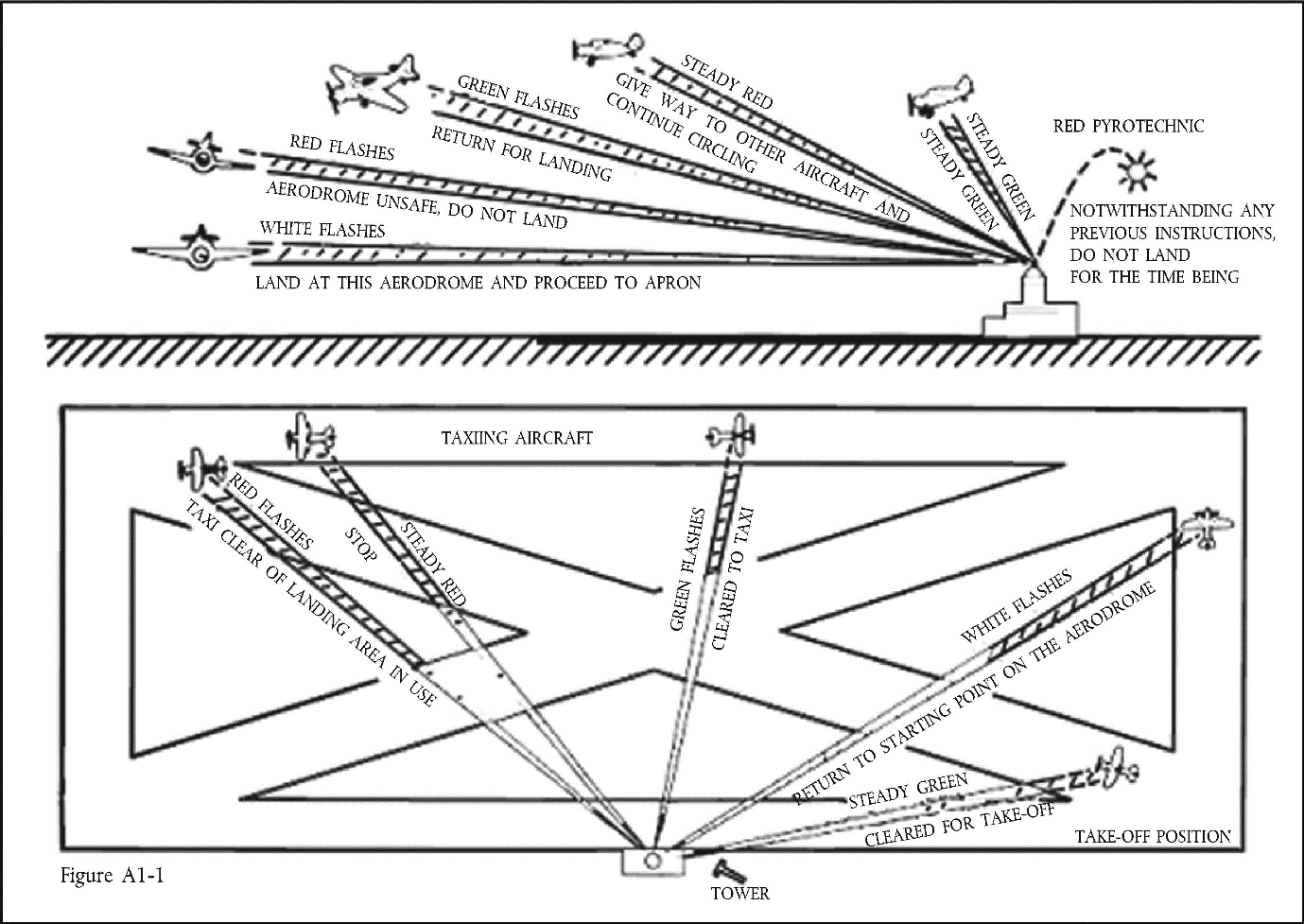 3.1.2. Acknowledgement by an aircraft (a) When in flight: (1) during the hours of daylight: — by rocking the aircraft’s wings, except for the base and final legs of the approach; (2) during the hours of darkness: — by flashing on and off twice the aircraft’s landing lights or, if not so equipped, by switching on and off twice its navigation lights. (b) When on the ground: (1) during the hours of daylight: — by moving the aircraft’s ailerons or rudder; (2) during the hours of darkness: — by flashing on and off twice the aircraft’s landing lights or, if not so equipped, by switching on and off twice its navigation lights. 3.2. Visual ground signals 3.2.1. Prohibition of landing 3.2.1.1. A horizontal red square panel with yellow diagonals (Figure A1-2) when displayed in a signal area indicates that landings are prohibited and that the prohibition is liable to be prolonged.  Figure A1-2 3.2.2. Need for special precautions while approaching or landing 3.2.2.1. A horizontal red square panel with one yellow diagonal (Figure A1-3) when displayed in a signal area indicates that owing to the bad state of the manoeuvring area, or for any other reason, special precautions must be observed in approaching to land or in landing. 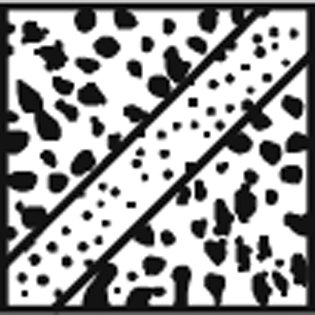 Figure A1-3 3.2.3. Use of runways and taxiways 3.2.3.1. A horizontal white dumb-bell (Figure A1-4) when displayed in a signal area indicates that aircraft are required to land, take off and taxi on runways and taxiways only. 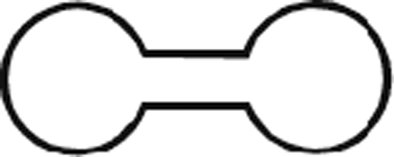 Figure A1-4 3.2.3.2. The same horizontal white dumb-bell as in 3.2.3.1 but with a black bar placed perpendicular to the shaft across each circular portion of the dumb-bell (Figure A1-5) when displayed in a signal area indicates that aircraft are required to land and take off on runways only, but other manoeuvres need not be confined to runways and taxiways. 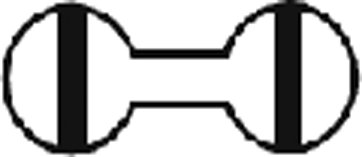 Figure A1-5 3.2.4. Closed runways or taxiways 3.2.4.1. Crosses of a single contrasting colour, white on runways and yellow on taxiways (Figure A1-6), displayed horizontally on runways and taxiways or parts thereof indicate an area unfit for movement of aircraft. 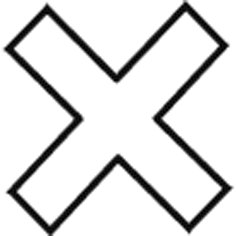 Figure A1-6 3.2.5. Directions for landing or take-off 3.2.5.1. A horizontal white or orange landing T (Figure A1-7) indicates the direction to be used by aircraft for landing and take-off, which shall be in a direction parallel to the shaft of the T towards the cross arm. When used at night, the landing T shall be either illuminated or outlined in white lights. 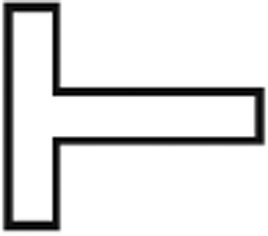 Figure A1-7 3.2.5.2. A set of two digits (Figure A1-8) displayed vertically at or near the aerodrome control tower indicates to aircraft on the manoeuvring area the direction for take-off, expressed in units of 10 degrees to the nearest 10 degrees of the magnetic compass.  Figure A1-8 3.2.6. Right-hand traffic 3.2.6.1. When displayed in a signal area, or horizontally at the end of the runway or strip in use, a right-hand arrow of conspicuous colour (Figure A1-9) indicates that turns are to be made to the right before landing and after take-off. 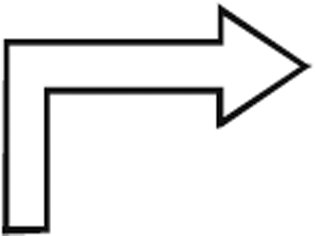 Figure A1-9 3.2.7. Air traffic services reporting office 3.2.7.1. The letter C displayed vertically in black against a yellow background (Figure A1-10) indicates the location of the air traffic services reporting office. 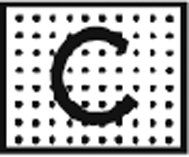 Figure A1-10 3.2.8. Sailplane flights in operation 3.2.8.1. A double white cross displayed horizontally (Figure A1-11) in the signal area indicates that the aerodrome is being used by sailplanes and that sailplane flights are being performed. 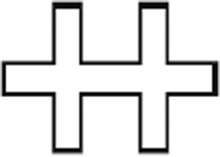 Figure A1-11 4. MARSHALLING SIGNALS 4.1. From a signalman/marshaller to an aircraft 4.1.1. The signals for use by the signalman/marshaller, with hands illuminated as necessary to facilitate observation by the pilot, and facing the aircraft in a position shall be: (a) for fixed-wing aircraft, on left side of aircraft, where best seen by the pilot; and (b) for helicopters, where the signalman/marshaller can best be seen by the pilot. 4.1.2. Prior to using the following signals, the signalman/marshaller shall ascertain that the area within which an aircraft is to be guided is clear of objects which the aircraft, in complying with [SERA.3301(a)](#_DxCrossRefBm918188024), might otherwise strike. <table border="1" cellpadding="0" cellspacing="0" width="603"><tr><td width="217"><p><div class="image-container"><img alt="EASA EAR image" src="/static/files/file_EwZ4FOd3Aet/image013.png"/></div></p></td><td valign="top" width="386"><p>1. Wingwalker/guide<a href="#_ftn21">[21]</a></p><p>Raise right hand above head level with wand pointing up; move left-hand wand pointing down toward body.</p></td></tr><tr><td width="217"><p align="center"><div class="image-container"><img alt="EASA EAR image" src="/static/files/file_EwZ4FOd3Aet/image014.png"/></div></p></td><td valign="top" width="386"><p>2. Identify gate</p><p>Raise fully extended arms straight above head with wands pointing up.</p></td></tr><tr><td width="217"><p align="center"><div class="image-container"><img alt="EASA EAR image" src="/static/files/file_EwZ4FOd3Aet/image015.png"/></div></p></td><td valign="top" width="386"><p>3. Proceed to next signalman/marshaller or as directed by tower/ground control</p><p>Point both arms upward; move and extend arms outward to sides of body and point with wands to direction of next signalman/marshaller or taxi area.</p></td></tr><tr><td width="217"><p align="center"><div class="image-container"><img alt="EASA EAR image" src="/static/files/file_EwZ4FOd3Aet/image016.png"/></div></p></td><td valign="top" width="386"><p>4. Straight ahead</p><p>Bend extended arms at elbows and move wands up and down from chest height to head.</p></td></tr><tr><td width="217"><p align="center"><div class="image-container"><img alt="EASA EAR image" src="/static/files/file_EwZ4FOd3Aet/image017.png"/></div></p></td><td valign="top" width="386"><p></p><p><b>5(a) Turn left (from pilot’s point of view)</b></p><p>With right arm and wand extended at a 90-degree angle to body, make ‘come ahead’ signal with left hand. The rate of signal motion indicates to pilot the rate of aircraft turn.</p></td></tr><tr><td width="217"><p align="center"><div class="image-container"><img alt="EASA EAR image" src="/static/files/file_EwZ4FOd3Aet/image018.png"/></div></p></td><td valign="top" width="386"><p><b>5(b) Turn right (from pilot’s point of view)</b></p><p>With left arm and wand extended at a 90-degree angle to body, make ‘come ahead’ signal with right hand. The rate of signal motion indicates to pilot the rate of aircraft turn.</p></td></tr><tr><td width="217"><p align="center"><div class="image-container"><img alt="EASA EAR image" src="/static/files/file_EwZ4FOd3Aet/image019.png"/></div></p></td><td valign="top" width="386"><p><b>6(a) Normal stop</b></p><p>Fully extend arms and wands at a 90-degree angle to sides and slowly move to above head until wands cross.</p></td></tr><tr><td width="217"><p align="center"><div class="image-container"><img alt="EASA EAR image" src="/static/files/file_EwZ4FOd3Aet/image020.png"/></div></p></td><td valign="top" width="386"><p><b>6(b) Emergency stop</b></p><p>Abruptly extend arms and wands to top of head, crossing wands.</p></td></tr><tr><td width="217"><p align="center"><div class="image-container"><img alt="EASA EAR image" src="/static/files/file_EwZ4FOd3Aet/image021.png"/></div></p></td><td valign="top" width="386"><p><b>7(a) Set brakes</b></p><p>Raise hand just above shoulder height with open palm. Ensuring eye contact with flight crew, close hand into a fist. <i>Do not</i> move until receipt of ‘thumbs up’ acknowledgement from flight crew.</p></td></tr><tr><td width="217"><p align="center"><div class="image-container"><img alt="EASA EAR image" src="/static/files/file_EwZ4FOd3Aet/image022.png"/></div></p></td><td valign="top" width="386"><p><b>7(b) Release brakes</b></p><p>Raise hand just above shoulder height with hand closed in a fist. Ensuring eye contact with flight crew, open palm. <i>Do not</i> move until receipt of ‘thumbs up’ acknowledgement from flight crew.</p></td></tr><tr><td width="217"><p align="center"><div class="image-container"><img alt="EASA EAR image" src="/static/files/file_EwZ4FOd3Aet/image023.png"/></div></p></td><td valign="top" width="386"><p><b>8(a) Chocks inserted</b></p><p>With arms and wands fully extended above head, move wands inward in a ‘jabbing’ motion until wands touch. <i>Ensure</i> acknowledgement is received from flight crew.</p></td></tr><tr><td width="217"><p align="center"><div class="image-container"><img alt="EASA EAR image" src="/static/files/file_EwZ4FOd3Aet/image024.png"/></div></p></td><td valign="top" width="386"><p><b>8(b) Chocks removed</b></p><p>With arms and wands fully extended above head, move wands outward in a ‘jabbing’ motion. <i>Do not</i> remove chocks until authorised by flight crew.</p></td></tr><tr><td width="217"><p align="center"><div class="image-container"><img alt="EASA EAR image" src="/static/files/file_EwZ4FOd3Aet/image025.png"/></div></p></td><td valign="top" width="386"><p><b>9. Start engine(s)</b></p><p>Raise right arm to head level with wand pointing up and start a circular motion with hand; at the same time, with left arm raised above head level, point to engine to be started.</p></td></tr><tr><td width="217"><p align="center"><div class="image-container"><img alt="EASA EAR image" src="/static/files/file_EwZ4FOd3Aet/image026.png"/></div></p></td><td valign="top" width="386"><p><b>10. Cut engines</b></p><p>Extend arm with wand forward of body at shoulder level; move hand and wand to top of left shoulder and draw wand to top of right shoulder in a slicing motion across throat.</p></td></tr><tr><td width="217"><p align="center"><div class="image-container"><img alt="EASA EAR image" src="/static/files/file_EwZ4FOd3Aet/image027.png"/></div></p></td><td valign="top" width="386"><p><b>11. Slow down</b></p><p>Move extended arms downwards in a ‘patting’ gesture, moving wands up and down from waist to knees.</p></td></tr><tr><td width="217"><p align="center"><div class="image-container"><img alt="EASA EAR image" src="/static/files/file_EwZ4FOd3Aet/image028.png"/></div></p></td><td valign="top" width="386"><p><b>12. Slow down engine(s) on indicated side</b></p><p>With arms down and wands toward ground, wave either <i>right</i> or <i>left</i> wand up and down indicating engine(s) on <i>left</i> or <i>right</i> side respectively should be slowed down.</p></td></tr><tr><td width="217"><p align="center"><div class="image-container"><img alt="EASA EAR image" src="/static/files/file_EwZ4FOd3Aet/image029.png"/></div></p></td><td valign="top" width="386"><p><b>13. Move back</b></p><p>With arms in front of body at waist height, rotate arms in a forward motion. To stop rearward movement, use signal 6(a) or 6(b).</p></td></tr><tr><td width="217"><p align="center"><div class="image-container"><img alt="EASA EAR image" src="/static/files/file_EwZ4FOd3Aet/image030.png"/></div></p></td><td valign="top" width="386"><p><b>14(a) Turns while backing (for tail to starboard)</b></p><p>Point left arm with wand down and bring right arm from overhead vertical position to horizontal forward position, repeating right-arm movement.</p></td></tr><tr><td width="217"><p align="center"><div class="image-container"><img alt="EASA EAR image" src="/static/files/file_EwZ4FOd3Aet/image031.png"/></div></p></td><td valign="top" width="386"><p><b>14(b) Turns while backing (for tail to port)</b></p><p>Point right arm with wand down and bring left arm from overhead vertical position to horizontal forward position, repeating left-arm movement.</p></td></tr><tr><td width="217"><p align="center"><div class="image-container"><img alt="EASA EAR image" src="/static/files/file_EwZ4FOd3Aet/image032.png"/></div></p></td><td valign="top" width="386"><p><b>15. Affirmative/all clear</b><a href="#_ftn22">[22]</a></p><p>Raise right arm to head level with wand pointing up or display hand with ‘thumbs up’; left arm remains at side by knee.</p></td></tr><tr><td width="217"><p align="center"><div class="image-container"><img alt="EASA EAR image" src="/static/files/file_EwZ4FOd3Aet/image033.png"/></div></p></td><td valign="top" width="386"><p><b>16. <i>Hover</i></b><a href="#_ftn23"><i><b>[23]</b></i></a></p><p>Fully extend arms and wands at a 90-degree angle to sides.</p></td></tr><tr><td width="217"><p align="center"><div class="image-container"><img alt="EASA EAR image" src="/static/files/file_EwZ4FOd3Aet/image034.png"/></div></p></td><td valign="top" width="386"><p><b>17. Move upwards</b><a href="#_ftn24">[24]</a></p><p>Fully extend arms and wands at a 90-degree angle to sides and, with palms turned up, move hands upwards. Speed of movement indicates rate of ascent.</p></td></tr><tr><td width="217"><p align="center"><div class="image-container"><img alt="EASA EAR image" src="/static/files/file_EwZ4FOd3Aet/image035.png"/></div></p></td><td valign="top" width="386"><p></p><p><b>18. Move downwards</b><a href="#_ftn25">[25]</a></p><p>Fully extend arms and wands at a 90-degree angle to sides and, with palms turned down, move hands downwards. Speed of movement indicates rate of descent.</p></td></tr><tr><td width="217"><p align="center"><div class="image-container"><img alt="EASA EAR image" src="/static/files/file_EwZ4FOd3Aet/image036.png"/></div></p></td><td valign="top" width="386"><p><b>19(a) Move horizontally left (from pilot’s point of view)</b><a href="#_ftn26">[26]</a></p><p>Extend arm horizontally at a 90-degree angle to right side of body. Move other arm in same direction in a sweeping motion.</p></td></tr></table> <table border="1" cellpadding="0" cellspacing="0" width="603"><tr><td width="218"><p align="center"><div class="image-container"><img alt="EASA EAR image" src="/static/files/file_EwZ4FOd3Aet/image037.png"/></div></p></td><td valign="top" width="385"><p><b>19(b) Move horizontally right (from pilot’s point of view)</b><a href="#_ftn27">[27]</a></p><p>Extend arm horizontally at a 90-degree angle to left side of body. Move other arm in same direction in a sweeping motion.</p></td></tr><tr><td width="218"><p align="center"><div class="image-container"><img alt="EASA EAR image" src="/static/files/file_EwZ4FOd3Aet/image038.png"/></div></p></td><td valign="top" width="385"><p><b>20. <i>Land</i></b><a href="#_ftn28"><i><b>[28]</b></i></a></p><p>Cross arms with wands downwards and in front of body.</p></td></tr><tr><td width="218"><p align="center"><div class="image-container"><img alt="EASA EAR image" src="/static/files/file_EwZ4FOd3Aet/image039.png"/></div></p></td><td valign="top" width="385"><p><b>21. Hold position/stand by</b></p><p>Fully extend arms and wands downwards at a 45-degree angle to sides. Hold position until aircraft is clear for next manoeuvre.</p></td></tr><tr><td width="218"><p align="center"><div class="image-container"><img alt="EASA EAR image" src="/static/files/file_EwZ4FOd3Aet/image040.png"/></div></p></td><td valign="top" width="385"><p><b>22. Dispatch aircraft</b></p><p>Perform a standard salute with right hand and/or wand to dispatch the aircraft. Maintain eye contact with flight crew until aircraft has begun to taxi.</p></td></tr><tr><td width="218"><p align="center"><div class="image-container"><img alt="EASA EAR image" src="/static/files/file_EwZ4FOd3Aet/image041.png"/></div></p></td><td valign="top" width="385"><p><b>23. Do not touch controls (technical/servicing communication signal)</b></p><p>Extend right arm fully above head and close fist or hold wand in horizontal position; left arm remains at side by knee.</p></td></tr><tr><td width="218"><p align="center"><div class="image-container"><img alt="EASA EAR image" src="/static/files/file_EwZ4FOd3Aet/image042.png"/></div></p></td><td valign="top" width="385"><p><b>24. Connect ground power (technical/servicing communication signal)</b></p><p>Hold arms fully extended above head; open left hand horizontally and move finger tips of right hand into and touch open palm of left hand (forming a ‘T’). At night, illuminated wands can also be used to form the ‘T’ above head.</p></td></tr><tr><td width="218"><p align="center"><div class="image-container"><img alt="EASA EAR image" src="/static/files/file_EwZ4FOd3Aet/image043.png"/></div></p></td><td valign="top" width="385"><p>25. Disconnect power (technical/servicing communication signal)</p><p>Hold arms fully extended above head with finger tips of right hand touching open horizontal palm of left hand (forming a ‘T’); then move right hand away from the left. <i>Do not</i> disconnect power until authorised by flight crew. At night, illuminated wands can also be used to form the ‘T’ above head.</p></td></tr><tr><td width="218"><p align="center"><div class="image-container"><img alt="EASA EAR image" src="/static/files/file_EwZ4FOd3Aet/image044.png"/></div></p></td><td valign="top" width="385"><p><b>26. Negative (technical/servicing communication signal)</b></p><p>Hold right arm straight out at 90 degrees from shoulder and point wand down to ground or display hand with ‘thumbs down’; left hand remains at side by knee.</p></td></tr><tr><td valign="top" width="218"><p><div class="image-container"><img alt="EASA EAR image" src="/static/files/file_EwZ4FOd3Aet/image045.png"/></div></p></td><td valign="top" width="385"><p><b>27. Establish communication via interphone (technical/servicing communication signal)</b></p><p>Extend both arms at 90 degrees from body and move hands to cup both ears.</p></td></tr><tr><td width="218"><p align="center"><div class="image-container"><img alt="EASA EAR image" src="/static/files/file_EwZ4FOd3Aet/image046.png"/></div></p></td><td valign="top" width="385"><p><b>28. Open/close stairs (technical/servicing communication signal)</b><a href="#_ftn29">[29]</a></p><p>With right arm at side and left arm raised above head at a 45-degree angle, move right arm in a sweeping motion towards top of left shoulder.</p></td></tr></table> 4.2. From the pilot of an aircraft to a signalman/marshaller 4.2.1. These signals shall be used by a pilot in the cockpit with hands plainly visible to the signalman/marshaller, and illuminated as necessary to facilitate observation by the signalman/marshaller. <table border="1" cellpadding="0" cellspacing="0" width="603"><tr><td width="378"><p align="center"><div class="image-container"><img alt="EASA EAR image" src="/static/files/file_EwZ4FOd3Aet/image047.png"/></div></p></td><td valign="top" width="226"><p>(a) Brakes engaged: raise arm and hand, with fingers extended, horizontally in front of face, then clench fist.</p></td></tr><tr><td width="378"><p align="center"><div class="image-container"><img alt="EASA EAR image" src="/static/files/file_EwZ4FOd3Aet/image048.png"/></div></p></td><td valign="top" width="226"><p>(b) Brakes released: raise arm, with fist clenched, horizontally in front of face, then extend fingers.</p></td></tr><tr><td width="378"><p align="center"><div class="image-container"><img alt="EASA EAR image" src="/static/files/file_EwZ4FOd3Aet/image049.png"/></div></p></td><td valign="top" width="226"><p>(c) Insert chocks: arms extended, palms outwards, move hands inwards to cross in front of face.</p></td></tr><tr><td width="378"><p align="center"><div class="image-container"><img alt="EASA EAR image" src="/static/files/file_EwZ4FOd3Aet/image050.png"/></div></p></td><td valign="top" width="226"><p>(d) Remove chocks: hands crossed in front of face, palms outwards, move arms outwards.</p></td></tr><tr><td width="378"><p align="center"><div class="image-container"><img alt="EASA EAR image" src="/static/files/file_EwZ4FOd3Aet/image051.png"/></div></p></td><td valign="top" width="226"><p>(e) Ready to start engine(s): Raise the appropriate number of fingers on one hand indicating the number of the engine to be started.</p></td></tr></table> 4.3. Technical/servicing communication signals 4.3.1. Manual signals shall only be used when verbal communication is not possible with respect to technical/servicing communication signals. 4.3.2. Signalmen/marshallers shall ensure that an acknowledgement is received from the flight crew with respect to technical/servicing communication signals. 5. STANDARD EMERGENCY HAND SIGNALS 5.1. The following hand signals are established as the minimum required for emergency communication between the ARFF incident commander/ARFF firefighters and the cockpit and/or cabin crews of the incident aircraft. ARFF emergency hand signals should be given from the left front side of the aircraft for the cockpit crew. <table border="1" cellpadding="0" cellspacing="0" width="603"><tr><td width="305"><p align="center"><div class="image-container"><img alt="EASA EAR image" src="/static/files/file_EwZ4FOd3Aet/image052.png"/></div></p></td><td valign="top" width="298"><p></p><p><b>1. Recommend evacuation</b></p><p>Evacuation recommended based on aircraft rescue and fire-fighting and Incident Commander’s assessment of external situation.</p><p>Arm extended from body, and held horizontal with hand upraised at eye level. Execute beckoning arm motion angled backward. Non-beckoning arm held against body.</p><p>Night — same with wands.</p></td></tr><tr><td width="305"><p align="center"><div class="image-container"><img alt="EASA EAR image" src="/static/files/file_EwZ4FOd3Aet/image053.png"/></div></p></td><td valign="top" width="298"><p></p><p><b>2. Recommend stop</b></p><p>Recommend evacuation in progress be halted. Stop aircraft movement or other activity in progress.</p><p>Arms in front of head — Crossed at wrists</p><p>Night — same with wands.</p></td></tr><tr><td width="305"><p align="center"><div class="image-container"><img alt="EASA EAR image" src="/static/files/file_EwZ4FOd3Aet/image054.png"/></div></p></td><td valign="top" width="298"><p></p><p><b>3. Emergency contained</b></p><p>No outside evidence of dangerous conditions or ‘all-clear.’</p><p>Arms extended outward and down at a 45 degree angle. Arms moved inward below waistline simultaneously until wrists crossed, then extended outward to starting position.</p><p>Night — same with wands.</p></td></tr><tr><td width="305"><p align="center"><div class="image-container"><img alt="EASA EAR image" src="/static/files/file_EwZ4FOd3Aet/image055.png"/></div></p></td><td valign="top" width="298"><p></p><p><b>4. Fire</b></p><p>Move right-hand in a ‘fanning’ motion from shoulder to knee, while at the same time pointing with left hand to area of fire.</p><p>Night — same with wands.</p></td></tr></table> --- [[19]](#_ftnref19) Clearances to land and to taxi will be given in due course. [[20]](#_ftnref20) Clearances to land and to taxi will be given in due course. [[21]](#_ftnref21) This signal provides an indication by a person positioned at the aircraft wing tip, to the pilot/marshaller/push-back operator, that the aircraft movement on/off a parking position would be unobstructed. [[22]](#_ftnref22) This signal is also used as a technical/servicing communication signal. [[24]](#_ftnref24) For use to hovering helicopters. [[25]](#_ftnref25) For use to hovering helicopters. [[29]](#_ftnref29) This signal is intended mainly for aircraft with the set of integral stairs at the front.
Regulation (EU) 2024/1111 1. DISTRESS AND URGENCY SIGNALS 1.1. General 1.1.1. Notwithstanding the provisions in 1.2 and 1.3, an aircraft in distress shall use any means at its disposal to attract attention, make known its position and obtain help. 1.1.2. The telecommunication transmission procedures for the distress and urgency signals shall be in accordance with [Section 14](#_DxCrossRefBm413419461). 1.2. Distress signals 1.2.1. The following signals, used either together or separately, mean that grave and imminent danger threatens, and immediate assistance is requested: (a) a signal made by radiotelegraphy or by any other signalling method consisting of the group SOS (.. .— — — . .. in the Morse Code); *[applicable until 30 April 2025 – Regulation (EU) 2016/1185]* (a) a signal made by radiotelegraphy or by any other signalling method consisting of the group SOS (… — — — … in the Morse Code); *[applicable from 1 May 2025 – Regulation (EU) 2024/404]* (b) a radiotelephony distress signal consisting of the spoken word MAYDAY; (c) a distress message sent via data link which transmits the intent of the word MAYDAY; (d) rockets or shells throwing red lights, fired one at a time at short intervals; (e) a parachute flare showing a red light; (f) setting of the transponder to Mode A Code 7700. 1.3. Urgency signals 1.3.1. The following signals, used either together or separately, mean that an aircraft wishes to give notice of difficulties which compel it to land without requiring immediate assistance: (a) the repeated switching on and off of the landing lights; or (b) the repeated switching on and off of the navigation lights in such manner as to be distinct from flashing navigation lights. 1.3.2. The following signals, used either together or separately, mean that an aircraft has a very urgent message to transmit concerning the safety of a ship, aircraft or other vehicle, or of some person on board or within sight: (a) a signal made by radiotelegraphy or by any other signalling method consisting of the group XXX (—..— —..— —..— in the Morse Code); (b) a radiotelephony urgency signal consisting of the spoken words PAN, PAN; (c) an urgency message sent via data link which transmits the intent of the words PAN, PAN. 2. VISUAL SIGNALS USED TO WARN AN UNAUTHORISED AIRCRAFT FLYING IN OR ABOUT TO ENTER A RESTRICTED, PROHIBITED OR DANGER AREA 2.1. When visual signals are used to warn unauthorised aircraft flying in or about to enter a restricted, prohibited or danger area by day and by night, a series of projectiles discharged from the ground at intervals of 10 seconds, each showing, on bursting, red and green lights or stars shall indicate to an unauthorised aircraft that it is flying in or about to enter a restricted, prohibited or danger area, and that the aircraft is to take such remedial action as may be necessary. 3. SIGNALS FOR AERODROME TRAFFIC 3.1. Light and pyrotechnic signals 3.1.1. Instructions *[applicable until 30 April 2025 – Regulation (EU) 2016/1185]* 3.1.1. Instructions for aircraft *[applicable from 1 May 2025 – Regulation (EU) 2024/404]* Table AP 1-1 <table border="1" cellpadding="0" cellspacing="0" width="606"><thead><tr><td colspan="2" rowspan="2" valign="top" width="244"><p><b>Light</b></p></td><td colspan="2" valign="top" width="362"><p><b>From Aerodrome Control to:</b></p></td></tr><tr><td valign="top" width="183"><p><b>Aircraft in flight</b></p></td><td valign="top" width="179"><p><b>Aircraft on the ground</b></p></td></tr></thead><tr><td rowspan="5" valign="top" width="118"><p>Directed towards aircraft concerned</p><p>(see Figure A1-1).</p></td><td valign="top" width="126"><p>Steady green</p></td><td valign="top" width="183"><p>Cleared to land</p></td><td valign="top" width="179"><p>Cleared for take-off</p></td></tr><tr><td valign="top" width="126"><p>Steady red</p></td><td valign="top" width="183"><p>Give way to other aircraft and continue circling</p></td><td valign="top" width="179"><p>Stop</p></td></tr><tr><td valign="top" width="126"><p>Series of green flashes</p></td><td valign="top" width="183"><p>Return for landing<a href="#_ftn20">[20]</a></p></td><td valign="top" width="179"><p>Cleared to taxi</p></td></tr><tr><td valign="top" width="126"><p>Series of red flashes</p></td><td valign="top" width="183"><p>Aerodrome unsafe, do not land</p></td><td valign="top" width="179"><p>Taxi clear of landing area in use</p></td></tr><tr><td valign="top" width="126"><p>Series of white flashes</p></td><td valign="top" width="183"><p>Land at this aerodrome and proceed to apron<a href="#_ftn21">[21]</a></p></td><td valign="top" width="179"><p>Return to starting point on the aerodrome</p></td></tr><tr><td colspan="2" valign="top" width="244"><p>Red pyrotechnic</p></td><td valign="top" width="183"><p>Notwithstanding any previous instructions, do not land for the time being</p></td></tr></table> 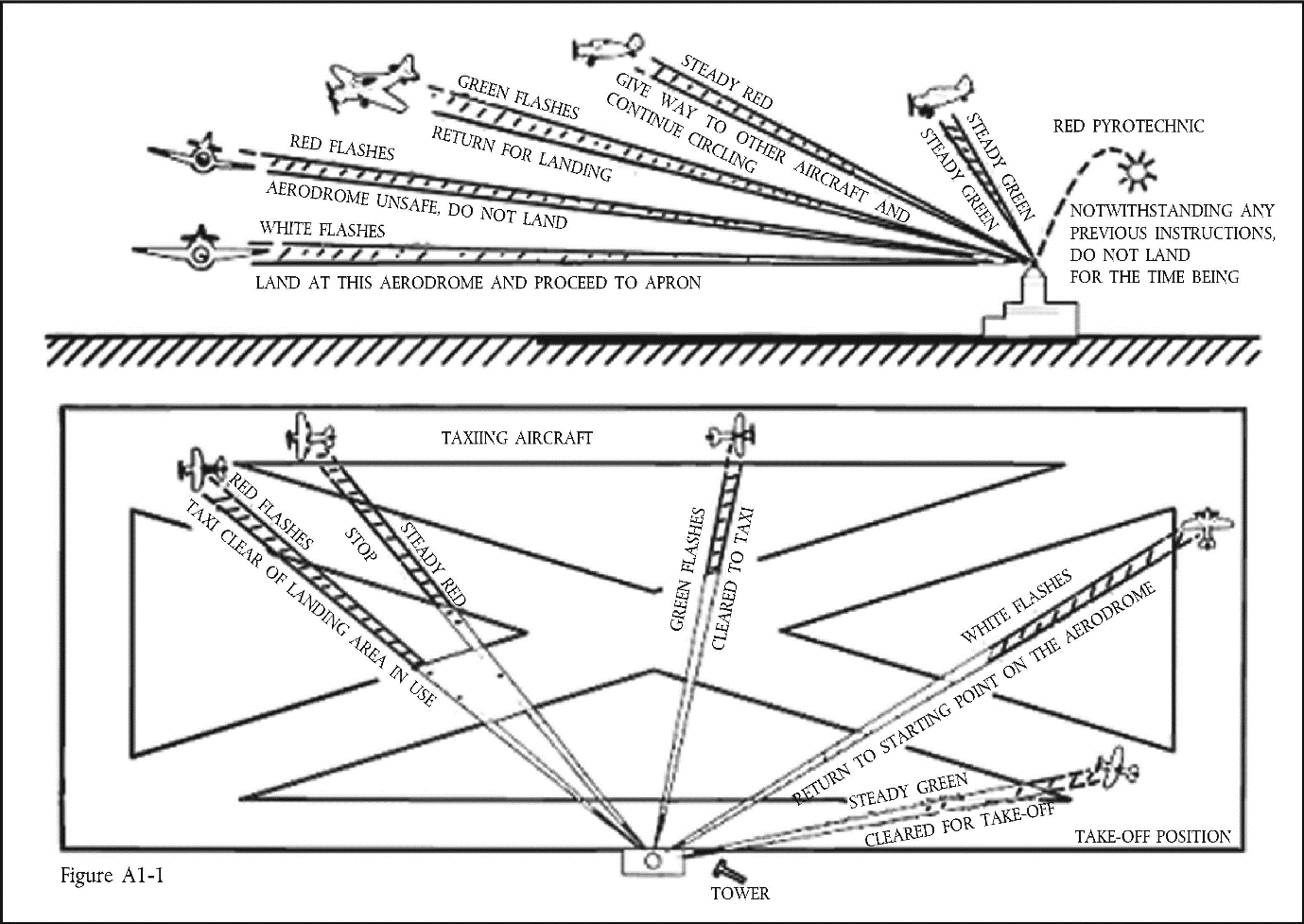 *[applicable until 30 April 2025 – Regulation (EU) 2016/1185]* 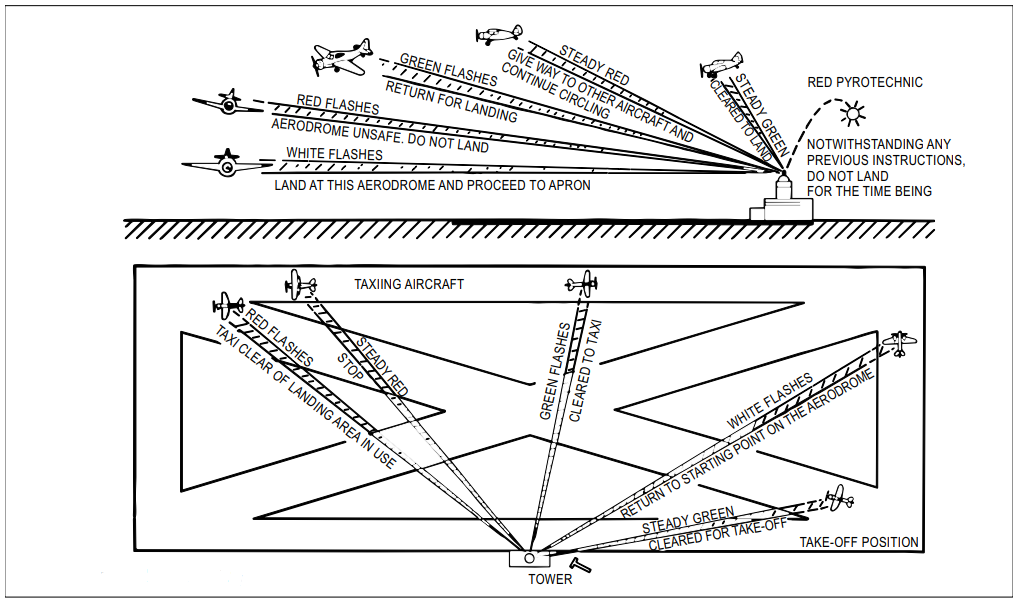 Figure A1-1 *[applicable from 1 May 2025 – Regulation (EU) 2024/404]* 3.1.2. Acknowledgement by an aircraft (a) When in flight: (1) during the hours of daylight: — by rocking the aircraft’s wings, except for the base and final legs of the approach; (2) during the hours of darkness: — by flashing on and off twice the aircraft’s landing lights or, if not so equipped, by switching on and off twice its navigation lights. (b) When on the ground: (1) during the hours of daylight: — by moving the aircraft’s ailerons or rudder; (2) during the hours of darkness: — by flashing on and off twice the aircraft’s landing lights or, if not so equipped, by switching on and off twice its navigation lights. 3.1.3. Instructions for ground vehicles or pedestrians (a) When communications by a system of visual signals is deemed to be adequate, or in the case of radio communication failure, the signals given hereunder shall have the meaning indicated in the table below. <table border="1" cellpadding="0" cellspacing="0"><tr><td valign="top" width="222"><p><b>Light signal from aerodrome control</b></p></td><td valign="top" width="225"><p><b>Meaning</b></p></td></tr><tr><td valign="top" width="222"><p><b>Green flashes</b></p></td><td valign="top" width="225"><p>Permission to cross landing area or to move onto taxiway</p></td></tr><tr><td valign="top" width="222"><p><b>Steady red</b></p></td><td valign="top" width="225"><p>Stop</p></td></tr><tr><td valign="top" width="222"><p><b>Red flashes</b></p></td><td valign="top" width="225"><p>Move off the landing area or taxiway and watch out for aircraft</p></td></tr><tr><td valign="top" width="222"><p><b>White flashes</b></p></td><td valign="top" width="225"><p>Vacate manoeuvring area in accordance with local instructions</p></td></tr></table> (b) In emergency conditions or if the signals in point (a) are not observed, the signal given hereunder shall be used for runways or taxiways equipped with a lighting system and shall have the meaning indicated in the table below. <table border="1" cellpadding="0" cellspacing="0"><tr><td valign="top" width="226"><p><b>Light signal from aerodrome control</b></p></td><td valign="top" width="222"><p><b>Meaning</b></p></td></tr><tr><td valign="top" width="226"><p><b>Flashing runway or taxiway lights</b></p></td><td valign="top" width="222"><p>Vacate the runway and observe the tower for light signal</p></td></tr></table> *[applicable from 1 May 2025 – Regulation (EU) 2024/404]* 3.2. Visual ground signals 3.2.1. Prohibition of landing 3.2.1.1. A horizontal red square panel with yellow diagonals (Figure A1-2) when displayed in a signal area indicates that landings are prohibited and that the prohibition is liable to be prolonged.  Figure A1-2 3.2.2. Need for special precautions while approaching or landing 3.2.2.1. A horizontal red square panel with one yellow diagonal (Figure A1-3) when displayed in a signal area indicates that owing to the bad state of the manoeuvring area, or for any other reason, special precautions must be observed in approaching to land or in landing. 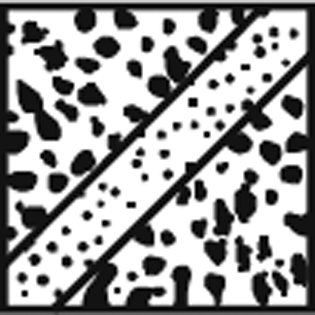 Figure A1-3 3.2.3. Use of runways and taxiways 3.2.3.1. A horizontal white dumb-bell (Figure A1-4) when displayed in a signal area indicates that aircraft are required to land, take off and taxi on runways and taxiways only. 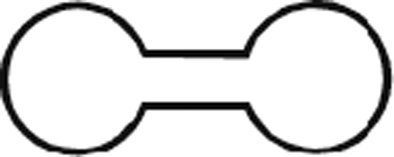 Figure A1-4 3.2.3.2. The same horizontal white dumb-bell as in 3.2.3.1 but with a black bar placed perpendicular to the shaft across each circular portion of the dumb-bell (Figure A1-5) when displayed in a signal area indicates that aircraft are required to land and take off on runways only, but other manoeuvres need not be confined to runways and taxiways. 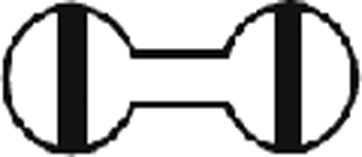 Figure A1-5 3.2.4. Closed runways or taxiways 3.2.4.1. Crosses of a single contrasting colour, white on runways and yellow on taxiways (Figure A1-6), displayed horizontally on runways and taxiways or parts thereof indicate an area unfit for movement of aircraft. 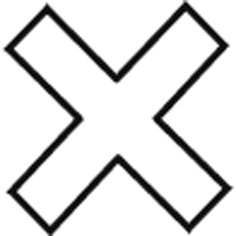 Figure A1-6 3.2.5. Directions for landing or take-off 3.2.5.1. A horizontal white or orange landing T (Figure A1-7) indicates the direction to be used by aircraft for landing and take-off, which shall be in a direction parallel to the shaft of the T towards the cross arm. When used at night, the landing T shall be either illuminated or outlined in white lights. 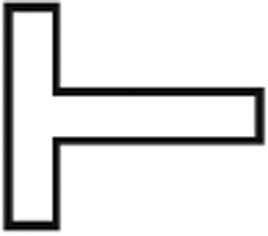 Figure A1-7 3.2.5.2. A set of two digits (Figure A1-8) displayed vertically at or near the aerodrome control tower indicates to aircraft on the manoeuvring area the direction for take-off, expressed in units of 10 degrees to the nearest 10 degrees of the magnetic compass.  Figure A1-8 3.2.6. Right-hand traffic 3.2.6.1. When displayed in a signal area, or horizontally at the end of the runway or strip in use, a right-hand arrow of conspicuous colour (Figure A1-9) indicates that turns are to be made to the right before landing and after take-off. 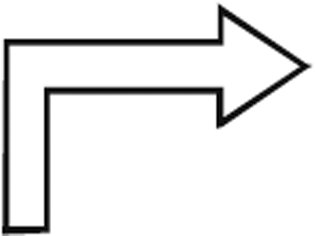 Figure A1-9 3.2.7. Air traffic services reporting office 3.2.7.1. The letter C displayed vertically in black against a yellow background (Figure A1-10) indicates the location of the air traffic services reporting office. 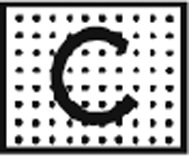 Figure A1-10 3.2.8. Sailplane flights in operation 3.2.8.1. A double white cross displayed horizontally (Figure A1-11) in the signal area indicates that the aerodrome is being used by sailplanes and that sailplane flights are being performed. 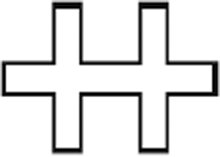 Figure A1-11 4. MARSHALLING SIGNALS 4.1. From a signalman/marshaller to an aircraft 4.1.1. The signals for use by the signalman/marshaller, with hands illuminated as necessary to facilitate observation by the pilot, and facing the aircraft in a position shall be: (a) for fixed-wing aircraft, on left side of aircraft, where best seen by the pilot; and (b) for helicopters, where the signalman/marshaller can best be seen by the pilot. *[applicable until 30 April 2025 – Regulation (EU) 2016/1185]* (b) for helicopters /VTOL-capable aircraft, where the signalman/marshaller can best be seen by the pilot. *[applicable from 1 May 2025 – Regulation (EU) 2024/1111]* 4.1.2. Prior to using the following signals, the signalman/marshaller shall ascertain that the area within which an aircraft is to be guided is clear of objects which the aircraft, in complying with [SERA.3301(a)](#_DxCrossRefBm413419287), might otherwise strike. <table border="1" cellpadding="0" cellspacing="0" width="603"><tr><td width="217"><p><div class="image-container"><img alt="EASA EAR image" src="/static/files/file_p9d2qxTG4nH/image014.png"/></div></p></td><td valign="top" width="386"><p>1. Wingwalker/guide<a href="#_ftn22">[22]</a></p><p>Raise right hand above head level with wand pointing up; move left-hand wand pointing down toward body.</p></td></tr><tr><td width="217"><p align="center"><div class="image-container"><img alt="EASA EAR image" src="/static/files/file_p9d2qxTG4nH/image015.png"/></div></p></td><td valign="top" width="386"><p>2. Identify gate</p><p>Raise fully extended arms straight above head with wands pointing up.</p></td></tr><tr><td width="217"><p align="center"><div class="image-container"><img alt="EASA EAR image" src="/static/files/file_p9d2qxTG4nH/image016.png"/></div></p></td><td valign="top" width="386"><p>3. Proceed to next signalman/marshaller or as directed by tower/ground control</p><p>Point both arms upward; move and extend arms outward to sides of body and point with wands to direction of next signalman/marshaller or taxi area.</p></td></tr><tr><td width="217"><p align="center"><div class="image-container"><img alt="EASA EAR image" src="/static/files/file_p9d2qxTG4nH/image017.png"/></div></p></td><td valign="top" width="386"><p>4. Straight ahead</p><p>Bend extended arms at elbows and move wands up and down from chest height to head.</p></td></tr><tr><td width="217"><p align="center"><div class="image-container"><img alt="EASA EAR image" src="/static/files/file_p9d2qxTG4nH/image018.png"/></div></p></td><td valign="top" width="386"><p></p><p><b>5(a) Turn left (from pilot’s point of view)</b></p><p>With right arm and wand extended at a 90-degree angle to body, make ‘come ahead’ signal with left hand. The rate of signal motion indicates to pilot the rate of aircraft turn.</p></td></tr><tr><td width="217"><p align="center"><div class="image-container"><img alt="EASA EAR image" src="/static/files/file_p9d2qxTG4nH/image019.png"/></div></p></td><td valign="top" width="386"><p><b>5(b) Turn right (from pilot’s point of view)</b></p><p>With left arm and wand extended at a 90-degree angle to body, make ‘come ahead’ signal with right hand. The rate of signal motion indicates to pilot the rate of aircraft turn.</p></td></tr><tr><td width="217"><p align="center"><div class="image-container"><img alt="EASA EAR image" src="/static/files/file_p9d2qxTG4nH/image020.png"/></div></p></td><td valign="top" width="386"><p><b>6(a) Normal stop</b></p><p>Fully extend arms and wands at a 90-degree angle to sides and slowly move to above head until wands cross.</p></td></tr><tr><td width="217"><p align="center"><div class="image-container"><img alt="EASA EAR image" src="/static/files/file_p9d2qxTG4nH/image021.png"/></div></p></td><td valign="top" width="386"><p><b>6(b) Emergency stop</b></p><p>Abruptly extend arms and wands to top of head, crossing wands.</p></td></tr><tr><td width="217"><p align="center"><div class="image-container"><img alt="EASA EAR image" src="/static/files/file_p9d2qxTG4nH/image022.png"/></div></p></td><td valign="top" width="386"><p><b>7(a) Set brakes</b></p><p>Raise hand just above shoulder height with open palm. Ensuring eye contact with flight crew, close hand into a fist. <i>Do not</i> move until receipt of ‘thumbs up’ acknowledgement from flight crew.</p></td></tr><tr><td width="217"><p align="center"><div class="image-container"><img alt="EASA EAR image" src="/static/files/file_p9d2qxTG4nH/image023.png"/></div></p></td><td valign="top" width="386"><p><b>7(b) Release brakes</b></p><p>Raise hand just above shoulder height with hand closed in a fist. Ensuring eye contact with flight crew, open palm. <i>Do not</i> move until receipt of ‘thumbs up’ acknowledgement from flight crew.</p></td></tr><tr><td width="217"><p align="center"><div class="image-container"><img alt="EASA EAR image" src="/static/files/file_p9d2qxTG4nH/image024.png"/></div></p></td><td valign="top" width="386"><p><b>8(a) Chocks inserted</b></p><p>With arms and wands fully extended above head, move wands inward in a ‘jabbing’ motion until wands touch. <i>Ensure</i> acknowledgement is received from flight crew.</p></td></tr><tr><td width="217"><p align="center"><div class="image-container"><img alt="EASA EAR image" src="/static/files/file_p9d2qxTG4nH/image025.png"/></div></p></td><td valign="top" width="386"><p><b>8(b) Chocks removed</b></p><p>With arms and wands fully extended above head, move wands outward in a ‘jabbing’ motion. <i>Do not</i> remove chocks until authorised by flight crew.</p></td></tr><tr><td width="217"><p align="center"><div class="image-container"><img alt="EASA EAR image" src="/static/files/file_p9d2qxTG4nH/image026.png"/></div></p></td><td valign="top" width="386"><p><b>9. Start engine(s)</b></p><p>Raise right arm to head level with wand pointing up and start a circular motion with hand; at the same time, with left arm raised above head level, point to engine to be started.</p></td></tr><tr><td width="217"><p align="center"><div class="image-container"><img alt="EASA EAR image" src="/static/files/file_p9d2qxTG4nH/image027.png"/></div></p></td><td valign="top" width="386"><p><b>10. Cut engines</b></p><p>Extend arm with wand forward of body at shoulder level; move hand and wand to top of left shoulder and draw wand to top of right shoulder in a slicing motion across throat.</p></td></tr><tr><td width="217"><p align="center"><div class="image-container"><img alt="EASA EAR image" src="/static/files/file_p9d2qxTG4nH/image028.png"/></div></p></td><td valign="top" width="386"><p><b>11. Slow down</b></p><p>Move extended arms downwards in a ‘patting’ gesture, moving wands up and down from waist to knees.</p></td></tr><tr><td width="217"><p align="center"><div class="image-container"><img alt="EASA EAR image" src="/static/files/file_p9d2qxTG4nH/image029.png"/></div></p></td><td valign="top" width="386"><p><b>12. Slow down engine(s) on indicated side</b></p><p>With arms down and wands toward ground, wave either <i>right</i> or <i>left</i> wand up and down indicating engine(s) on <i>left</i> or <i>right</i> side respectively should be slowed down.</p></td></tr><tr><td width="217"><p align="center"><div class="image-container"><img alt="EASA EAR image" src="/static/files/file_p9d2qxTG4nH/image030.png"/></div></p></td><td valign="top" width="386"><p><b>13. Move back</b></p><p>With arms in front of body at waist height, rotate arms in a forward motion. To stop rearward movement, use signal 6(a) or 6(b).</p></td></tr><tr><td width="217"><p align="center"><div class="image-container"><img alt="EASA EAR image" src="/static/files/file_p9d2qxTG4nH/image031.png"/></div></p></td><td valign="top" width="386"><p><b>14(a) Turns while backing (for tail to starboard)</b></p><p>Point left arm with wand down and bring right arm from overhead vertical position to horizontal forward position, repeating right-arm movement.</p></td></tr><tr><td width="217"><p align="center"><div class="image-container"><img alt="EASA EAR image" src="/static/files/file_p9d2qxTG4nH/image032.png"/></div></p></td><td valign="top" width="386"><p><b>14(b) Turns while backing (for tail to port)</b></p><p>Point right arm with wand down and bring left arm from overhead vertical position to horizontal forward position, repeating left-arm movement.</p></td></tr><tr><td width="217"><p align="center"><div class="image-container"><img alt="EASA EAR image" src="/static/files/file_p9d2qxTG4nH/image033.png"/></div></p></td><td valign="top" width="386"><p><b>15. Affirmative/all clear</b><a href="#_ftn23">[23]</a></p><p>Raise right arm to head level with wand pointing up or display hand with ‘thumbs up’; left arm remains at side by knee.</p></td></tr><tr><td width="217"><p align="center"><div class="image-container"><img alt="EASA EAR image" src="/static/files/file_p9d2qxTG4nH/image034.png"/></div></p></td><td valign="top" width="386"><p><b>16. <i>Hover</i></b><a href="#_ftn24"><i><b>[24]</b></i></a></p><p>Fully extend arms and wands at a 90-degree angle to sides.</p></td></tr><tr><td width="217"><p align="center"><div class="image-container"><img alt="EASA EAR image" src="/static/files/file_p9d2qxTG4nH/image035.png"/></div></p></td><td valign="top" width="386"><p><b>17. Move upwards</b><a href="#_ftn25">[25]</a></p><p>Fully extend arms and wands at a 90-degree angle to sides and, with palms turned up, move hands upwards. Speed of movement indicates rate of ascent.</p></td></tr><tr><td width="217"><p align="center"><div class="image-container"><img alt="EASA EAR image" src="/static/files/file_p9d2qxTG4nH/image036.png"/></div></p></td><td valign="top" width="386"><p></p><p><b>18. Move downwards</b><a href="#_ftn26">[26]</a></p><p>Fully extend arms and wands at a 90-degree angle to sides and, with palms turned down, move hands downwards. Speed of movement indicates rate of descent.</p></td></tr><tr><td width="217"><p align="center"><div class="image-container"><img alt="EASA EAR image" src="/static/files/file_p9d2qxTG4nH/image037.png"/></div></p></td><td valign="top" width="386"><p><b>19(a) Move horizontally left (from pilot’s point of view)</b><a href="#_ftn27">[27]</a></p><p>Extend arm horizontally at a 90-degree angle to right side of body. Move other arm in same direction in a sweeping motion.</p></td></tr></table> <table border="1" cellpadding="0" cellspacing="0" width="603"><tr><td width="218"><p align="center"><div class="image-container"><img alt="EASA EAR image" src="/static/files/file_p9d2qxTG4nH/image038.png"/></div></p></td><td valign="top" width="385"><p><b>19(b) Move horizontally right (from pilot’s point of view)</b><a href="#_ftn28">[28]</a></p><p>Extend arm horizontally at a 90-degree angle to left side of body. Move other arm in same direction in a sweeping motion.</p></td></tr><tr><td width="218"><p align="center"><div class="image-container"><img alt="EASA EAR image" src="/static/files/file_p9d2qxTG4nH/image039.png"/></div></p></td><td valign="top" width="385"><p><b>20. <i>Land</i></b><a href="#_ftn29"><i><b>[29]</b></i></a></p><p>Cross arms with wands downwards and in front of body.</p></td></tr><tr><td width="218"><p align="center"><div class="image-container"><img alt="EASA EAR image" src="/static/files/file_p9d2qxTG4nH/image040.png"/></div></p></td><td valign="top" width="385"><p><b>21. Hold position/stand by</b></p><p>Fully extend arms and wands downwards at a 45-degree angle to sides. Hold position until aircraft is clear for next manoeuvre.</p></td></tr><tr><td width="218"><p align="center"><div class="image-container"><img alt="EASA EAR image" src="/static/files/file_p9d2qxTG4nH/image041.png"/></div></p></td><td valign="top" width="385"><p><b>22. Dispatch aircraft</b></p><p>Perform a standard salute with right hand and/or wand to dispatch the aircraft. Maintain eye contact with flight crew until aircraft has begun to taxi.</p></td></tr><tr><td width="218"><p align="center"><div class="image-container"><img alt="EASA EAR image" src="/static/files/file_p9d2qxTG4nH/image042.png"/></div></p></td><td valign="top" width="385"><p><b>23. Do not touch controls (technical/servicing communication signal)</b></p><p>Extend right arm fully above head and close fist or hold wand in horizontal position; left arm remains at side by knee.</p></td></tr><tr><td width="218"><p align="center"><div class="image-container"><img alt="EASA EAR image" src="/static/files/file_p9d2qxTG4nH/image043.png"/></div></p></td><td valign="top" width="385"><p><b>24. Connect ground power (technical/servicing communication signal)</b></p><p>Hold arms fully extended above head; open left hand horizontally and move finger tips of right hand into and touch open palm of left hand (forming a ‘T’). At night, illuminated wands can also be used to form the ‘T’ above head.</p></td></tr><tr><td width="218"><p align="center"><div class="image-container"><img alt="EASA EAR image" src="/static/files/file_p9d2qxTG4nH/image044.png"/></div></p></td><td valign="top" width="385"><p>25. Disconnect power (technical/servicing communication signal)</p><p>Hold arms fully extended above head with finger tips of right hand touching open horizontal palm of left hand (forming a ‘T’); then move right hand away from the left. <i>Do not</i> disconnect power until authorised by flight crew. At night, illuminated wands can also be used to form the ‘T’ above head.</p></td></tr><tr><td width="218"><p align="center"><div class="image-container"><img alt="EASA EAR image" src="/static/files/file_p9d2qxTG4nH/image045.png"/></div></p></td><td valign="top" width="385"><p><b>26. Negative (technical/servicing communication signal)</b></p><p>Hold right arm straight out at 90 degrees from shoulder and point wand down to ground or display hand with ‘thumbs down’; left hand remains at side by knee.</p></td></tr><tr><td valign="top" width="218"><p><div class="image-container"><img alt="EASA EAR image" src="/static/files/file_p9d2qxTG4nH/image046.png"/></div></p></td><td valign="top" width="385"><p><b>27. Establish communication via interphone (technical/servicing communication signal)</b></p><p>Extend both arms at 90 degrees from body and move hands to cup both ears.</p></td></tr><tr><td width="218"><p align="center"><div class="image-container"><img alt="EASA EAR image" src="/static/files/file_p9d2qxTG4nH/image047.png"/></div></p></td><td valign="top" width="385"><p><b>28. Open/close stairs (technical/servicing communication signal)</b><a href="#_ftn30">[30]</a></p><p>With right arm at side and left arm raised above head at a 45-degree angle, move right arm in a sweeping motion towards top of left shoulder.</p></td></tr></table> 4.2. From the pilot of an aircraft to a signalman/marshaller 4.2.1. These signals shall be used by a pilot in the cockpit with hands plainly visible to the signalman/marshaller, and illuminated as necessary to facilitate observation by the signalman/marshaller. <table border="1" cellpadding="0" cellspacing="0" width="603"><tr><td width="378"><p align="center"><div class="image-container"><img alt="EASA EAR image" src="/static/files/file_p9d2qxTG4nH/image048.png"/></div></p></td><td valign="top" width="226"><p>(a) Brakes engaged: raise arm and hand, with fingers extended, horizontally in front of face, then clench fist.</p></td></tr><tr><td width="378"><p align="center"><div class="image-container"><img alt="EASA EAR image" src="/static/files/file_p9d2qxTG4nH/image049.png"/></div></p></td><td valign="top" width="226"><p>(b) Brakes released: raise arm, with fist clenched, horizontally in front of face, then extend fingers.</p></td></tr><tr><td width="378"><p align="center"><div class="image-container"><img alt="EASA EAR image" src="/static/files/file_p9d2qxTG4nH/image050.png"/></div></p></td><td valign="top" width="226"><p>(c) Insert chocks: arms extended, palms outwards, move hands inwards to cross in front of face.</p></td></tr><tr><td width="378"><p align="center"><div class="image-container"><img alt="EASA EAR image" src="/static/files/file_p9d2qxTG4nH/image051.png"/></div></p></td><td valign="top" width="226"><p>(d) Remove chocks: hands crossed in front of face, palms outwards, move arms outwards.</p></td></tr><tr><td width="378"><p align="center"><div class="image-container"><img alt="EASA EAR image" src="/static/files/file_p9d2qxTG4nH/image052.png"/></div></p></td><td valign="top" width="226"><p>(e) Ready to start engine(s): Raise the appropriate number of fingers on one hand indicating the number of the engine to be started.</p></td></tr></table> 4.3. Technical/servicing communication signals 4.3.1. Manual signals shall only be used when verbal communication is not possible with respect to technical/servicing communication signals. 4.3.2. Signalmen/marshallers shall ensure that an acknowledgement is received from the flight crew with respect to technical/servicing communication signals. 5. STANDARD EMERGENCY HAND SIGNALS 5.1. The following hand signals are established as the minimum required for emergency communication between the ARFF incident commander/ARFF firefighters and the cockpit and/or cabin crews of the incident aircraft. ARFF emergency hand signals should be given from the left front side of the aircraft for the cockpit crew. <table border="1" cellpadding="0" cellspacing="0" width="603"><tr><td width="305"><p align="center"><div class="image-container"><img alt="EASA EAR image" src="/static/files/file_p9d2qxTG4nH/image053.png"/></div></p></td><td valign="top" width="298"><p></p><p><b>1. Recommend evacuation</b></p><p>Evacuation recommended based on aircraft rescue and fire-fighting and Incident Commander’s assessment of external situation.</p><p>Arm extended from body, and held horizontal with hand upraised at eye level. Execute beckoning arm motion angled backward. Non-beckoning arm held against body.</p><p>Night — same with wands.</p></td></tr><tr><td width="305"><p align="center"><div class="image-container"><img alt="EASA EAR image" src="/static/files/file_p9d2qxTG4nH/image054.png"/></div></p></td><td valign="top" width="298"><p></p><p><b>2. Recommend stop</b></p><p>Recommend evacuation in progress be halted. Stop aircraft movement or other activity in progress.</p><p>Arms in front of head — Crossed at wrists</p><p>Night — same with wands.</p></td></tr><tr><td width="305"><p align="center"><div class="image-container"><img alt="EASA EAR image" src="/static/files/file_p9d2qxTG4nH/image055.png"/></div></p></td><td valign="top" width="298"><p></p><p><b>3. Emergency contained</b></p><p>No outside evidence of dangerous conditions or ‘all-clear.’</p><p>Arms extended outward and down at a 45 degree angle. Arms moved inward below waistline simultaneously until wrists crossed, then extended outward to starting position.</p><p>Night — same with wands.</p></td></tr><tr><td width="305"><p align="center"><div class="image-container"><img alt="EASA EAR image" src="/static/files/file_p9d2qxTG4nH/image056.png"/></div></p></td><td valign="top" width="298"><p></p><p><b>4. Fire</b></p><p>Move right-hand in a ‘fanning’ motion from shoulder to knee, while at the same time pointing with left hand to area of fire.</p><p>Night — same with wands.</p></td></tr></table> --- [[20]](#_ftnref20) Clearances to land and to taxi will be given in due course. [[21]](#_ftnref21) Clearances to land and to taxi will be given in due course. [[22]](#_ftnref22) This signal provides an indication by a person positioned at the aircraft wing tip, to the pilot/marshaller/push-back operator, that the aircraft movement on/off a parking position would be unobstructed. [[23]](#_ftnref23) This signal is also used as a technical/servicing communication signal. [[25]](#_ftnref25) For use to hovering helicopters. [applicable until 30 April 2025 – Regulation (EU) 2016/1185] For use to hovering helicopters / VTOL-capable aircraft. *[applicable from 1 May 2025 – Regulation (EU) 2024/1111]* [[26]](#_ftnref26) For use to hovering helicopters. [applicable until 30 April 2025 – Regulation (EU) 2016/1185] For use to hovering helicopters / VTOL-capable aircraft. *[applicable from 1 May 2025 – Regulation (EU) 2024/1111]* [[30]](#_ftnref30) This signal is intended mainly for aircraft with the set of integral stairs at the front.
*Regulation (EU) 2024/1111* **1. DISTRESS AND URGENCY SIGNALS** 1.1. General 1.1.1. Notwithstanding the provisions in 1.2 and 1.3, an aircraft in distress shall use any means at its disposal to attract attention, make known its position and obtain help. 1.1.2. The telecommunication transmission procedures for the distress and urgency signals shall be in accordance with [Section 14](#_DxCrossRefBm558475655). 1.2. Distress signals 1.2.1. The following signals, used either together or separately, mean that grave and imminent danger threatens, and immediate assistance is requested: (a) a signal made by radiotelegraphy or by any other signalling method consisting of the group SOS (… — — — … in the Morse Code); (b) a radiotelephony distress signal consisting of the spoken word MAYDAY; (c) a distress message sent via data link which transmits the intent of the word MAYDAY; (d) rockets or shells throwing red lights, fired one at a time at short intervals; (e) a parachute flare showing a red light; (f) setting of the transponder to Mode A Code 7700. 1.3. Urgency signals 1.3.1. The following signals, used either together or separately, mean that an aircraft wishes to give notice of difficulties which compel it to land without requiring immediate assistance: (a) the repeated switching on and off of the landing lights; or (b) the repeated switching on and off of the navigation lights in such manner as to be distinct from flashing navigation lights. 1.3.2. The following signals, used either together or separately, mean that an aircraft has a very urgent message to transmit concerning the safety of a ship, aircraft or other vehicle, or of some person on board or within sight: (a) a signal made by radiotelegraphy or by any other signalling method consisting of the group XXX (—..— —..— —..— in the Morse Code); (b) a radiotelephony urgency signal consisting of the spoken words PAN, PAN; (c) an urgency message sent via data link which transmits the intent of the words PAN, PAN. **2. VISUAL SIGNALS USED TO WARN AN UNAUTHORISED AIRCRAFT FLYING IN OR ABOUT TO ENTER A RESTRICTED, PROHIBITED OR DANGER AREA** 2.1. When visual signals are used to warn unauthorised aircraft flying in or about to enter a restricted, prohibited or danger area by day and by night, a series of projectiles discharged from the ground at intervals of 10 seconds, each showing, on bursting, red and green lights or stars shall indicate to an unauthorised aircraft that it is flying in or about to enter a restricted, prohibited or danger area, and that the aircraft is to take such remedial action as may be necessary. **3. SIGNALS FOR AERODROME TRAFFIC** 3.1. Light and pyrotechnic signals 3.1.1. Instructions for aircraft ***Table AP 1-1*** <table bgcolor="#d9d9d9" cellpadding="7" cellspacing="0"> <col/> <col/> <col/> <col/> <thead> <tr valign="top"> <td bgcolor="#808080" colspan="2" rowspan="2"><p align="center"> <b>Light</b></p> </td> <td bgcolor="#808080" colspan="2"><p align="center"> <b>From Aerodrome Control to:</b></p> </td> </tr> <tr valign="top"> <td bgcolor="#808080"><p align="center"> <b>Aircraft in flight</b></p> </td> <td bgcolor="#808080"><p align="center"> <b>Aircraft on the ground</b></p> </td> </tr> </thead> <tbody> <tr valign="top"> <td bgcolor="#d9d9d9" rowspan="5"><p align="left"> Directed towards aircraft concerned</p> <p align="left">(see Figure A1-1).</p> </td> <td bgcolor="#d9d9d9"><p align="left"> Steady green</p> </td> <td bgcolor="#d9d9d9"><p align="left"> Cleared to land</p> </td> <td bgcolor="#d9d9d9"><p align="left"> Cleared for take-off</p> </td> </tr> <tr valign="top"> <td bgcolor="#d9d9d9"><p align="left"> Steady red</p> </td> <td bgcolor="#d9d9d9"><p align="left"> Give way to other aircraft and continue circling</p> </td> <td bgcolor="#d9d9d9"><p align="left"> Stop</p> </td> </tr> <tr valign="top"> <td bgcolor="#d9d9d9"><p align="left"> Series of green flashes</p> </td> <td bgcolor="#d9d9d9"><p align="left"> Return for landing<a href="#_ftn20" name="_ftnref20">[20]</a></p> </td> <td bgcolor="#d9d9d9"><p align="left"> Cleared to taxi</p> </td> </tr> <tr valign="top"> <td bgcolor="#d9d9d9"><p align="left"> Series of red flashes</p> </td> <td bgcolor="#d9d9d9"><p align="left"> Aerodrome unsafe, do not land</p> </td> <td bgcolor="#d9d9d9"><p align="left"> Taxi clear of landing area in use</p> </td> </tr> <tr valign="top"> <td bgcolor="#d9d9d9"><p align="left"> Series of white flashes</p> </td> <td bgcolor="#d9d9d9"><p align="left"> Land at this aerodrome and proceed to apron<a href="#_ftn21" name="_ftnref21">[21]</a></p> </td> <td bgcolor="#d9d9d9"><p align="left"> Return to starting point on the aerodrome</p> </td> </tr> <tr valign="top"> <td bgcolor="#d9d9d9" colspan="2"><p align="left"> Red pyrotechnic</p> </td> <td bgcolor="#d9d9d9"><p align="left"> Notwithstanding any previous instructions, do not land for the time being</p> </td> <td bgcolor="#d9d9d9"><p align="left"> <br/> </p> </td> </tr> </tbody> </table> ***Figure A1-1*** 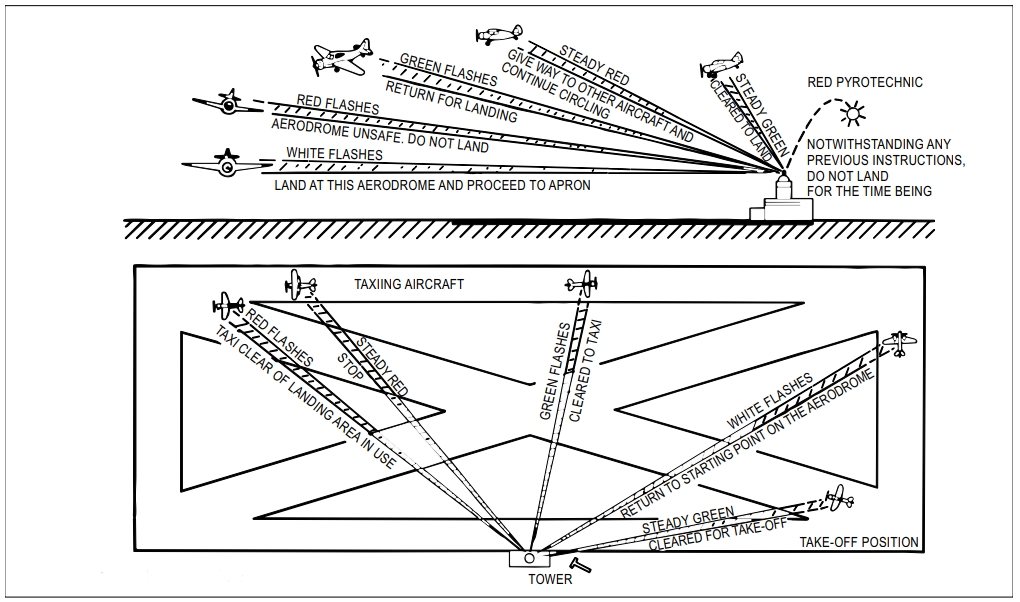 3.1.2. Acknowledgement by an aircraft (a) When in flight: (1) during the hours of daylight: — by rocking the aircraft’s wings, except for the base and final legs of the approach; (2) during the hours of darkness: — by flashing on and off twice the aircraft’s landing lights or, if not so equipped, by switching on and off twice its navigation lights. (b) When on the ground: (1) during the hours of daylight: — by moving the aircraft’s ailerons or rudder; (2) during the hours of darkness: — by flashing on and off twice the aircraft’s landing lights or, if not so equipped, by switching on and off twice its navigation lights. 3.1.3. Instructions for ground vehicles or pedestrians (a) When communications by a system of visual signals is deemed to be adequate, or in the case of radio communication failure, the signals given hereunder shall have the meaning indicated in the table below. <table bgcolor="#d9d9d9" cellpadding="7" cellspacing="0"> <col/> <col/> <tr valign="top"> <td bgcolor="#808080"><p> <b>Light signal from aerodrome control</b></p> </td> <td bgcolor="#808080"><p> <b>Meaning</b></p> </td> </tr> <tr valign="top"> <td bgcolor="#808080"><p> <b>Green flashes</b></p> </td> <td bgcolor="#d9d9d9"><p> Permission to cross landing area or to move onto taxiway</p> </td> </tr> <tr valign="top"> <td bgcolor="#808080"><p> <b>Steady red</b></p> </td> <td bgcolor="#d9d9d9"><p> Stop</p> </td> </tr> <tr valign="top"> <td bgcolor="#808080"><p> <b>Red flashes</b></p> </td> <td bgcolor="#d9d9d9"><p> Move off the landing area or taxiway and watch out for aircraft</p> </td> </tr> <tr valign="top"> <td bgcolor="#808080"><p> <b>White flashes</b></p> </td> <td bgcolor="#d9d9d9"><p> Vacate manoeuvring area in accordance with local instructions</p> </td> </tr> </table> (b) In emergency conditions or if the signals in point (a) are not observed, the signal given hereunder shall be used for runways or taxiways equipped with a lighting system and shall have the meaning indicated in the table below. <table bgcolor="#d9d9d9" cellpadding="7" cellspacing="0"> <col/> <col/> <tr valign="top"> <td bgcolor="#808080"><p> <b>Light signal from aerodrome control</b></p> </td> <td bgcolor="#808080"><p> <b>Meaning</b></p> </td> </tr> <tr valign="top"> <td bgcolor="#808080"><p> <b>Flashing runway or taxiway lights</b></p> </td> <td bgcolor="#d9d9d9"><p> Vacate the runway and observe the tower for light signal</p> </td> </tr> </table> 3.2. Visual ground signals 3.2.1. Prohibition of landing 3.2.1.1. A horizontal red square panel with yellow diagonals (Figure A1-2) when displayed in a signal area indicates that landings are prohibited and that the prohibition is liable to be prolonged.  ***Figure A1-2*** 3.2.2. Need for special precautions while approaching or landing 3.2.2.1. A horizontal red square panel with one yellow diagonal (Figure A1-3) when displayed in a signal area indicates that owing to the bad state of the manoeuvring area, or for any other reason, special precautions must be observed in approaching to land or in landing. 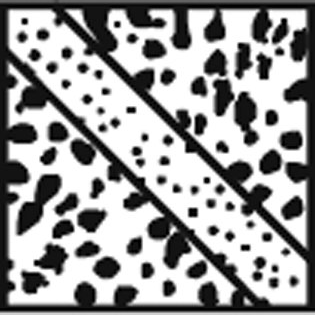 ***Figure A1-3*** 3.2.3. Use of runways and taxiways 3.2.3.1. A horizontal white dumb-bell (Figure A1-4) when displayed in a signal area indicates that aircraft are required to land, take off and taxi on runways and taxiways only. 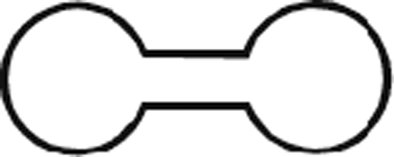 ***Figure A1-4*** 3.2.3.2. The same horizontal white dumb-bell as in 3.2.3.1 but with a black bar placed perpendicular to the shaft across each circular portion of the dumb-bell (Figure A1-5) when displayed in a signal area indicates that aircraft are required to land and take off on runways only, but other manoeuvres need not be confined to runways and taxiways. 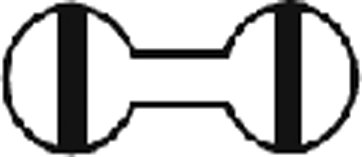 ***Figure A1-5*** 3.2.4. Closed runways or taxiways 3.2.4.1. Crosses of a single contrasting colour, white on runways and yellow on taxiways (Figure A1-6), displayed horizontally on runways and taxiways or parts thereof indicate an area unfit for movement of aircraft. 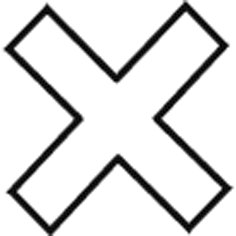 ***Figure A1-6*** 3.2.5. Directions for landing or take-off 3.2.5.1. A horizontal white or orange landing T (Figure A1-7) indicates the direction to be used by aircraft for landing and take-off, which shall be in a direction parallel to the shaft of the T towards the cross arm. When used at night, the landing T shall be either illuminated or outlined in white lights. 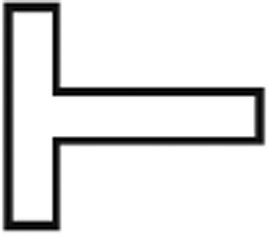 ***Figure A1-7*** 3.2.5.2. A set of two digits (Figure A1-8) displayed vertically at or near the aerodrome control tower indicates to aircraft on the manoeuvring area the direction for take-off, expressed in units of 10 degrees to the nearest 10 degrees of the magnetic compass.  ***Figure A1-8*** 3.2.6. Right-hand traffic 3.2.6.1. When displayed in a signal area, or horizontally at the end of the runway or strip in use, a right-hand arrow of conspicuous colour (Figure A1-9) indicates that turns are to be made to the right before landing and after take-off. 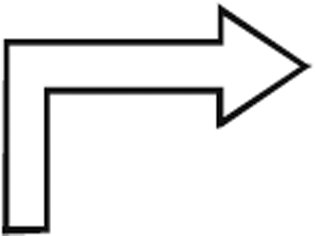 ***Figure A1-9*** 3.2.7. Air traffic services reporting office 3.2.7.1. The letter C displayed vertically in black against a yellow background (Figure A1-10) indicates the location of the air traffic services reporting office. 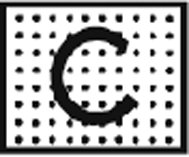 ***Figure A1-10*** 3.2.8. Sailplane flights in operation 3.2.8.1. A double white cross displayed horizontally (Figure A1-11) in the signal area indicates that the aerodrome is being used by sailplanes and that sailplane flights are being performed. 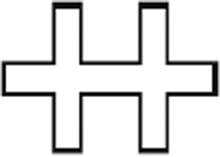 ***Figure A1-11*** **4. MARSHALLING SIGNALS** 4.1. From a signalman/marshaller to an aircraft 4.1.1. The signals for use by the signalman/marshaller, with hands illuminated as necessary to facilitate observation by the pilot, and facing the aircraft in a position shall be: (a) for fixed-wing aircraft, on left side of aircraft, where best seen by the pilot; and (b) for helicopters /VTOL-capable aircraft, where the signalman/marshaller can best be seen by the pilot. 4.1.2. Prior to using the following signals, the signalman/marshaller shall ascertain that the area within which an aircraft is to be guided is clear of objects which the aircraft, in complying with [SERA.3301(a)](#_DxCrossRefBm558475479), might otherwise strike. <table cellpadding="7" cellspacing="0"> <col/> <col/> <tr> <td><p align="center"> <img align="bottom" border="0" name="Image3" src="source-marked_html_71a32249.png"/> </p> </td> <td valign="top"><p> <br/> <br/> </p> <p> <b>1. Wingwalker/guide</b><a href="#_ftn22" name="_ftnref22">[22]</a></p> <p>Raise right hand above head level with wand pointing up; move left-hand wand pointing down toward body.</p> </td> </tr> <tr> <td><p align="center"> <img align="bottom" border="0" name="Picture 13" src="source-marked_html_994fca6b.png"/> </p> </td> <td valign="top"><p> <br/> <br/> </p> <p> <b>2. Identify gate</b></p> <p>Raise fully extended arms straight above head with wands pointing up.</p> </td> </tr> <tr> <td><p align="center"> <img align="bottom" border="0" name="Picture 14" src="source-marked_html_b5d9303c.png"/> </p> </td> <td valign="top"><p> <br/> <br/> </p> <p> <b>3. Proceed to next signalman/marshaller or as directed by tower/ground control</b></p> <p>Point both arms upward; move and extend arms outward to sides of body and point with wands to direction of next signalman/marshaller or taxi area.</p> </td> </tr> <tr> <td><p align="center"> <img align="bottom" border="0" name="Image4" src="source-marked_html_6fd4e7ab.png"/> </p> </td> <td valign="top"><p> <br/> <br/> </p> <p> <b>4. Straight ahead</b></p> <p>Bend extended arms at elbows and move wands up and down from chest height to head.</p> </td> </tr> <tr> <td><p align="center"> <img align="bottom" border="0" name="Picture 16" src="source-marked_html_1babcce0.png"/> </p> </td> <td valign="top"><p> <br/> <br/> </p> <p> <b>5(a) Turn left (from pilot’s point of view)</b></p> <p>With right arm and wand extended at a 90-degree angle to body, make ‘come ahead’ signal with left hand. The rate of signal motion indicates to pilot the rate of aircraft turn.</p> </td> </tr> <tr> <td><p align="center"> <img align="bottom" border="0" name="Picture 17" src="source-marked_html_b471b8c8.png"/> </p> </td> <td valign="top"><p> <br/> <br/> </p> <p> <b>5(b) Turn right (from pilot’s point of view)</b></p> <p>With left arm and wand extended at a 90-degree angle to body, make ‘come ahead’ signal with right hand. The rate of signal motion indicates to pilot the rate of aircraft turn.</p> </td> </tr> <tr> <td><p align="center"> <img align="bottom" border="0" name="Picture 18" src="source-marked_html_ecc8d3f3.png"/> </p> </td> <td valign="top"><p> <br/> <br/> </p> <p> <b>6(a) Normal stop</b></p> <p>Fully extend arms and wands at a 90-degree angle to sides and slowly move to above head until wands cross.</p> </td> </tr> <tr> <td><p align="center"> <img align="bottom" border="0" name="Picture 19" src="source-marked_html_22ec41c5.png"/> </p> </td> <td valign="top"><p> <br/> <br/> </p> <p> <b>6(b) Emergency stop</b></p> <p>Abruptly extend arms and wands to top of head, crossing wands.</p> </td> </tr> <tr> <td><p align="center"> <img align="bottom" border="0" name="Picture 20" src="source-marked_html_6d386467.png"/> </p> </td> <td valign="top"><p> <br/> <br/> </p> <p> <b>7(a) Set brakes</b></p> <p>Raise hand just above shoulder height with open palm. Ensuring eye contact with flight crew, close hand into a fist. <i>Do not</i> move until receipt of ‘thumbs up’ acknowledgement from flight crew.</p> </td> </tr> <tr> <td><p align="center"> <img align="bottom" border="0" name="Picture 21" src="source-marked_html_2645ddb6.png"/> </p> </td> <td valign="top"><p> <br/> <br/> </p> <p> <b>7(b) Release brakes</b></p> <p>Raise hand just above shoulder height with hand closed in a fist. Ensuring eye contact with flight crew, open palm. <i>Do not</i> move until receipt of ‘thumbs up’ acknowledgement from flight crew.</p> </td> </tr> <tr> <td><p align="center"> <img align="bottom" border="0" name="Picture 22" src="source-marked_html_a9979daf.png"/> </p> </td> <td valign="top"><p> <br/> <br/> </p> <p> <b>8(a) Chocks inserted</b></p> <p>With arms and wands fully extended above head, move wands inward in a ‘jabbing’ motion until wands touch. <i>Ensure</i> acknowledgement is received from flight crew.</p> </td> </tr> <tr> <td><p align="center"> <img align="bottom" border="0" name="Picture 23" src="source-marked_html_51b6421e.png"/> </p> </td> <td valign="top"><p> <br/> <br/> </p> <p> <b>8(b) Chocks removed</b></p> <p>With arms and wands fully extended above head, move wands outward in a ‘jabbing’ motion. <i>Do not</i> remove chocks until authorised by flight crew.</p> </td> </tr> <tr> <td><p align="center"> <img align="bottom" border="0" name="Picture 24" src="source-marked_html_919c4460.png"/> </p> </td> <td valign="top"><p> <br/> <br/> </p> <p> <b>9. Start engine(s)</b></p> <p>Raise right arm to head level with wand pointing up and start a circular motion with hand; at the same time, with left arm raised above head level, point to engine to be started.</p> </td> </tr> <tr> <td><p align="center"> <img align="bottom" border="0" name="Picture 25" src="source-marked_html_e0fff577.png"/> </p> </td> <td valign="top"><p> <br/> <br/> </p> <p> <b>10. Cut engines</b></p> <p>Extend arm with wand forward of body at shoulder level; move hand and wand to top of left shoulder and draw wand to top of right shoulder in a slicing motion across throat.</p> </td> </tr> <tr> <td><p align="center"> <img align="bottom" border="0" name="Picture 26" src="source-marked_html_d38d0457.png"/> </p> </td> <td valign="top"><p> <br/> <br/> </p> <p> <b>11. Slow down</b></p> <p>Move extended arms downwards in a ‘patting’ gesture, moving wands up and down from waist to knees.</p> </td> </tr> <tr> <td><p align="center"> <img align="bottom" border="0" name="Picture 27" src="source-marked_html_70e6e10e.png"/> </p> </td> <td valign="top"><p> <br/> <br/> </p> <p> <b>12. Slow down engine(s) on indicated side</b></p> <p>With arms down and wands toward ground, wave either <i>right</i> or <i>left</i> wand up and down indicating engine(s) on <i>left</i> or <i>right</i> side respectively should be slowed down.</p> </td> </tr> <tr> <td><p align="center"> <img align="bottom" border="0" name="Picture 28" src="source-marked_html_c4d9ba17.png"/> </p> </td> <td valign="top"><p> <br/> <br/> </p> <p> <b>13. Move back</b></p> <p>With arms in front of body at waist height, rotate arms in a forward motion. To stop rearward movement, use signal 6(a) or 6(b).</p> </td> </tr> <tr> <td><p align="center"> <img align="bottom" border="0" name="Picture 29" src="source-marked_html_46383791.png"/> </p> </td> <td valign="top"><p> <br/> <br/> </p> <p> <b>14(a) Turns while backing (for tail to starboard)</b></p> <p>Point left arm with wand down and bring right arm from overhead vertical position to horizontal forward position, repeating right-arm movement.</p> </td> </tr> <tr> <td><p align="center"> <img align="bottom" border="0" name="Picture 30" src="source-marked_html_984f268d.png"/> </p> </td> <td valign="top"><p> <br/> <br/> </p> <p> <b>14(b) Turns while backing (for tail to port)</b></p> <p>Point right arm with wand down and bring left arm from overhead vertical position to horizontal forward position, repeating left-arm movement.</p> </td> </tr> <tr> <td><p align="center"> <img align="bottom" border="0" name="Picture 31" src="source-marked_html_f1185be2.png"/> </p> </td> <td valign="top"><p> <br/> <br/> </p> <p> <b>15. Affirmative/all clear</b><a href="#_ftn23" name="_ftnref23">[23]</a></p> <p>Raise right arm to head level with wand pointing up or display hand with ‘thumbs up’; left arm remains at side by knee.</p> </td> </tr> <tr> <td><p align="center"> <img align="bottom" border="0" name="Picture 32" src="source-marked_html_f4dedd1d.png"/> </p> </td> <td valign="top"><p> <br/> <br/> </p> <p> <b>16. </b><i><b>Hover</b></i><i><a href="#_ftn24" name="_ftnref24">[24]</a></i></p> <p>Fully extend arms and wands at a 90-degree angle to sides.</p> </td> </tr> <tr> <td><p align="center"> <img align="bottom" border="0" name="Picture 33" src="source-marked_html_c31960b0.png"/> </p> </td> <td valign="top"><p> <br/> <br/> </p> <p> <b>17. Move upwards</b><a href="#_ftn25" name="_ftnref25">[25]</a></p> <p>Fully extend arms and wands at a 90-degree angle to sides and, with palms turned up, move hands upwards. Speed of movement indicates rate of ascent.</p> </td> </tr> <tr> <td><p align="center"> <img align="bottom" border="0" name="Picture 34" src="source-marked_html_6147a958.png"/> </p> </td> <td valign="top"><p> <br/> <br/> </p> <p> <b>18. Move downwards</b><a href="#_ftn26" name="_ftnref26">[26]</a></p> <p>Fully extend arms and wands at a 90-degree angle to sides and, with palms turned down, move hands downwards. Speed of movement indicates rate of descent.</p> </td> </tr> <tr> <td><p align="center"> <img align="bottom" border="0" name="Picture 35" src="source-marked_html_6aa7eeef.png"/> </p> </td> <td valign="top"><p> <br/> <br/> </p> <p> <b>19(a) Move horizontally left (from pilot’s point of view)</b><a href="#_ftn27" name="_ftnref27">[27]</a></p> <p>Extend arm horizontally at a 90-degree angle to right side of body. Move other arm in same direction in a sweeping motion.</p> </td> </tr> </table> <table cellpadding="7" cellspacing="0"> <col/> <col/> <tr> <td><p align="center"> <img align="bottom" border="0" name="Picture 36" src="source-marked_html_9ebbd13a.png"/> </p> </td> <td valign="top"><p> <br/> <br/> </p> <p> <b>19(b) Move horizontally right (from pilot’s point of view)</b><a href="#_ftn28" name="_ftnref28">[28]</a></p> <p>Extend arm horizontally at a 90-degree angle to left side of body. Move other arm in same direction in a sweeping motion.</p> </td> </tr> <tr> <td><p align="center"> <img align="bottom" border="0" name="Picture 37" src="source-marked_html_460cd4fe.png"/> </p> </td> <td valign="top"><p> <br/> <br/> </p> <p> <b>20. </b><i><b>Land</b></i><i><a href="#_ftn29" name="_ftnref29">[29]</a></i></p> <p>Cross arms with wands downwards and in front of body.</p> </td> </tr> <tr> <td><p align="center"> <img align="bottom" border="0" name="Picture 38" src="source-marked_html_291bffa4.png"/> </p> </td> <td valign="top"><p> <br/> <br/> </p> <p> <b>21. Hold position/stand by</b></p> <p>Fully extend arms and wands downwards at a 45-degree angle to sides. Hold position until aircraft is clear for next manoeuvre.</p> </td> </tr> <tr> <td><p align="center"> <img align="bottom" border="0" name="Picture 39" src="source-marked_html_a4ded03d.png"/> </p> </td> <td valign="top"><p> <br/> <br/> </p> <p> <b>22. Dispatch aircraft</b></p> <p>Perform a standard salute with right hand and/or wand to dispatch the aircraft. Maintain eye contact with flight crew until aircraft has begun to taxi.</p> </td> </tr> <tr> <td><p align="center"> <img align="bottom" border="0" name="Picture 41" src="source-marked_html_711a0dd1.png"/> </p> </td> <td valign="top"><p> <br/> <br/> </p> <p> <b>23. Do not touch controls (technical/servicing communication signal)</b></p> <p>Extend right arm fully above head and close fist or hold wand in horizontal position; left arm remains at side by knee.</p> </td> </tr> <tr> <td><p align="center"> <img align="bottom" border="0" name="Picture 42" src="source-marked_html_13d36d51.png"/> </p> </td> <td valign="top"><p> <br/> <br/> </p> <p> <b>24. Connect ground power (technical/servicing communication signal)</b></p> <p>Hold arms fully extended above head; open left hand horizontally and move finger tips of right hand into and touch open palm of left hand (forming a ‘T’). At night, illuminated wands can also be used to form the ‘T’ above head.</p> </td> </tr> <tr> <td><p align="center"> <img align="bottom" border="0" name="Picture 43" src="source-marked_html_143ac9f6.png"/> </p> </td> <td valign="top"><p> <br/> <br/> </p> <p> <b>25. Disconnect power (technical/servicing communication signal)</b></p> <p>Hold arms fully extended above head with finger tips of right hand touching open horizontal palm of left hand (forming a ‘T’); then move right hand away from the left. <i>Do not</i> disconnect power until authorised by flight crew. At night, illuminated wands can also be used to form the ‘T’ above head.</p> </td> </tr> <tr> <td><p align="center"> <img align="bottom" border="0" name="Picture 44" src="source-marked_html_16390825.png"/> </p> </td> <td valign="top"><p> <br/> <br/> </p> <p> <b>26. Negative (technical/servicing communication signal)</b></p> <p>Hold right arm straight out at 90 degrees from shoulder and point wand down to ground or display hand with ‘thumbs down’; left hand remains at side by knee.</p> </td> </tr> <tr valign="top"> <td><p> <img align="bottom" border="0" name="Picture 45" src="source-marked_html_a0a6c5c4.png"/> </p> </td> <td><p> <br/> <br/> </p> <p> <b>27. Establish communication via interphone (technical/servicing communication signal)</b></p> <p>Extend both arms at 90 degrees from body and move hands to cup both ears.</p> </td> </tr> <tr> <td><p align="center"> <img align="bottom" border="0" name="Picture 46" src="source-marked_html_793aad3d.png"/> </p> </td> <td valign="top"><p> <br/> <br/> </p> <p> <b>28. Open/close stairs (technical/servicing communication signal)</b><a href="#_ftn30" name="_ftnref30">[30]</a></p> <p>With right arm at side and left arm raised above head at a 45-degree angle, move right arm in a sweeping motion towards top of left shoulder.</p> </td> </tr> </table> 4.2. From the pilot of an aircraft to a signalman/marshaller 4.2.1. These signals shall be used by a pilot in the cockpit with hands plainly visible to the signalman/marshaller, and illuminated as necessary to facilitate observation by the signalman/marshaller. <table cellpadding="7" cellspacing="0"> <col/> <col/> <tr> <td><p align="center"> <img align="bottom" border="0" name="Picture 47" src="source-marked_html_29a2b15e.png"/> </p> </td> <td valign="top"><p align="left"> (a) Brakes engaged: raise arm and hand, with fingers extended, horizontally in front of face, then clench fist.</p> </td> </tr> <tr> <td><p align="center"> <img align="bottom" border="0" name="Picture 48" src="source-marked_html_5dae7fc0.png"/> </p> </td> <td valign="top"><p align="left"> (b) Brakes released: raise arm, with fist clenched, horizontally in front of face, then extend fingers.</p> </td> </tr> <tr> <td><p align="center"> <img align="bottom" border="0" name="Picture 49" src="source-marked_html_8b21bd17.png"/> </p> </td> <td valign="top"><p align="left"> (c) Insert chocks: arms extended, palms outwards, move hands inwards to cross in front of face.</p> </td> </tr> <tr> <td><p align="center"> <img align="bottom" border="0" name="Picture 50" src="source-marked_html_98f28bd2.png"/> </p> </td> <td valign="top"><p align="left"> (d) Remove chocks: hands crossed in front of face, palms outwards, move arms outwards.</p> </td> </tr> <tr> <td><p align="center"> <img align="bottom" border="0" name="Picture 51" src="source-marked_html_3b503278.png"/> </p> </td> <td valign="top"><p align="left"> (e) Ready to start engine(s): Raise the appropriate number of fingers on one hand indicating the number of the engine to be started.</p> </td> </tr> </table> 4.3. Technical/servicing communication signals 4.3.1. Manual signals shall only be used when verbal communication is not possible with respect to technical/servicing communication signals. 4.3.2. Signalmen/marshallers shall ensure that an acknowledgement is received from the flight crew with respect to technical/servicing communication signals. **5. STANDARD EMERGENCY HAND SIGNALS** 5.1. The following hand signals are established as the minimum required for emergency communication between the ARFF incident commander/ARFF firefighters and the cockpit and/or cabin crews of the incident aircraft. ARFF emergency hand signals should be given from the left front side of the aircraft for the cockpit crew. <table cellpadding="7" cellspacing="0"> <col/> <col/> <tr> <td><p align="center"> <img align="bottom" border="0" name="Picture 53" src="source-marked_html_feb6e3fd.png"/> </p> </td> <td valign="top"><p> <br/> <br/> </p> <p> <b>1. Recommend evacuation</b></p> <p> Evacuation recommended based on aircraft rescue and fire-fighting and Incident Commander’s assessment of external situation.</p> <p> Arm extended from body, and held horizontal with hand upraised at eye level. Execute beckoning arm motion angled backward. Non-beckoning arm held against body.</p> <p>Night — same with wands.</p> </td> </tr> <tr> <td><p align="center"> <img align="bottom" border="0" name="Picture 54" src="source-marked_html_e9c1097c.png"/> </p> </td> <td valign="top"><p> <br/> <br/> </p> <p> <b>2. Recommend stop</b></p> <p> Recommend evacuation in progress be halted. Stop aircraft movement or other activity in progress.</p> <p> Arms in front of head — Crossed at wrists</p> <p>Night — same with wands.</p> </td> </tr> <tr> <td><p align="center"> <img align="bottom" border="0" name="Picture 55" src="source-marked_html_e4fadaae.png"/> </p> </td> <td valign="top"><p> <br/> <br/> </p> <p> <b>3. Emergency contained</b></p> <p> No outside evidence of dangerous conditions or ‘all-clear.’</p> <p> Arms extended outward and down at a 45 degree angle. Arms moved inward below waistline simultaneously until wrists crossed, then extended outward to starting position.</p> <p>Night — same with wands.</p> </td> </tr> <tr> <td><p align="center"> <img align="bottom" border="0" name="Picture 56" src="source-marked_html_5d77672d.png"/> </p> </td> <td valign="top"><p> <br/> <br/> </p> <p> <b>4. Fire</b></p> <p> Move right-hand in a ‘fanning’ motion from shoulder to knee, while at the same time pointing with left hand to area of fire.</p> <p>Night — same with wands.</p> </td> </tr> </table> --- [[20]](#_ftnref20) Clearances to land and to taxi will be given in due course. [[21]](#_ftnref21) Clearances to land and to taxi will be given in due course. [[22]](#_ftnref22) This signal provides an indication by a person positioned at the aircraft wing tip, to the pilot/marshaller/push-back operator, that the aircraft movement on/off a parking position would be unobstructed. [[23]](#_ftnref23) This signal is also used as a technical/servicing communication signal. [[24]](#_ftnref24) For use to hovering helicopters / VTOL-capable aircraft. [[25]](#_ftnref25) For use to hovering helicopters / VTOL-capable aircraft. [[26]](#_ftnref26) For use to hovering helicopters / VTOL-capable aircraft. [[27]](#_ftnref27) For use to hovering helicopters / VTOL-capable aircraft. [[28]](#_ftnref28) For use to hovering helicopters / VTOL-capable aircraft. [[29]](#_ftnref29) For use to hovering helicopters / VTOL-capable aircraft. [[30]](#_ftnref30) This signal is intended mainly for aircraft with the set of integral stairs at the front.
Contact support