Light
Dark
System
Log In
Loading...
Compare / EASA/
Incorporated Amendments
/
Compare & Highlight Differences
I 25.2 Definitions
Available versions for ERULES-1963177438-8670
ED Decision 2003/2/RM
found in: CS-25 Amdt 27 - Large Aeroplanes (Jan 2023)
Version
CS-25 Amdt 27 - La... (Jan 2023)
Section
Share
Version
Show details
Hide details
Version
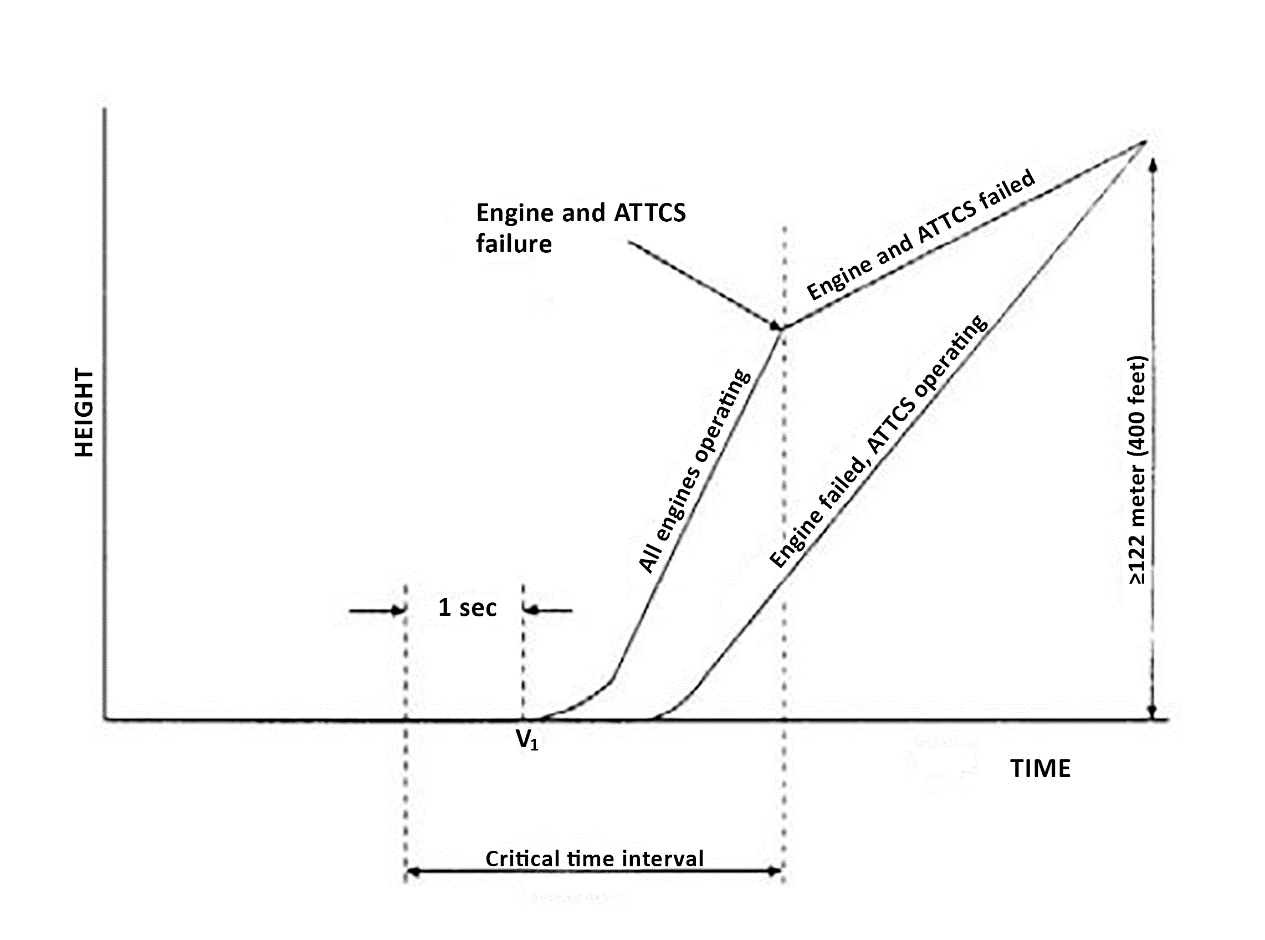
I 25.2 Definitions ED Decision 2003/2/RM (a) *AutomaticTakeoff Thrust Control System (ATTCS)*. An ATTCS system is defined as a system which automatically resets thrust or power on the operating engine(s) when any engine fails during take-off. For the purpose of the requirements in this Appendix, the ATTCS system comprises all elements of equipment necessary for the control and performance of each intended function, including all devices both mechanical and electrical that sense engine failure, transmit signals and actuate fuel controls or power levers of the operating engine(s) to achieve scheduled thrust or power increases, the engine control system and devices which furnish cockpit information on system operation. (b) *Critical Time Interval.* When conducting an ATTCS take-off, the critical time interval is between one second before reaching V1, and the point on the gross take-off flight path with all engines operating where, assuming a simultaneous engine and ATTCS system failure, the resulting flight path thereafter intersects the gross flight path, determined in accordance with [CS 25.115](#_DxCrossRefBm1709820674), at not less than 122 m (400 feet) above the take-off surface. This definition is shown in the following figure: