Light
Dark
System
Log In
Loading...
Compare / EASA/
Incorporated Amendments
/
Compare & Highlight Differences
CS-VLA 341 Gust load factors
Available versions for ERULES-1963177438-8053
ED Decision 2003/18/RM
found in: CS-VLA Amdt 1 - Very Light Aeroplanes (Mar 2009)
Version
CS-VLA Amdt 1 - Ve... (Mar 2009)
Section
Share
Version
Show details
Hide details
Version
CS-VLA 341 Gust load factors ED Decision 2003/18/RM In the absence of a more rational analysis, the gust load factors may be computed as follows: 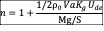 where – <table border="0" cellpadding="0" cellspacing="0" width="613"><tr><td valign="top" width="43"><p>Kg </p></td><td valign="top" width="18"><p>=</p></td><td valign="top" width="552"><p><div class="image-container"><img alt="EASA EAR image" src="/static/files/file_CbObCD5goL3/image017.jpg"/></div> = gust alleviation factor; </p></td></tr><tr><td valign="top" width="43"><p>µg </p></td><td valign="top" width="18"><p>=</p></td><td valign="top" width="552"><p><div class="image-container"><img alt="EASA EAR image" src="/static/files/file_CbObCD5goL3/image019.jpg"/></div>= aeroplane mass ratio;</p></td></tr><tr><td valign="top" width="43"><p>U<sub>de</sub></p></td><td valign="top" width="18"><p>=</p></td><td valign="top" width="552"><p>derived gust velocities referred to in <a href="#_DxCrossRefBm584936674">CS-VLA 333(c)</a> (m/s) ; </p></td></tr><tr><td valign="top" width="43"><p>ρ<sub>0</sub></p></td><td valign="top" width="18"><p>=</p></td><td valign="top" width="552"><p>density of air at sea level (kg/m<sup>3</sup>); </p></td></tr><tr><td valign="top" width="43"><p>ρ </p></td><td valign="top" width="18"><p>=</p></td><td valign="top" width="552"><p>density of air (kg/m<sup>3</sup>); </p></td></tr><tr><td valign="top" width="43"><p>M/S</p></td><td valign="top" width="18"><p>=</p></td><td valign="top" width="552"><p>wing loading (kg/m<sup>2</sup>); </p></td></tr><tr><td valign="top" width="43"><p>C̅</p></td><td valign="top" width="18"><p>=</p></td><td valign="top" width="552"><p>mean geometric chord (m); g = acceleration due to gravity (m/s<sup>2</sup>);</p></td></tr><tr><td valign="top" width="43"><p>V</p></td><td valign="top" width="18"><p>=</p></td><td valign="top" width="552"><p>aeroplane equivalent speed (m/s); and</p></td></tr><tr><td valign="top" width="43"><p>a</p></td><td valign="top" width="18"><p>=</p></td><td valign="top" width="552"><p>slope of the aeroplane normal force coefficient curve C<sub>NA</sub> per radian if the gust loads are applied to the wings and horizontal tail surfaces simultaneously by a rational method. The wing lift curve slope C<sub>L</sub> per radian may be used when the gust load is applied to the wings only and the horizontal tail gust loads are treated as a separate condition.</p></td></tr></table>