Light
Dark
System
Log In
Loading...
Compare / EASA/
Incorporated Amendments
/
Compare & Highlight Differences
GM3 ADR.OR.D.027 Safety programmes
Available versions for ERULES-1963177438-2712
ED Decision 2014/012/R
found in: Aerodromes (139/2014) Part-ADR.AR Part-ADR.OR Part-ADR.OPS CS-ADR-DSN CS-HPT-DSN (Dec 2024)
From
Aerodromes (139/20... (Dec 2024)
Aerodromes (139/20... (Jun 2023)
From section
To
Aerodromes (139/20... (Dec 2024)
Aerodromes (139/20... (Jun 2023)
To section
No visible text changes
0 removals
0 additions
View
Rich
Plain
Sync scrolling
Share
From
Show details
Hide details
To
Show details
Hide details
Version
Show side by side
GM3 ADR.OR.D.027 Safety programmes ED Decision 2024/004/R HOT SPOTS A hot spot is defined as ‘a location on an aerodrome movement area with a history, or potential risk of collision, or runway incursion, and where heightened attention by pilots/drivers is necessary.’ Strategies to manage and mitigate the risk from hot spots, depending on the case, may include, but are not limited to: (a) awareness campaigns; (b) additional visual aids (signs, markings, and lighting); (c) establishment of alternative routings; (d) introducing changes to the design of parts of the aerodrome; and (e) the mitigation of blind spots in the aerodrome control tower. Aerodrome charts showing hot spots should be produced locally, checked regularly for accuracy, revised as needed, distributed locally, and published in the AIP. The criteria used to establish and chart a hot spot are contained in the PANS-ATM (Chapter 7) and Annex 4 — Aeronautical Charts (Chapters 13, 14 and 15). Examples of how hot spots are shown on charts are provided in Figures 1, 2, and 3 below. 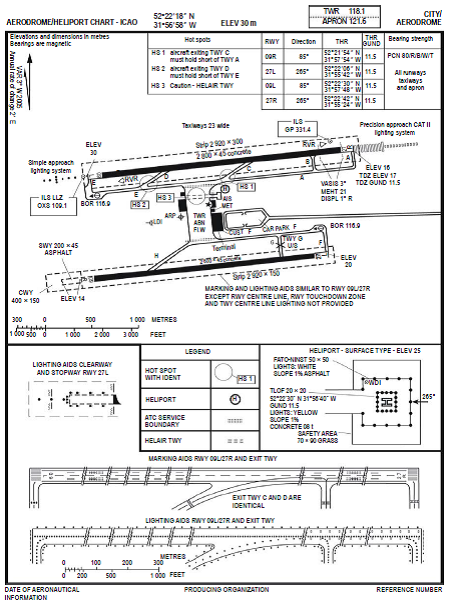 Figure 1 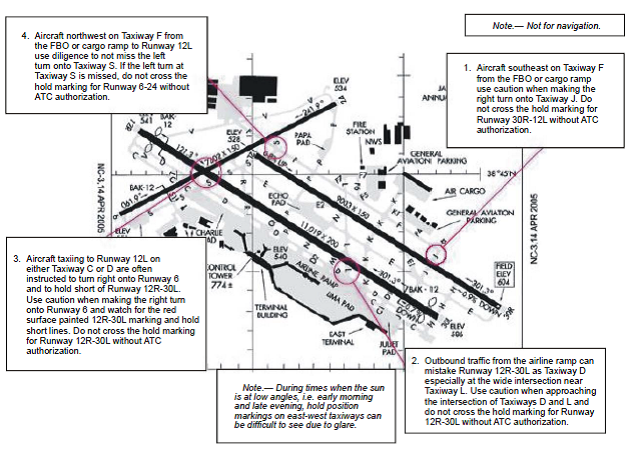 Figure 2 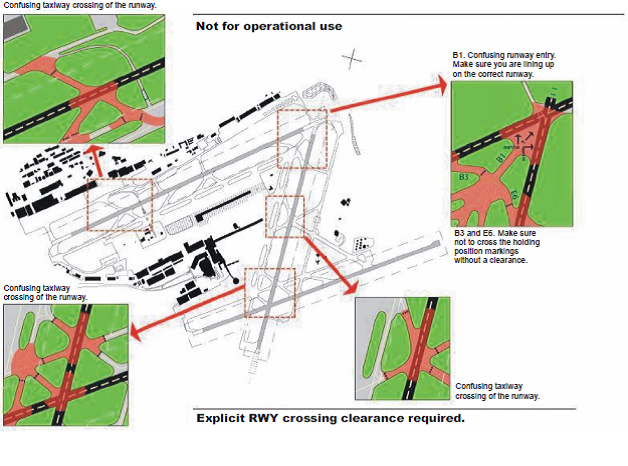 Figure 3 [applicable until 23 May 2025 – ED Decision 2014/012/R]
GM3 ADR.OR.D.027 Safety programmes ED Decision 2014/012/R HOT SPOTS A hot spot is defined as ‘a location on an aerodrome movement area with a history, or potential risk of collision, or runway incursion, and where heightened attention by pilots/drivers is necessary.’ Strategies to manage and mitigate the risk from hot spots, depending on the case, may include, but are not limited to: (a) awareness campaigns; (b) additional visual aids (signs, markings, and lighting); (c) establishment of alternative routings; (d) introducing changes to the design of parts of the aerodrome; and (e) the mitigation of blind spots in the aerodrome control tower. Aerodrome charts showing hot spots should be produced locally, checked regularly for accuracy, revised as needed, distributed locally, and published in the AIP. The criteria used to establish and chart a hot spot are contained in the PANS-ATM (Chapter 7) and Annex 4 — Aeronautical Charts (Chapters 13, 14 and 15). Examples of how hot spots are shown on charts are provided in Figures 1, 2, and 3 below. 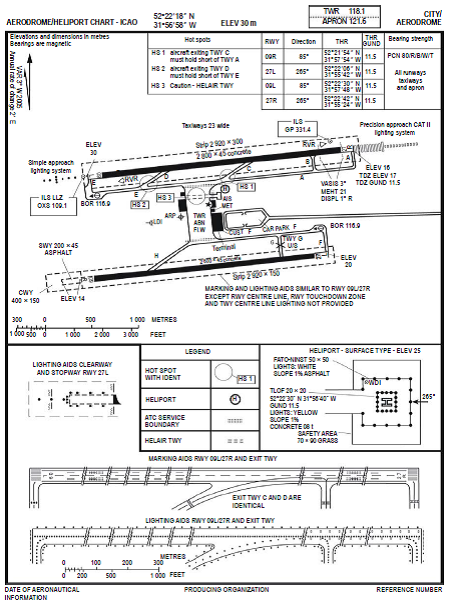 Figure 1 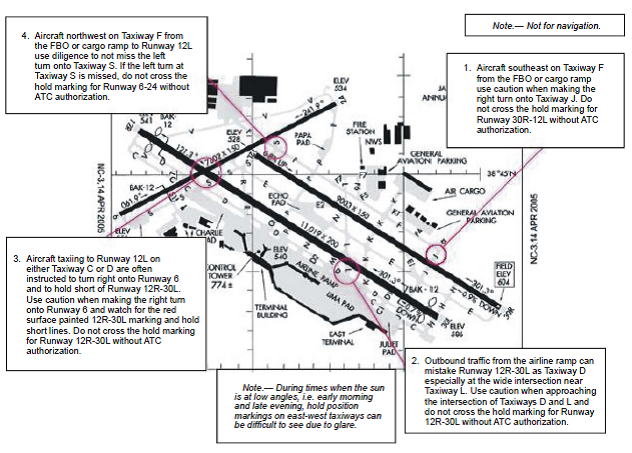 Figure 2 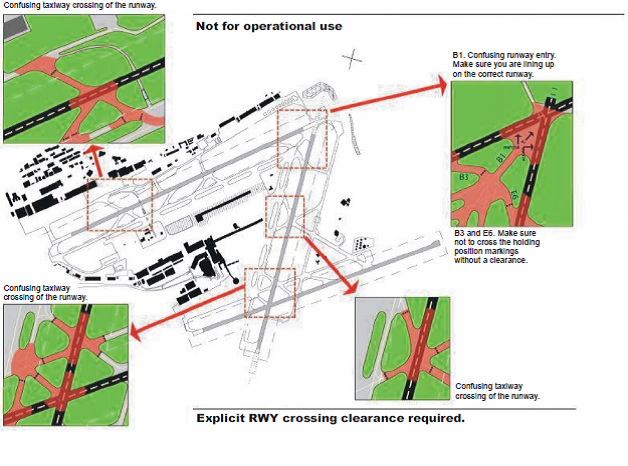 Figure 3
Contact support