Light
Dark
System
Log In
Loading...
Compare / EASA/
Incorporated Amendments
/
Compare & Highlight Differences
GM1 ADR-DSN.Q.846 Lighting of fixed objects
Available versions for ERULES-1963177438-2523
ED Decision 2016/027/R
found in: Aerodromes (139/2014) Part-ADR.AR Part-ADR.OR Part-ADR.OPS CS-ADR-DSN CS-HPT-DSN (Dec 2024)
From
Easy Access Rules ... (Mar 2026)
Aerodromes (139/20... (Dec 2024)
Aerodromes (139/20... (Jun 2023)
From section
To
Easy Access Rules ... (Mar 2026)
Aerodromes (139/20... (Dec 2024)
Aerodromes (139/20... (Jun 2023)
To section
No visible text changes
0 removals
0 additions
View
Rich
Plain
Sync scrolling
Share
From
Show details
Hide details
To
Show details
Hide details
Version
Show side by side
GM1 ADR-DSN.Q.846 Lighting of fixed objects ED Decision 2016/027/R (a) Guidance on how a combination of low-, medium-, and/or high-intensity lights on obstacles should be displayed is given in Figures GM-Q-1 to GM-Q-8. (b) High-intensity obstacle lights are intended for day use as well as night use. Care should be taken to ensure that these lights do not create disconcerting dazzle or environmental concerns. Guidance on the design, location, and operation of high-intensity obstacle lights is given in ICAO Doc 9157, Aerodrome Design Manual, Part 4, Visual Aids. (c) Where, the use of high-intensity obstacle lights, Type A, or medium-intensity obstacle lights, Type A, at night may dazzle pilots in the vicinity of an aerodrome (within approximately 10 000 m radius) or cause significant environmental concerns, a dual obstacle lighting system should be provided. This system should be composed of high-intensity obstacle lights, Type A, or medium intensity obstacle lights, Type A, as appropriate, for daytime and twilight use and medium-intensity obstacle light, Type B or C, for night-time use. 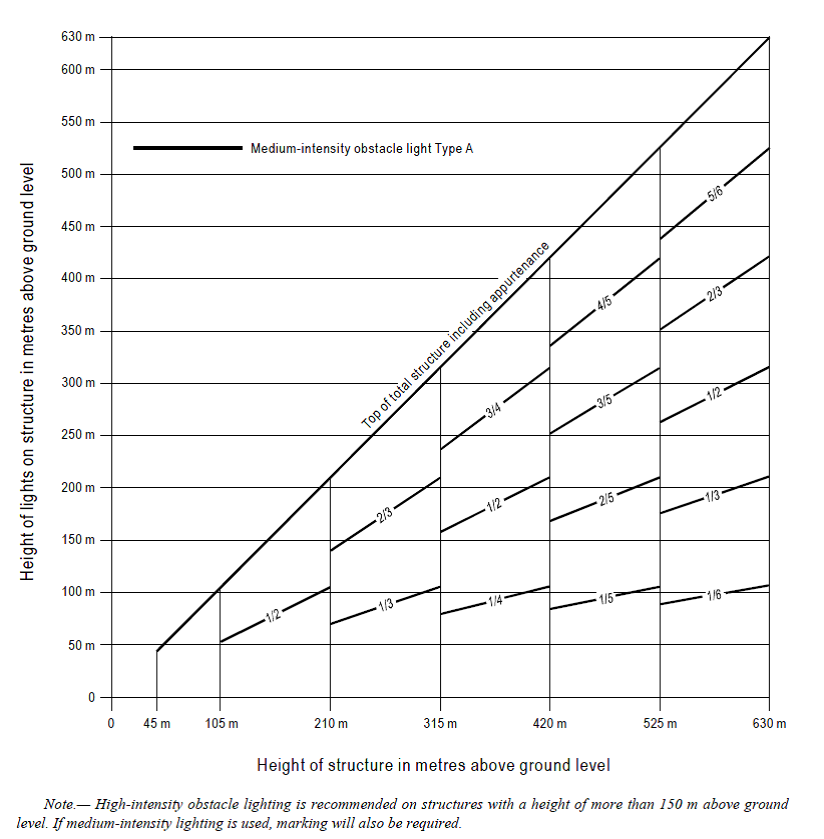 Figure GM-Q-1.Medium-intensity flashing-white obstacle lighting system, Type A 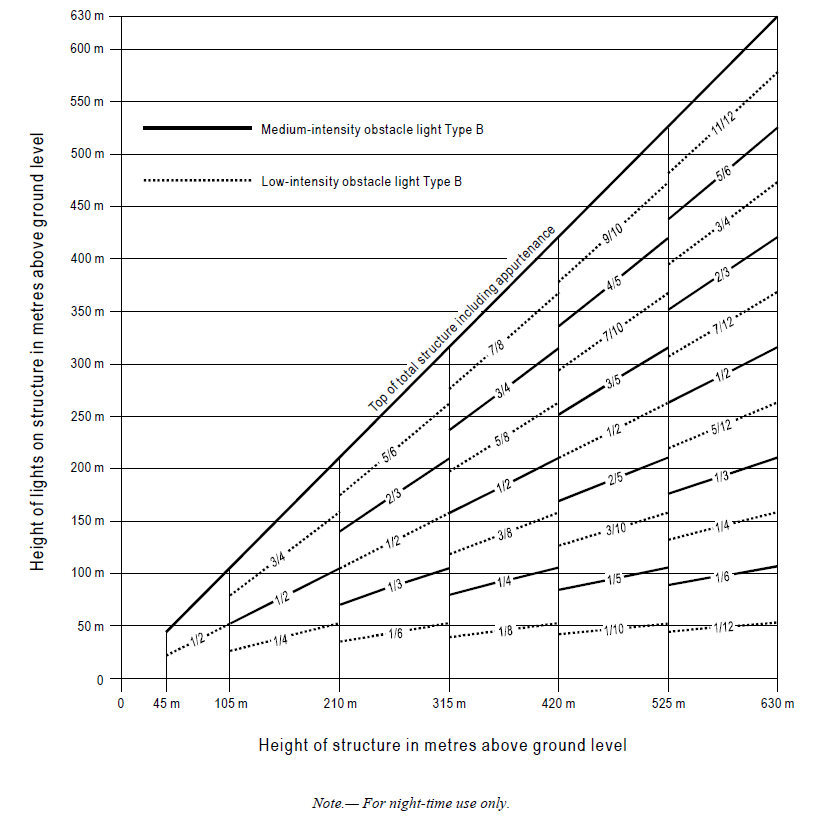 Figure GM-Q-2. Medium-intensity flashing-red obstacle lighting system, Type B 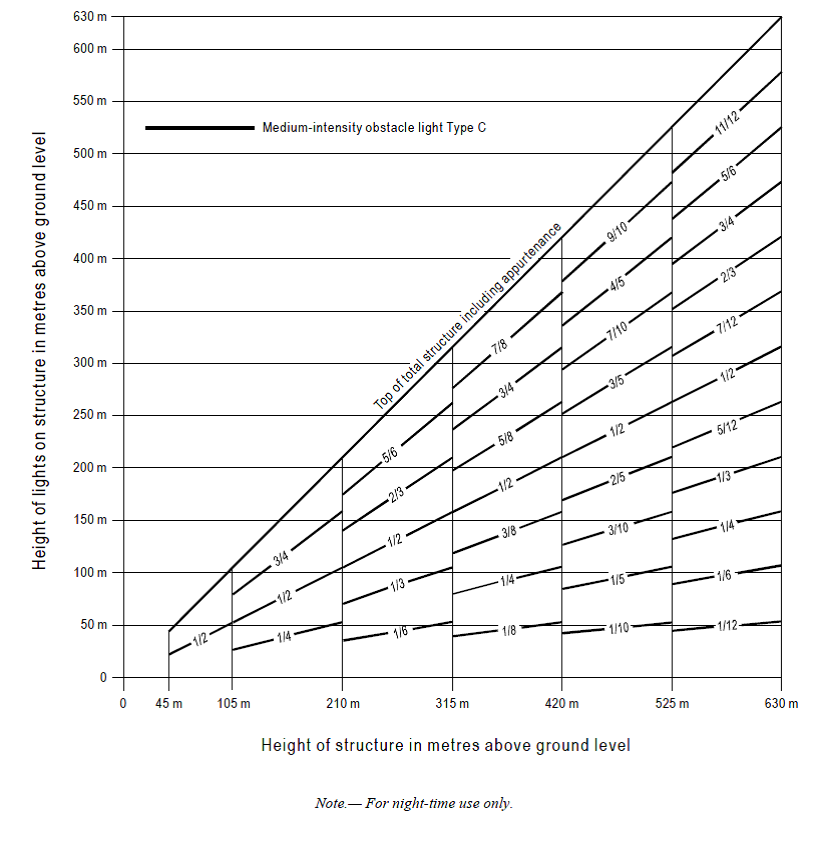 Figure GM-Q-3. Medium-intensity fixed-red obstacle lighting system, Type C 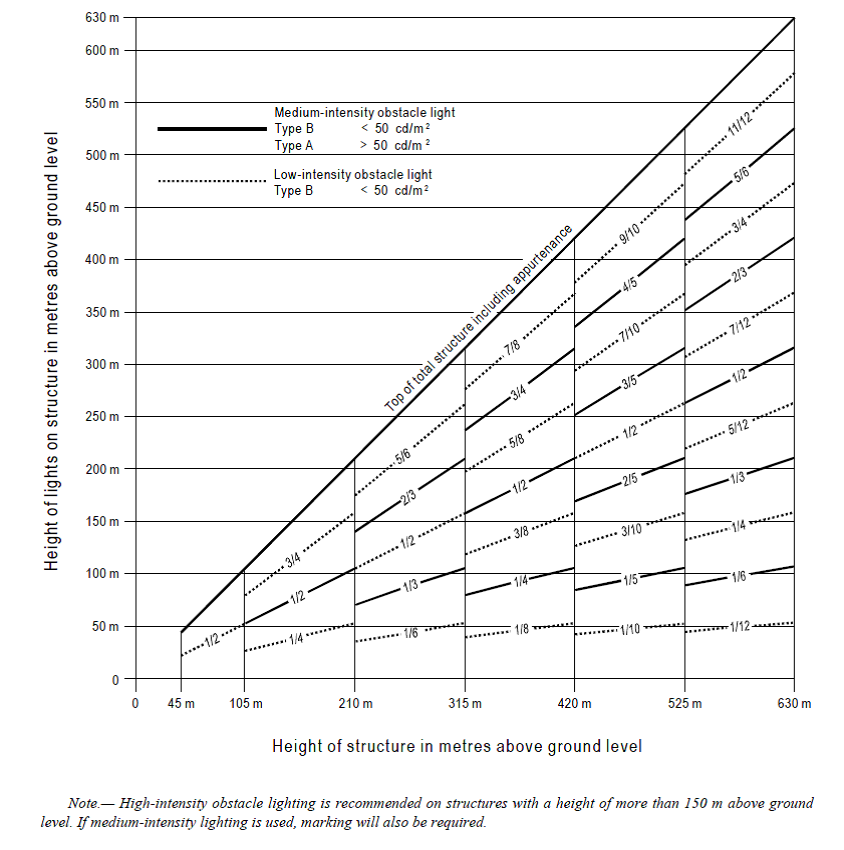 Figure GM-Q-4. Medium-intensity dual obstacle lighting system, Type A/Type B 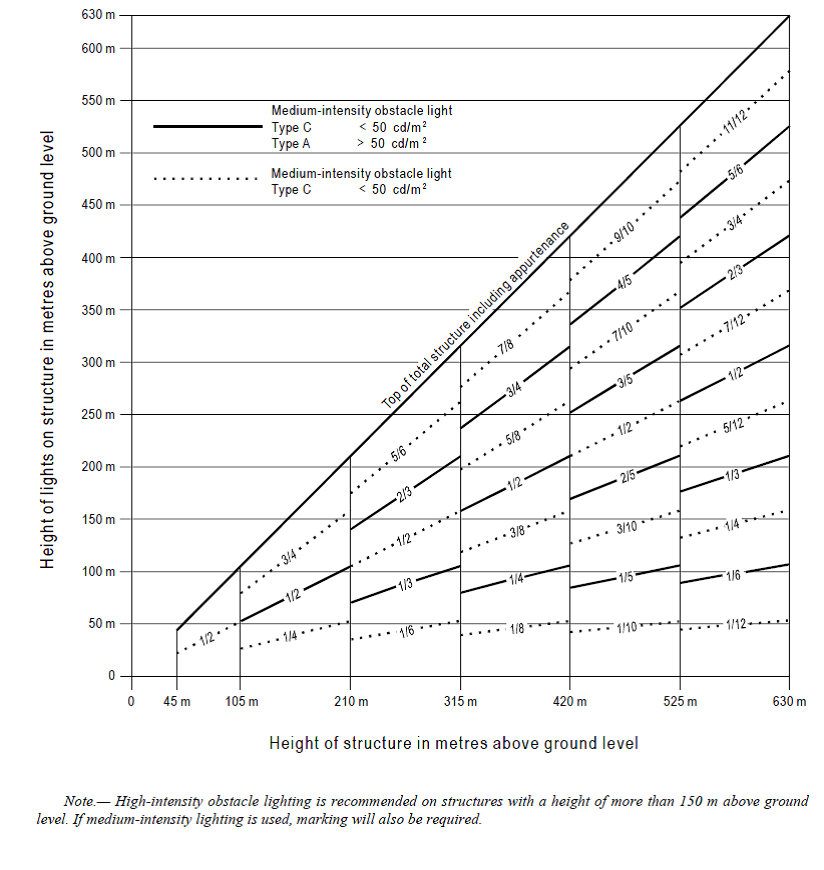 Figure GM-Q-5. Medium-intensity dual obstacle lighting system, Type A/Type C 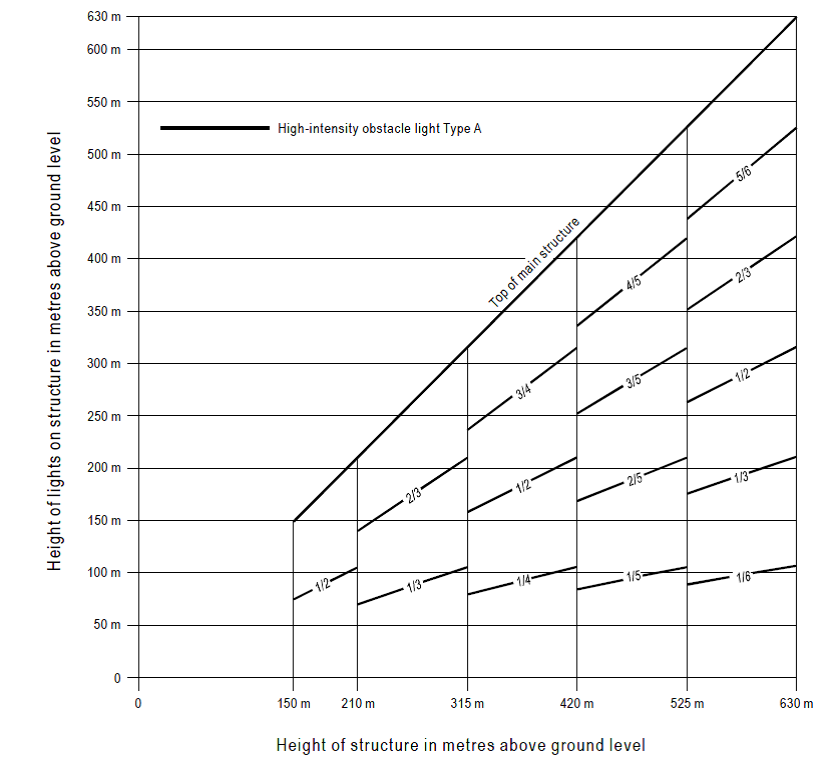 Figure GM-Q-6. High-intensity flashing-white obstacle lighting system, Type A 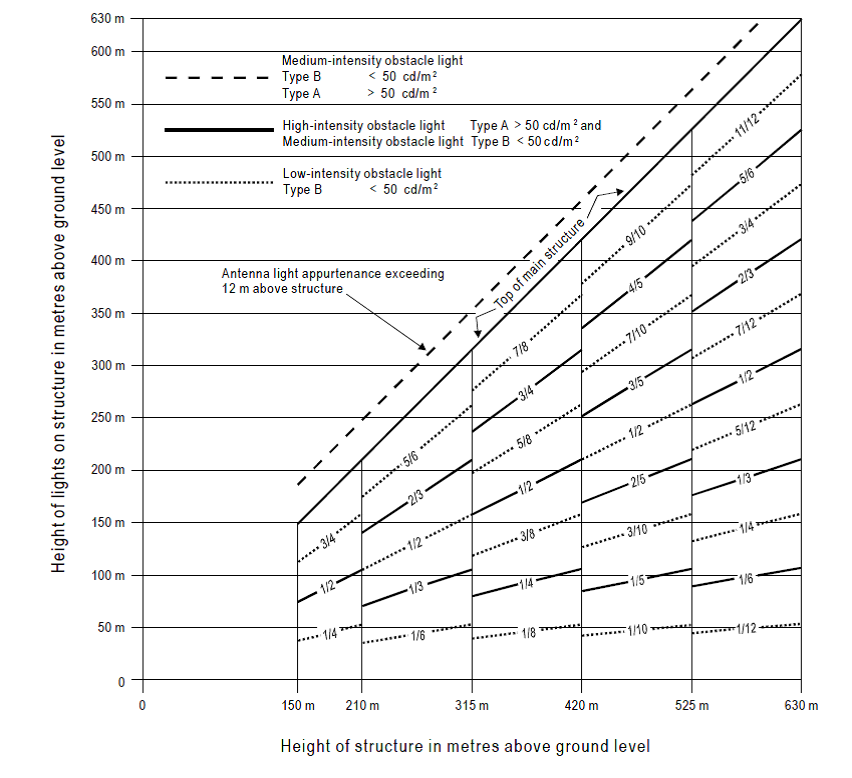 Figure GM-Q-7. High-/medium-intensity dual obstacle lighting system, Type A/Type B 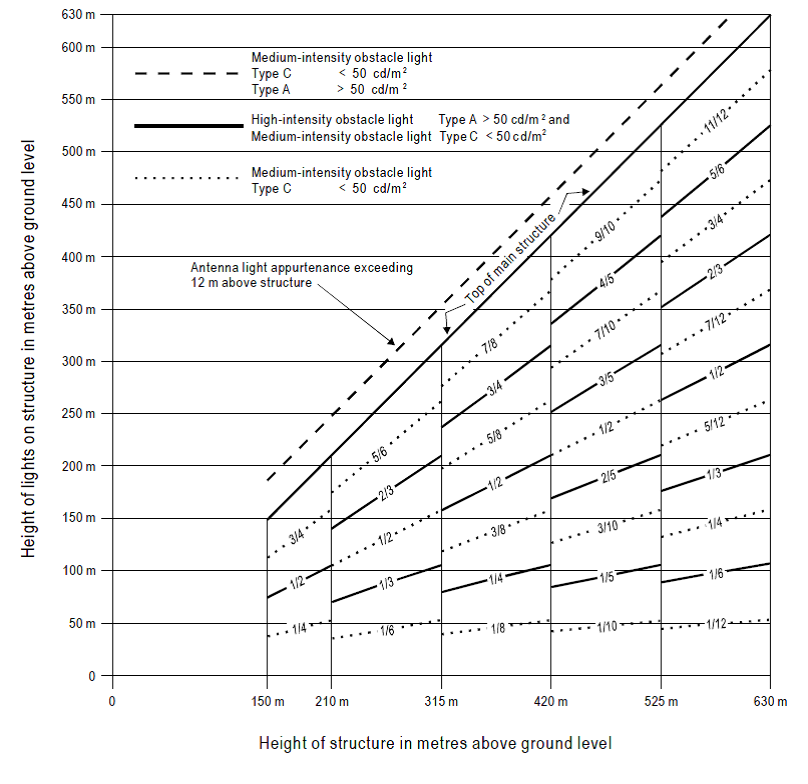 Figure GM-Q-8. High-/medium-intensity dual obstacle lighting system, Type A/Type C In the cases as stated in [CS ADR-DSN.Q.848(c) and (d)](#_DxCrossRefBm151830964), normally the spacing would not exceed 52 m. [Issue: ADR-DSN/3]
GM1 ADR-DSN.Q.846 Lighting of fixed objects ED Decision 2016/027/R (a) Guidance on how a combination of low-, medium-, and/or high-intensity lights on obstacles should be displayed is given in Figures GM-Q-1 to GM-Q-8. (b) High-intensity obstacle lights are intended for day use as well as night use. Care should be taken to ensure that these lights do not create disconcerting dazzle or environmental concerns. Guidance on the design, location, and operation of high-intensity obstacle lights is given in ICAO Doc 9157, Aerodrome Design Manual, Part 4, Visual Aids. (c) Where, the use of high-intensity obstacle lights, Type A, or medium-intensity obstacle lights, Type A, at night may dazzle pilots in the vicinity of an aerodrome (within approximately 10 000 m radius) or cause significant environmental concerns, a dual obstacle lighting system should be provided. This system should be composed of high-intensity obstacle lights, Type A, or medium intensity obstacle lights, Type A, as appropriate, for daytime and twilight use and medium-intensity obstacle light, Type B or C, for night-time use. 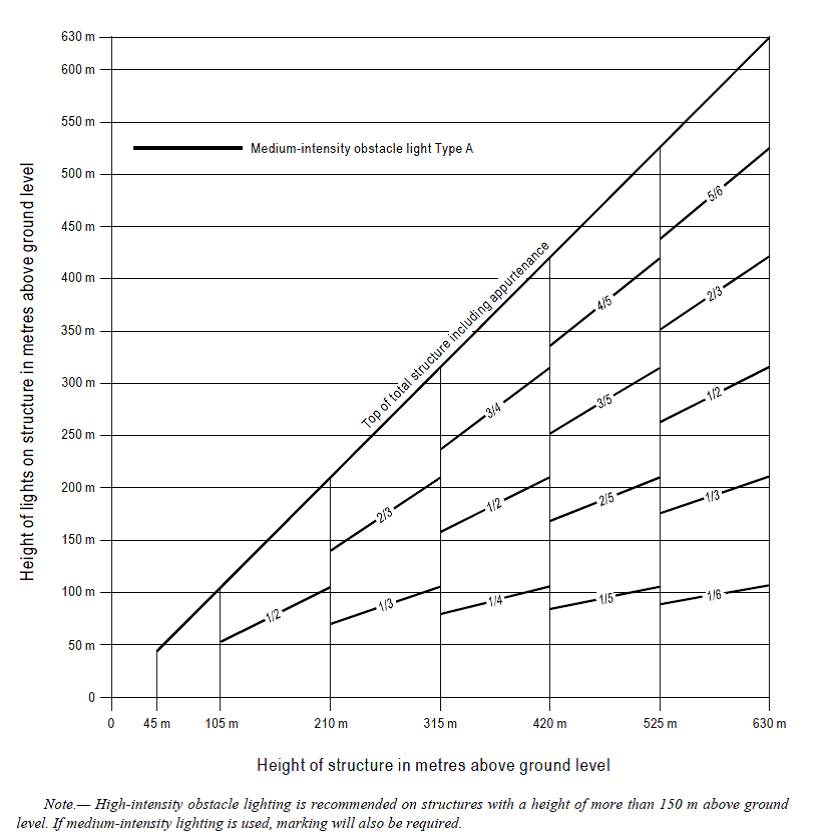 Figure GM-Q-1.Medium-intensity flashing-white obstacle lighting system, Type A 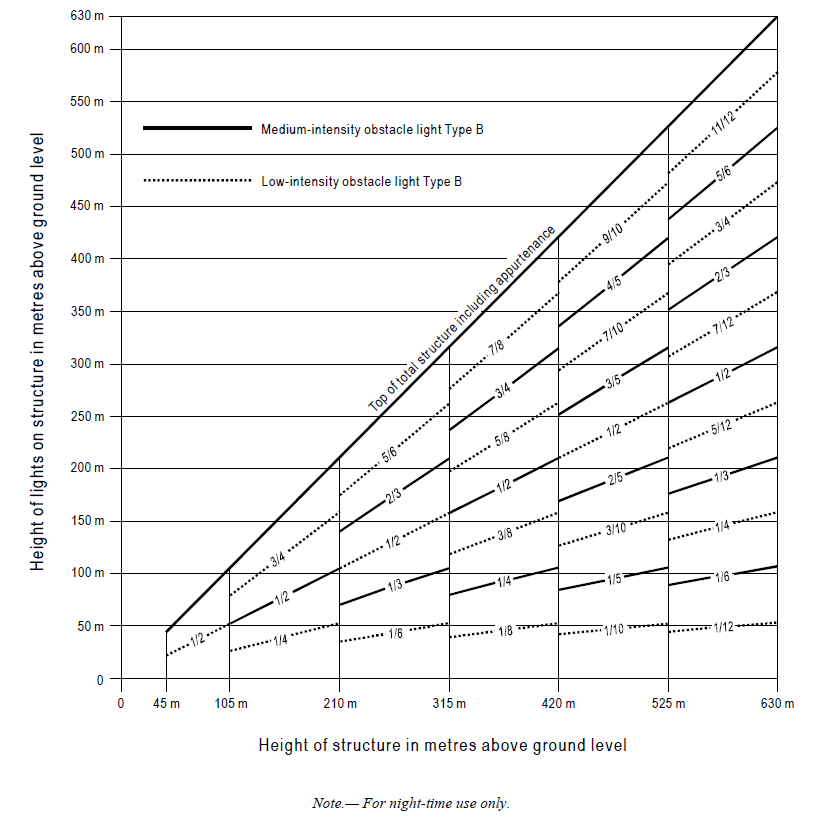 Figure GM-Q-2. Medium-intensity flashing-red obstacle lighting system, Type B 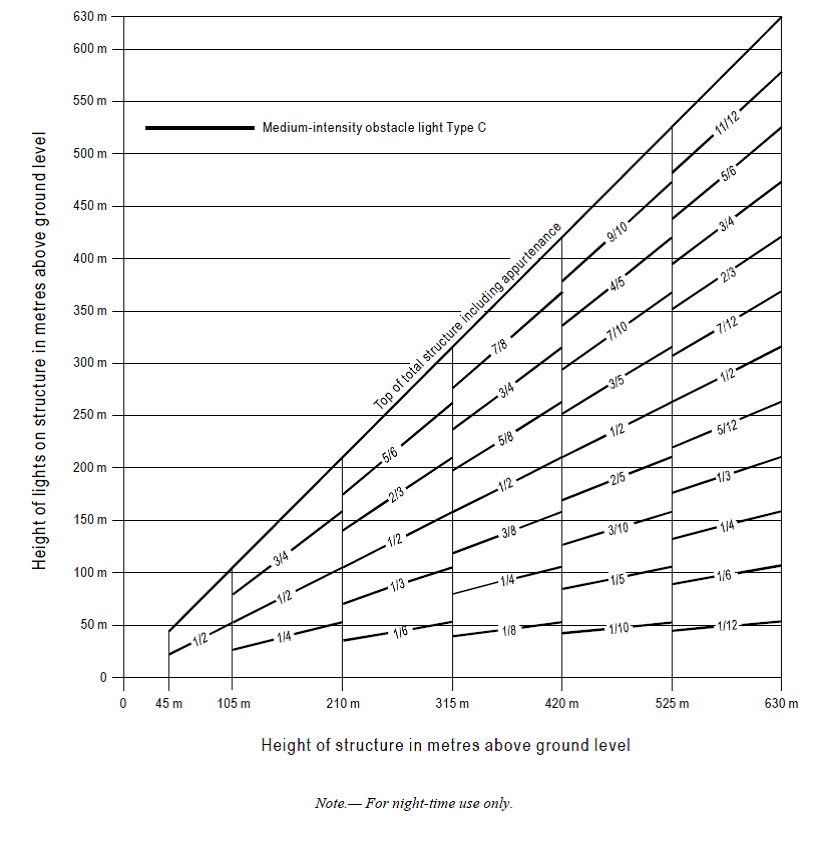 Figure GM-Q-3. Medium-intensity fixed-red obstacle lighting system, Type C 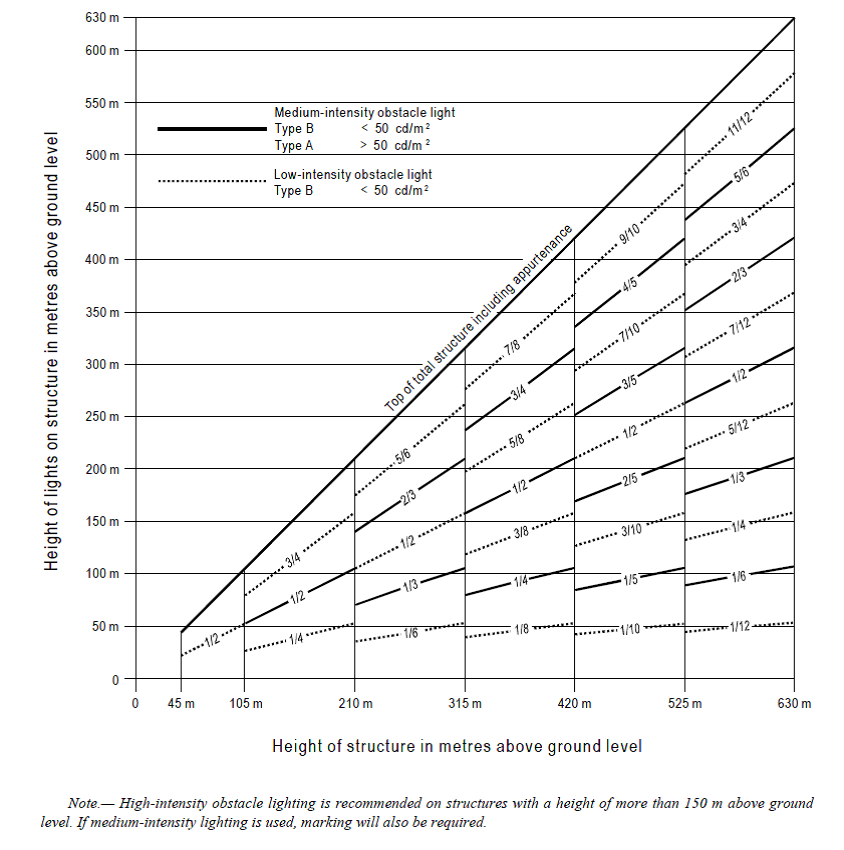 Figure GM-Q-4. Medium-intensity dual obstacle lighting system, Type A/Type B 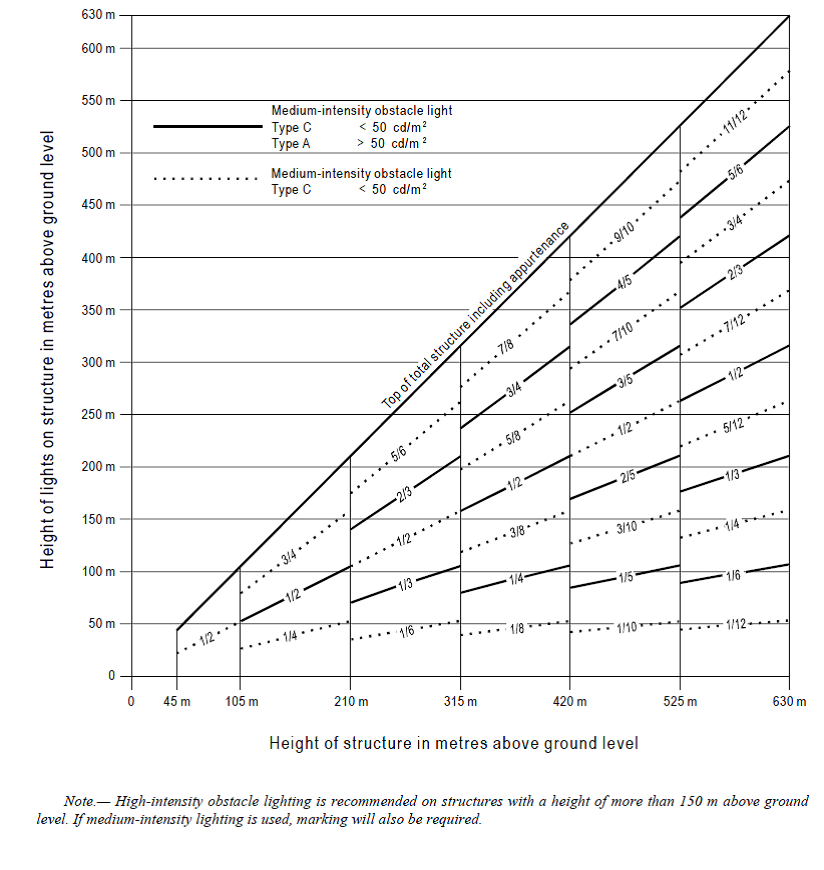 Figure GM-Q-5. Medium-intensity dual obstacle lighting system, Type A/Type C 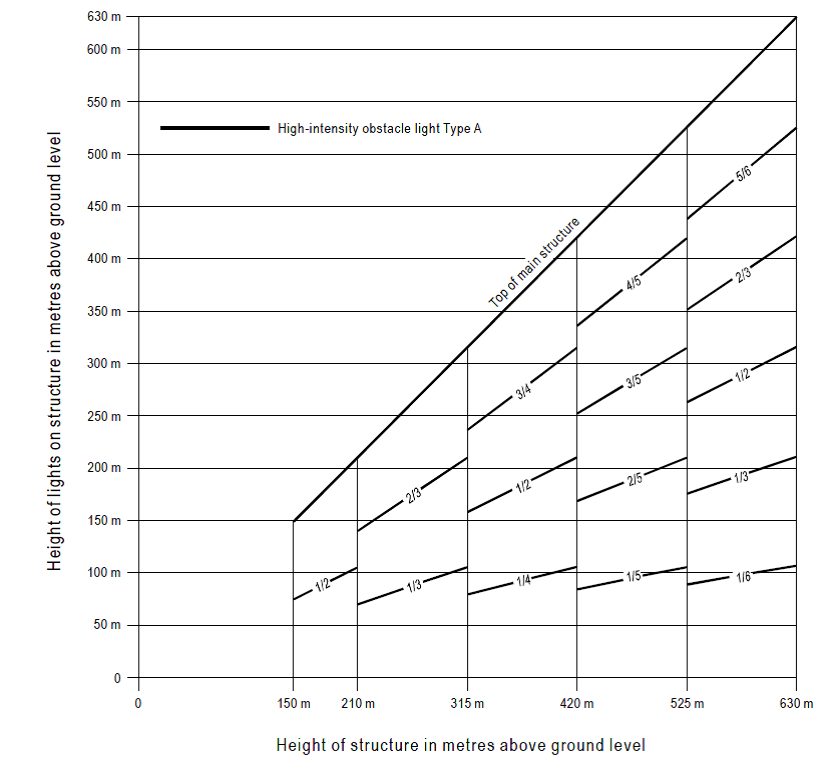 Figure GM-Q-6. High-intensity flashing-white obstacle lighting system, Type A 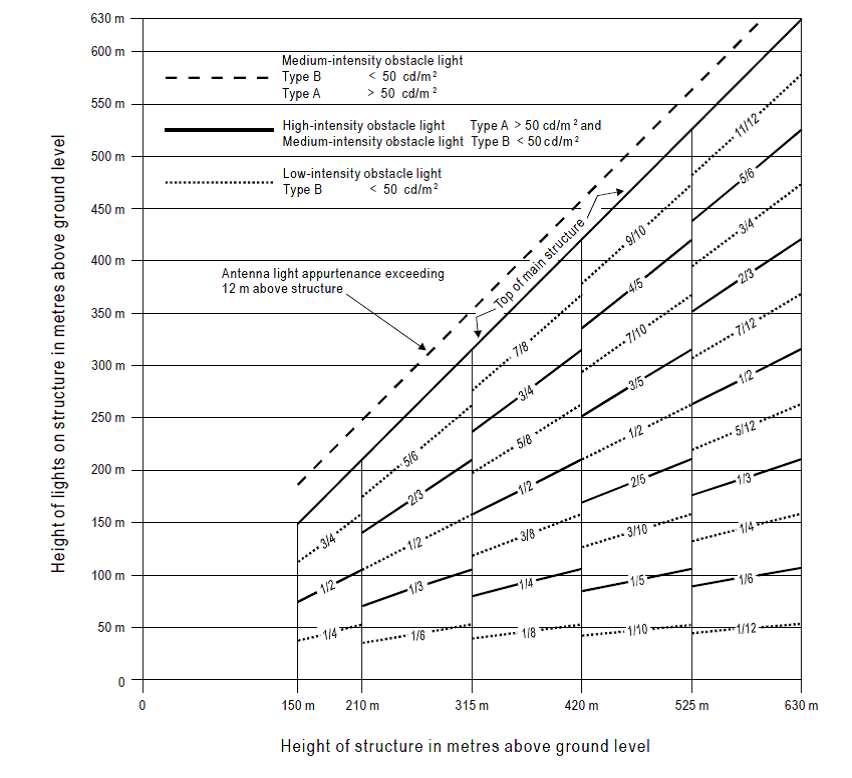 Figure GM-Q-7. High-/medium-intensity dual obstacle lighting system, Type A/Type B 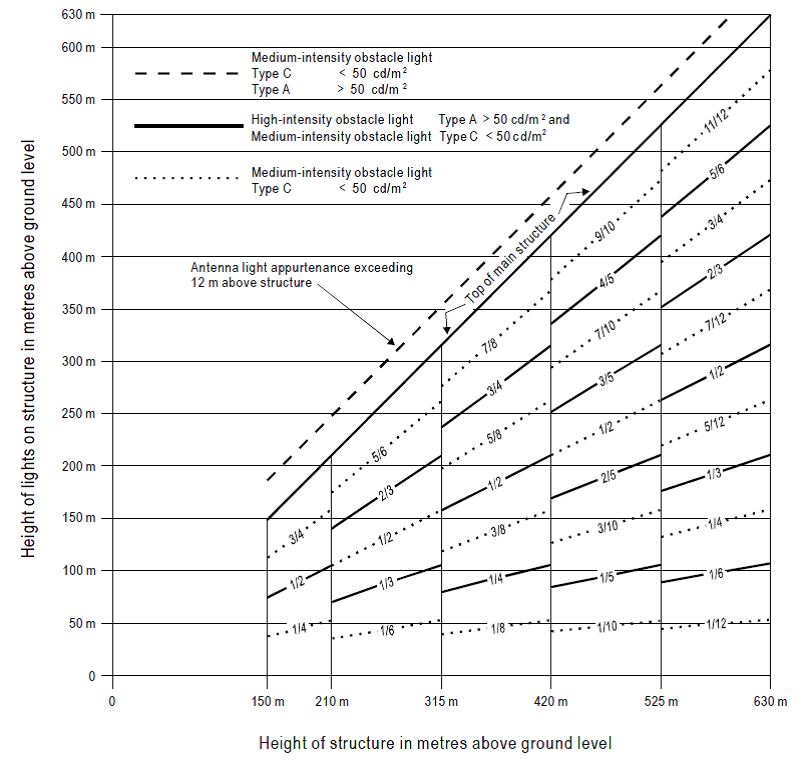 Figure GM-Q-8. High-/medium-intensity dual obstacle lighting system, Type A/Type C In the cases as stated in [CS ADR-DSN.Q.848(c) and (d)](#_DxCrossRefBm1800047826), normally the spacing would not exceed 52 m. [Issue: ADR-DSN/3]
##### GM1 ADR-DSN.Q.846 Lighting of fixed objects *ED Decision 2016/027/R* (a) Guidance on how a combination of low-, medium-, and/or high-intensity lights on obstacles should be displayed is given in Figures GM-Q-1 to GM-Q-8. (b) High-intensity obstacle lights are intended for day use as well as night use. Care should be taken to ensure that these lights do not create disconcerting dazzle or environmental concerns. Guidance on the design, location, and operation of high-intensity obstacle lights is given in ICAO Doc 9157, Aerodrome Design Manual, Part 4, Visual Aids. (c) Where, the use of high-intensity obstacle lights, Type A, or medium-intensity obstacle lights, Type A, at night may dazzle pilots in the vicinity of an aerodrome (within approximately 10 000 m radius) or cause significant environmental concerns, a dual obstacle lighting system should be provided. This system should be composed of high-intensity obstacle lights, Type A, or medium intensity obstacle lights, Type A, as appropriate, for daytime and twilight use and medium-intensity obstacle light, Type B or C, for night-time use. 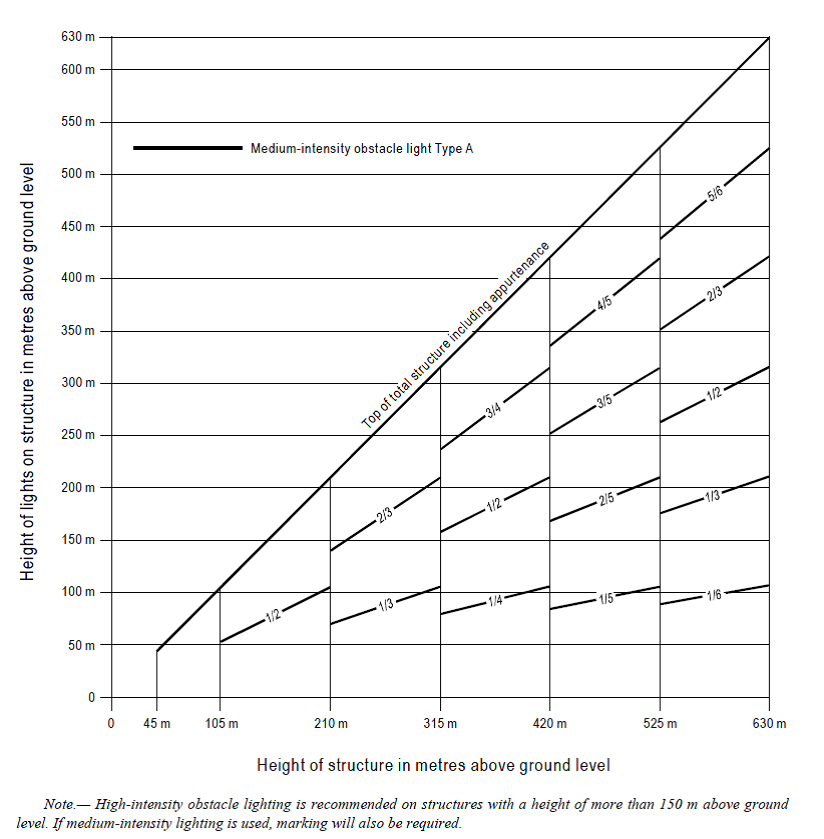 ***Figure GM-Q-1.Medium-intensity flashing-white obstacle lighting system, Type A*** 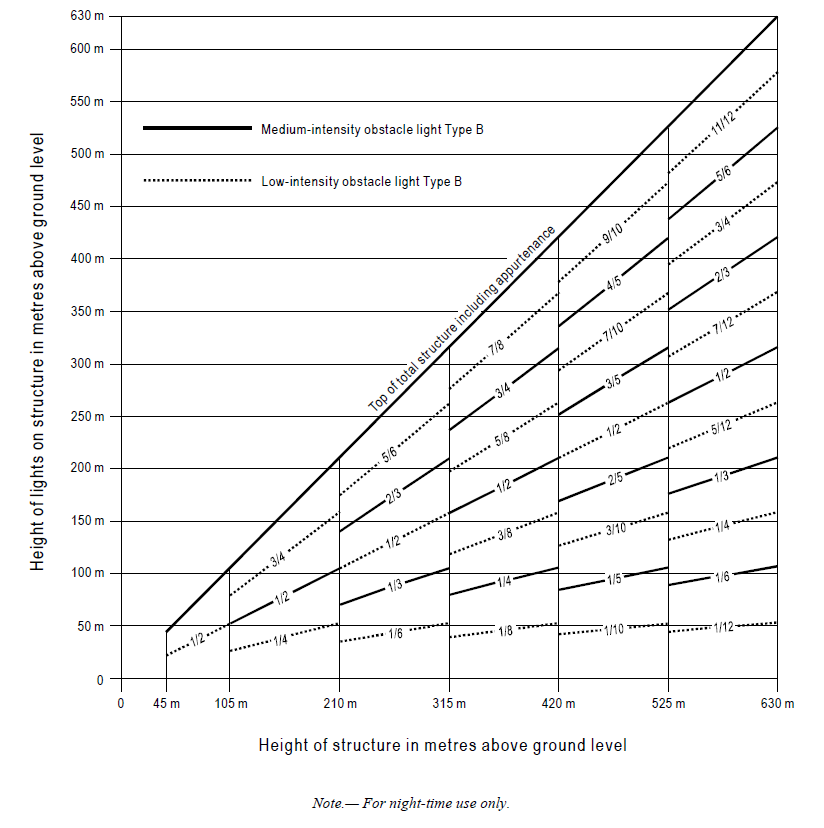 ***Figure GM-Q-2. Medium-intensity flashing-red obstacle lighting system, Type B*** 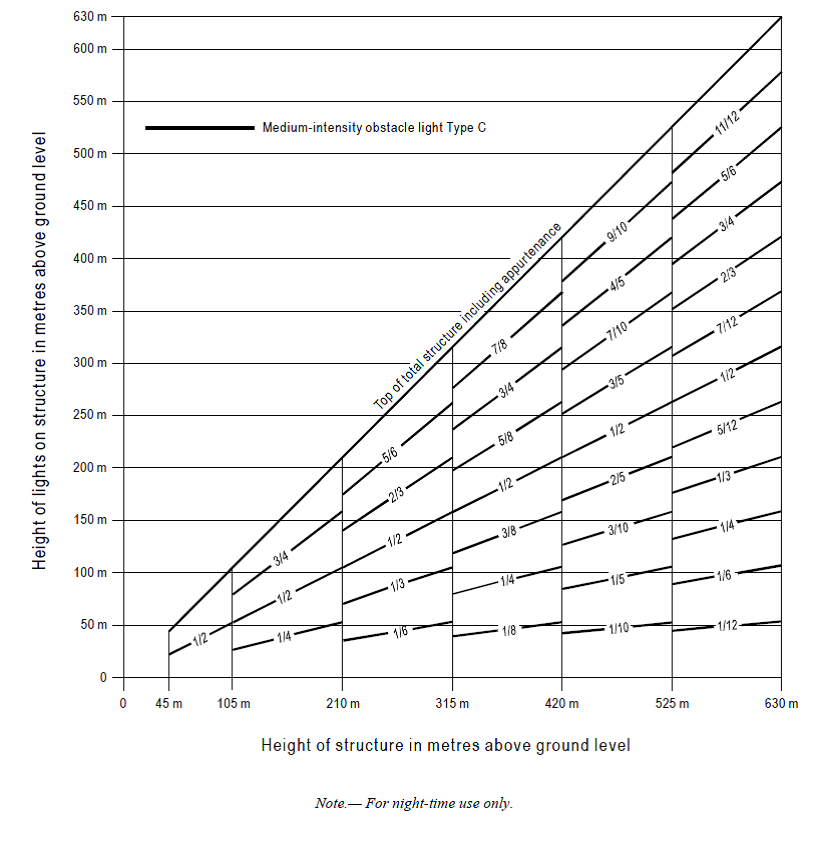 ***Figure GM-Q-3. Medium-intensity fixed-red obstacle lighting system, Type C*** 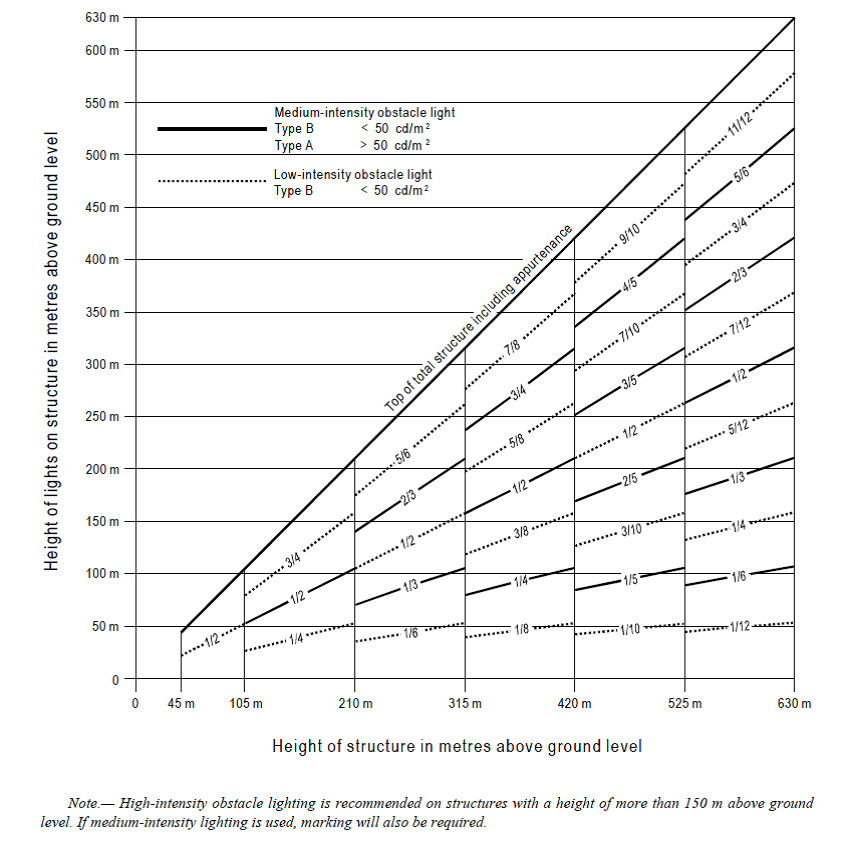 ***Figure GM-Q-4. Medium-intensity dual obstacle lighting system, Type A/Type B*** 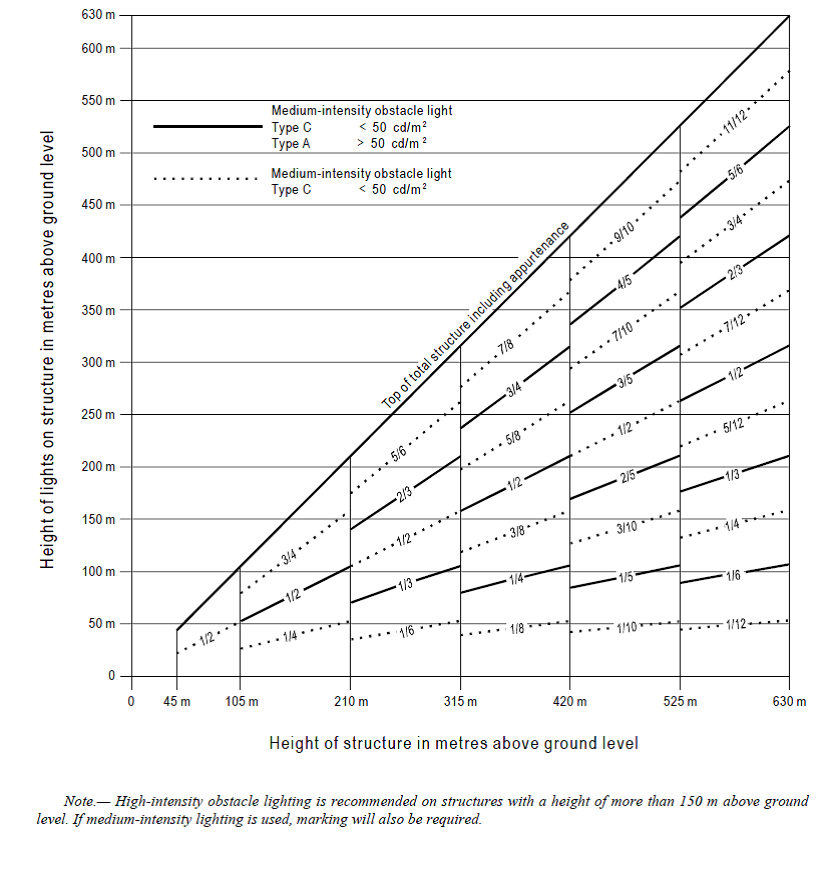 ***Figure GM-Q-5. Medium-intensity dual obstacle lighting system, Type A/Type C*** 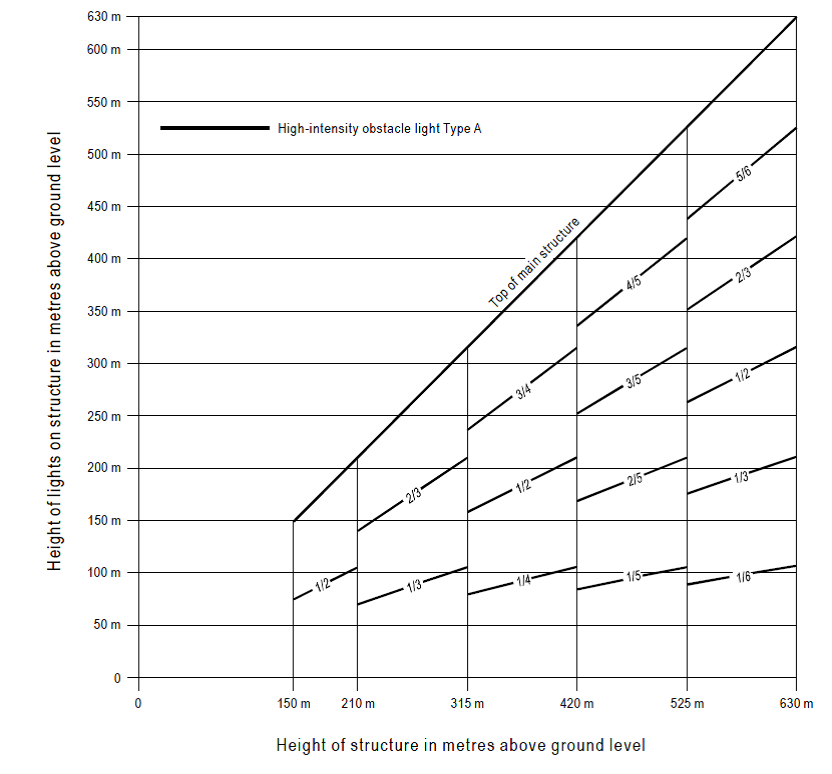 ***Figure GM-Q-6. High-intensity flashing-white obstacle lighting system, Type A*** 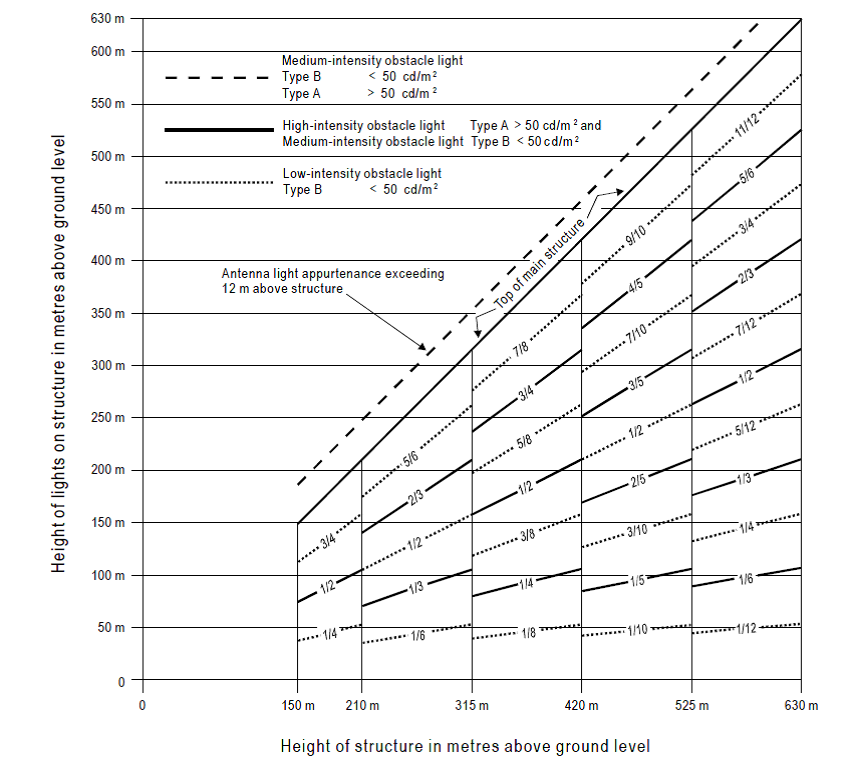 ***Figure GM-Q-7. High-/medium-intensity dual obstacle lighting system, Type A/Type B*** 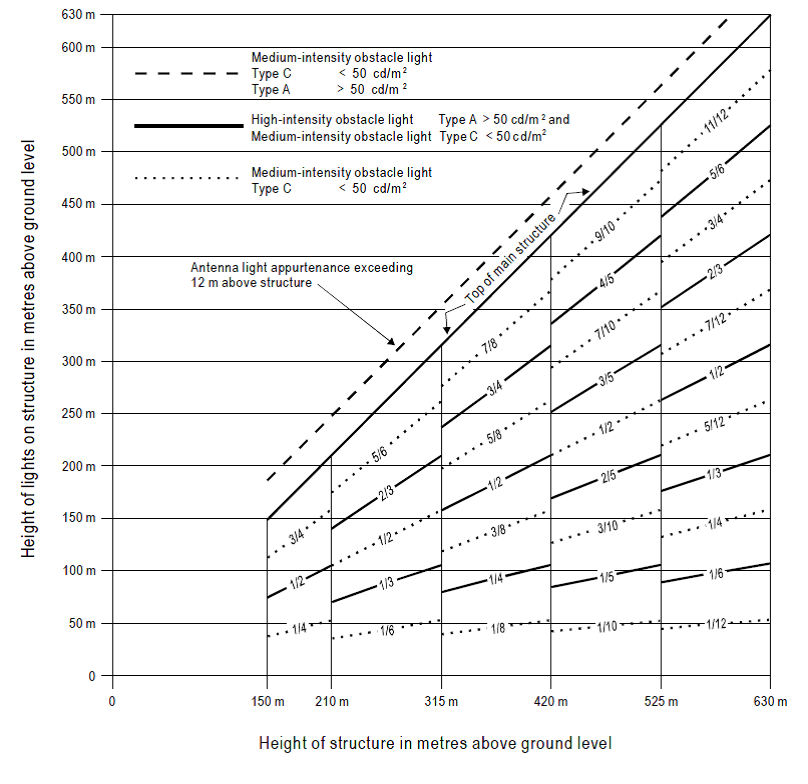 ***Figure GM-Q-8. High-/medium-intensity dual obstacle lighting system, Type A/Type C*** In the cases as stated in [CS ADR-DSN.Q.848(c) and (d)](#_DxCrossRefBm1262885403), normally the spacing would not exceed 52 m. [Issue: ADR-DSN/3]
Contact support