Light
Dark
System
Log In
Loading...
Compare / EASA/
Incorporated Amendments
/
Compare & Highlight Differences
Appendix 2.3 to ETSO-C153a - Integrated Modular Avionics (IMA) Platform and Module Minimum Performance Standard (MPS)
Available versions for ERULES-1963177438-18126
ED Decision 2020/011/R
found in: CS-ETSO Amdt 17 - European Technical Standard Orders (Oct 2026)
Version
CS-ETSO Amdt 17 - ... (Oct 2026)
Section
Share
Version
Show details
Hide details
Version
**Appendix 2.3 to ETSO-C153a – Integrated Modular Avionics (IMA) Platform and Module Minimum Performance Standard (MPS)** *ED Decision 2020/011/R* **CLASS PR: Processing** **1. Purpose and scope** 1.1. Introduction This Appendix contains the Minimum Performance Standards (MPSs) for the CLASS PR Intended Function: Processing (PR). These standards specify characteristics that should be useful to designers, manufacturers, installers and users of the IMA module. 1.2. Definitions For ETSO-C153a CLASS PR, the IMA module provides shared resources in terms of processing between hosted applications, modules and/or components. The following definitions are used: — Processing Unit: a set of physical components (hardware and/or software) in charge of carrying out the instructions of a computer programme by performing the basic arithmetical, logical, and input/output operations of the Executable Object Code. — Executable Object Code (EUROCAE ED-12C/RTCA DO-178C): a form of code that is directly usable by the processing unit of the target computer and is, therefore, a compiled, assembled, and linked binary image, loaded into the target computing hardware. — Processing Element: a well-defined set of instructions which is a primary form of an Executable Object Code execution and for which a level of isolation would be guaranteed by the IMA module. In the context of PR class, the ‘concurrent item’ defined in Appendix 2.1, paragraph 1 means ‘Processing Element’. 1.3. Intended Function For ETSO-C153a CLASS PR, the intended function is to provide the capability to share the processing supplied by one or several processing unit(s). The IMA module may include data storage and interfaces between hosted applications, modules and/or components; in this case, this class shall be combined with the DS and IF Classes. The following figure provides an overview of the intended function of the above-mentioned IMA module and the associated definitions: 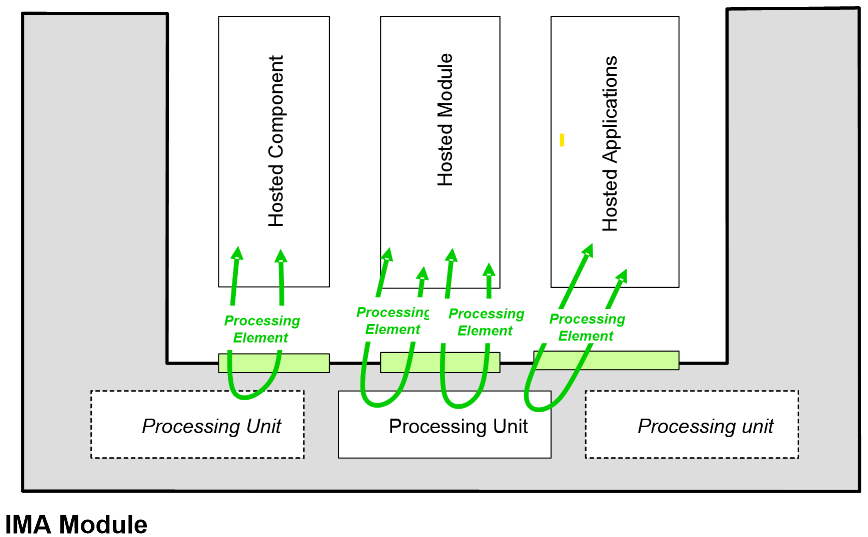 ***Figure 15: IMA module overview for ETSO-C153a CLASS PR*** **2. Requirements** 2.1. Functional requirements for ETSO-C153a CLASS PR PR.a) The IMA module shall provide to hosted applications a Processing Resource which has the capacity to execute a set of instructions of a computer programme by performing the basic arithmetical, logical, and input/output operations of their Executable Object Code; PR.b) The IMA module shall be able to host applications and/or Executable Object Code(s) components. PR.c) The IMA module shall provide to hosted applications the capacity to share the Processing Resource thanks to Processing Elements managed through a logical interface, such as an Application Programme Interface (API). 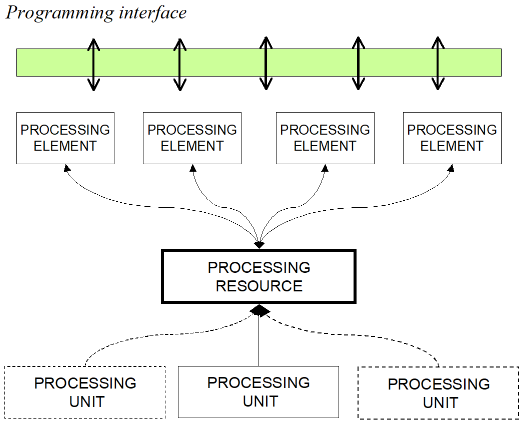 ***Figure 16: CLASS PR — the relationship between the processing elements*** 2.2. Characterisation requirements for ETSO-C153a CLASS PR PR.d) All aspects of the processing performance of the shared Processing Unit of the IMA module shall be characterised, including, but not limited to, the following: 1. Processing Unit throughput (performance capacities and timings); 2. Performance of User Software/Software Interface (Core Software) Mechanism(s), Protocol(s), and Service(s); 3. Performance of User Hardware/Software Interface Mechanism(s), Protocol(s) and Service(s); 4. Performance of supported Processing Element Type (e.g. application, partition, process, thread, etc.); 5. Performance of Interrupt Mechanisms; and 6. Performance of Memory Management, including cache and Memory Management Unit (MMU). Note: These performance requirements are additional to those applicable in Appendix 2.1 — COMMON. **3. Verification procedures** The following table gives the verification method for each MPS; nevertheless, an alternative method may be proposed to the certification authority: <table bgcolor="#d9d9d9" cellpadding="7" cellspacing="0"> <col/> <col/> <col/> <col/> <col/> <tr valign="top"> <td bgcolor="#808080"><p align="center"> <b>Requirement identifier</b></p> </td> <td bgcolor="#808080"><p align="center"> <b>Verification method</b></p> </td> <td bgcolor="#808080"><p align="center"> <b>Test under normal conditions</b></p> </td> <td bgcolor="#808080"><p align="center"> <b>Test under environmental conditions</b></p> </td> <td bgcolor="#808080"><p align="center"> <b>Comment</b></p> </td> </tr> <tr valign="top"> <td bgcolor="#d9d9d9"><p align="center"> <b>PR.a)</b></p> </td> <td bgcolor="#d9d9d9"><p align="center"> T</p> </td> <td bgcolor="#d9d9d9"><p align="center"> Y</p> </td> <td bgcolor="#d9d9d9"><p align="center"> Y</p> </td> <td bgcolor="#d9d9d9"><p align="center"> <br/> </p> </td> </tr> <tr valign="top"> <td bgcolor="#d9d9d9"><p align="center"> <b>PR.b)</b></p> </td> <td bgcolor="#d9d9d9"><p align="center"> T</p> </td> <td bgcolor="#d9d9d9"><p align="center"> Y</p> </td> <td bgcolor="#d9d9d9"><p align="center"> Y</p> </td> <td bgcolor="#d9d9d9"><p align="center"> <br/> </p> </td> </tr> <tr valign="top"> <td bgcolor="#d9d9d9"><p align="center"> <b>PR.c)</b></p> </td> <td bgcolor="#d9d9d9"><p align="center"> T</p> </td> <td bgcolor="#d9d9d9"><p align="center"> Y</p> </td> <td bgcolor="#d9d9d9"><p align="center"> Y</p> </td> <td bgcolor="#d9d9d9"><p align="center"> <br/> </p> </td> </tr> <tr valign="top"> <td bgcolor="#d9d9d9"><p align="center"> <b>PR.d)</b></p> </td> <td bgcolor="#d9d9d9"><p align="center"> T (A*)</p> </td> <td bgcolor="#d9d9d9"><p align="center"> Y</p> </td> <td bgcolor="#d9d9d9"><p align="center"> Y<sup>(1)</sup></p> </td> <td bgcolor="#d9d9d9"><p align="center"> <br/> </p> </td> </tr> </table> ***Table 3: Verification Acceptance Criteria*** (A\*) means that verification by the Analysis method is possible for the item that cannot be tested. Note (1): applicable for a functional subset cf. CO.gg). [Amdt ETSO/10] [Amdt ETSO/16]
Contact support