Light
Dark
System
Log In
Loading...
Compare / EASA/
Incorporated Amendments
/
Compare & Highlight Differences
Appendix 1 to ETSO-C142b - Minimum Performance Standard for Lithium Batteries
Available versions for ERULES-1963177438-18039
ED Decision 2020/011/R
found in: CS-ETSO Amdt 17 - European Technical Standard Orders (Oct 2026)
Version
CS-ETSO Amdt 17 - ... (Oct 2026)
Section
Share
Version
Show details
Hide details
Version
###### Appendix 1 to ETSO-C142b – Minimum Performance Standard for Lithium Batteries *ED Decision 2020/011/R* This Appendix prescribes the MPS for lithium batteries, as modified by this ETSO. The standard is modified as follows: ***Table 1— Text modifications to RTCA document DO-227A*** <table bgcolor="#d9d9d9" cellpadding="7" cellspacing="0"> <col/> <col/> <col/> <tr valign="top"> <td bgcolor="#808080"><p align="left"> <b>RTCA DO-227A Section and title: </b> </p> </td> <td bgcolor="#808080"><p align="left"> <b>Current wording: </b> </p> <p align="left"><br/> </p> </td> <td bgcolor="#808080"><p align="left"> <b>Modified wording:</b></p> </td> </tr> <tr valign="top"> <td bgcolor="#808080"><p align="left"> <b>1.4 Specific Exclusions from this document </b> </p> </td> <td bgcolor="#d9d9d9"><p align="left"> c. Cells or batteries containing less than 2 Watt-hours (Wh) of capacity have sufficiently low energy that the possible hazard is considered low and therefore these cells and batteries are assessed as presenting an acceptably low risk for installation as long as they are compliant with the requirements of UL 1642 [Reference 9]. If compliant with UL 1642 and the UN transport regulations [Reference 10], no other requirements from this MOPS will apply to cells or batteries with less than 2 Wh of capacity. </p> </td> <td bgcolor="#d9d9d9"><p align="left"> c. Coin or button cells that contain less than 2 watt-hours (Wh) of capacity have sufficiently low energy that the possible hazard is considered to be low, and therefore these cells and batteries are assessed as presenting an acceptably low risk for installation as long as they are compliant with the requirements of UL 1642 [Reference 9]. If they are compliant with UL 1642 and the UN transport regulations [Reference 10], no other requirements from this MOPS will apply to <u>coin or button</u> cells with less than 2 Wh of capacity.</p> </td> </tr> <tr valign="top"> <td bgcolor="#808080"><p align="left"> <b>n/a</b></p> </td> <td bgcolor="#d9d9d9"><p align="left"> ./.</p> </td> <td bgcolor="#d9d9d9"><p align="left"> d. For non-rechargeable cells and/or batteries that contain less than 5 Wh and have not been tested to RTCA document DO‑227A, Sections 1.0 and 2.0, the requirement of this ETSO can be met under the ‘End Item testing’ described in DO-227A, Sections 2.2.3 and 2.4.3. </p> <p align="left"> Mark the cell or battery per Section 4.2 of this ETSO (ETSO-C142b-7). </p> <p align="left"> Note: </p> <p align="left">For ETSO-C142b-7 approvals, the ETSO marking must be on the End Item and the cell or battery as well. The cell or battery must have a notation in the manufacturer’s documentation that the cell or battery is not to be used in another End Item. The End Item is needed in order to meet the requirement of this ETSO, and the configuration control documentation must state that the cell or battery is approved based solely on the fact that it is tested and validated within the approved End Item. Only cells or batteries that are approved under the ETSO‑C142b End Item article may be used. Cells or batteries should only be used if they are approved by the manufacturer of the article. If a different cell or battery is to be used with this End Item, a new ETSO application (for the End Item) must be submitted to EASA. </p> </td> </tr> <tr valign="top"> <td bgcolor="#808080"><p align="left"> <b>2.4.1.2.1</b></p> </td> <td bgcolor="#d9d9d9"><p align="left"> (…)</p> <p align="left"> Test procedure</p> <p align="left"> (…)</p> <p align="left"> d. immediately start to discharge the sample cells using the DC power supply set at a constant current and with a voltage of limit of 3 volts. </p> <p align="left">(…)</p> </td> <td bgcolor="#d9d9d9"><p align="left"> (…)</p> <p align="left"> Test procedure</p> <p align="left"> (…)</p> <p align="left"> d. immediately start to discharge the sample cells using the DC power supply set at a constant current and with a voltage of limit set to the cell nominal voltage. </p> <p align="left">(…)</p> </td> </tr> <tr valign="top"> <td bgcolor="#808080"><p align="left"> <b>2.4.3</b></p> </td> <td bgcolor="#d9d9d9"><p align="left"> (…) </p> <p align="left"> Testing shall be accomplished in the order indicated in Figure 2-27. </p> <p align="left"> (…)</p> <p align="left">End Item safety tests may be conducted using just two End Items by performing the non-destructive thermal management and load profile test first, followed by the thermal runaway containment tests using the same two End Items (with new batteries). All actual batteries used in the End Item safety tests will have previously passed the End Item vibration and shock tests.</p> </td> <td bgcolor="#d9d9d9"><p align="left"> (…) </p> <p align="left"> Remove ‘Testing shall be accomplished in the order indicated in Figure 2-27’.</p> <p align="left"> (…)</p> <p align="left"> End Item safety tests may be conducted using just two End Items by performing the non-destructive thermal management and load profile test first, followed by the thermal runaway containment tests using the same two End Items (with new batteries). </p> <p align="left">Remove ‘All actual batteries used in the End Item safety tests will have previously passed the End Item vibration and shock tests’.</p> </td> </tr> </table> In addition, in Section 2.4.2.1.7, replace Table 2-2 and Figure 2-16 with the following table and figure: 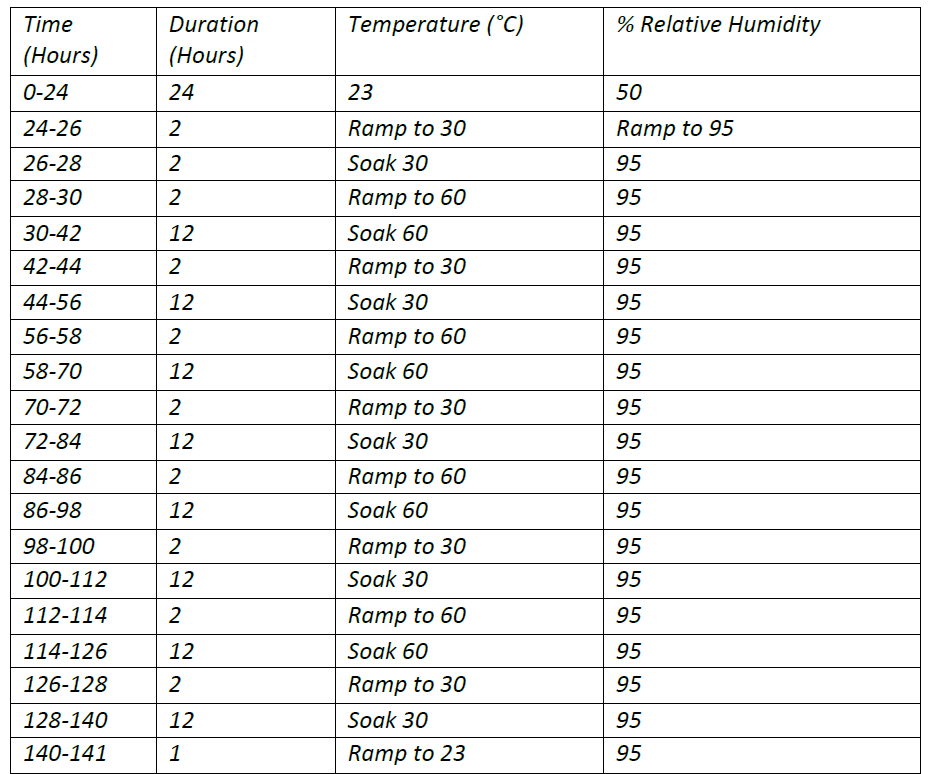 ***Table 2-2: Table of relative humidity / temperature test profile values*** 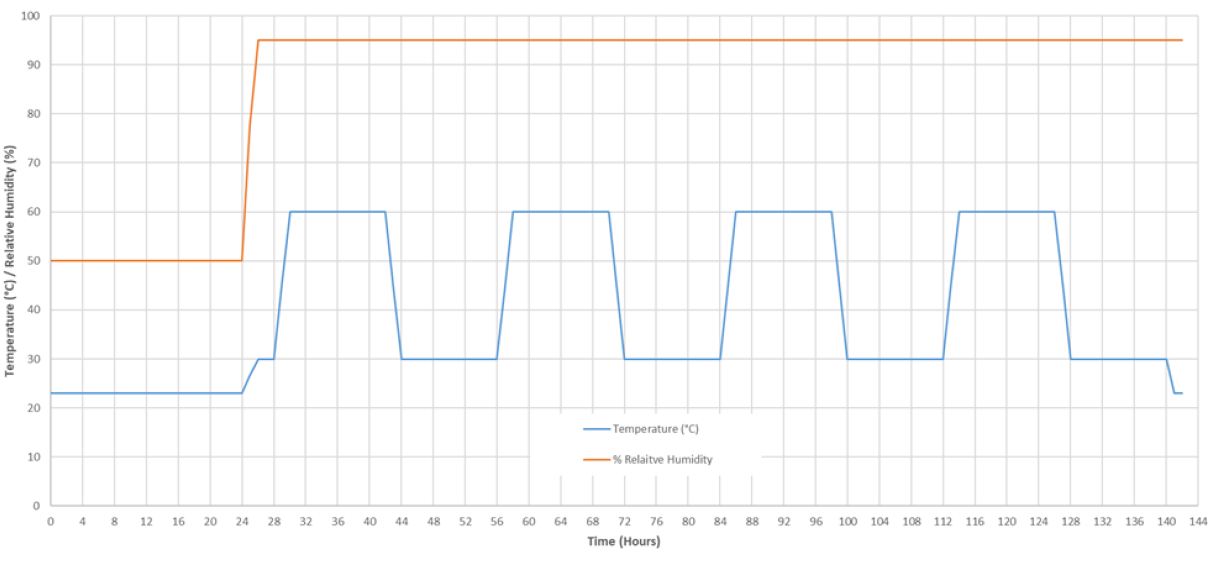 ***Figure 2-16: Humidity test profile of temperature and humidity versus time*** [Amdt ETSO/3] [Amdt ETSO/16]
Contact support