Light
Dark
System
Log In
Loading...
Compare / EASA/
Incorporated Amendments
/
Compare & Highlight Differences
AMC3 ATS.TR.220 Application of wake turbulence separation
Available versions for ERULES-1963177438-17236
ED Decision 2020/008/R
found in: ATM/ANS Provision of Services (2017/373) (Mar 2025)
From
ATM/ANS Provision ... (Mar 2025)
ATM/ANS Provision ... (Feb 2023)
From section
To
ATM/ANS Provision ... (Mar 2025)
ATM/ANS Provision ... (Feb 2023)
To section
No visible text changes
0 removals
0 additions
View
Rich
Plain
Sync scrolling
Share
From
Show details
Hide details
To
Show details
Hide details
Version
Show side by side
AMC3 ATS.TR.220 Application of wake turbulence separation ED Decision 2020/008/R TIME-BASED WAKE TURBULENCE LONGITUDINAL SEPARATION MINIMA — DEPARTING AIRCRAFT (a) A separation minimum of 3 minutes should be applied for a LIGHT or MEDIUM aircraft and 2 minutes for a HEAVY aircraft taking off behind a SUPER aircraft when the aircraft are using: (1) the same runway; (2) parallel runways separated by less than 760 m (2 500 ft); (3) crossing runways if the projected flight path of the second aircraft will cross the projected flight path of the first aircraft at the same altitude or less than 300 m (1 000 ft) below; and (4) parallel runways separated by 760 m (2 500 ft) or more if the projected flight path of the second aircraft will cross the projected flight path of the first aircraft at the same altitude or less than 300 m (1 000 ft) below. (b) A separation minimum of 4 minutes should be applied for a LIGHT or MEDIUM aircraft when taking off behind an SUPER aircraft from: (1) an intermediate part of the same runway; or (2) an intermediate part of a parallel runway separated by less than 760 m (2 500 ft). (c) A separation minimum of 2 minutes should be applied between a LIGHT or MEDIUM aircraft taking off behind a HEAVY aircraft or a LIGHT aircraft taking off behind a MEDIUM aircraft when the aircraft are using: (1) the same runway (see Figure 43); (2) parallel runways separated by less than 760 m (2 500 ft) (see Figure 43); (3) crossing runways if the projected flight path of the second aircraft will cross the projected flight path of the first aircraft at the same altitude or less than 300 m (1 000 ft) below (see Figure 44); and (4) parallel runways separated by 760 m (2 500 ft) or more if the projected flight path of the second aircraft will cross the projected flight path of the first aircraft at the same altitude or less than 300 m (1 000 ft) below (see Figure 44). 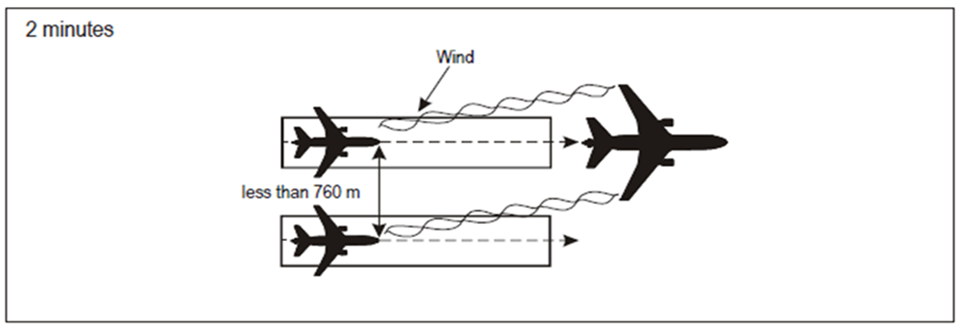 Figure 43: 2-minute separation for following aircraft 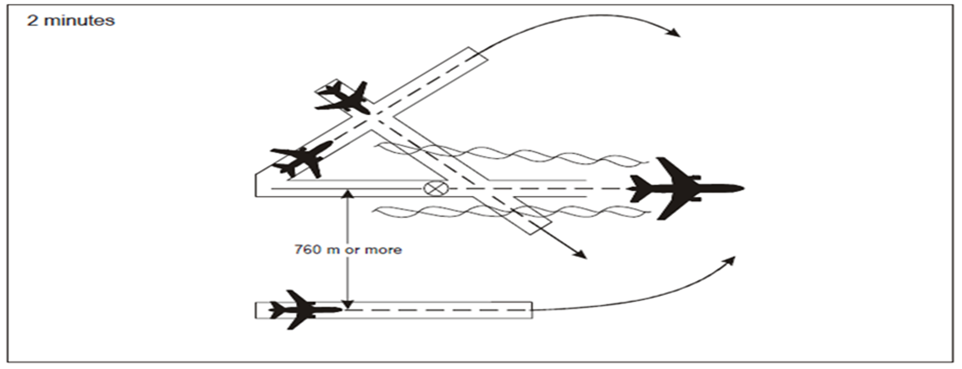 Figure 44: 2-minute wake turbulence separation for crossing aircraft (d) A separation minimum of 3 minutes should be applied (see Figure 45) between a LIGHT or MEDIUM aircraft when taking off behind a HEAVY aircraft or a LIGHT aircraft when taking off behind a MEDIUM aircraft from: (1) an intermediate part of the same runway; or (2) an intermediate part of a parallel runway separated by less than 760 m (2 500 ft). 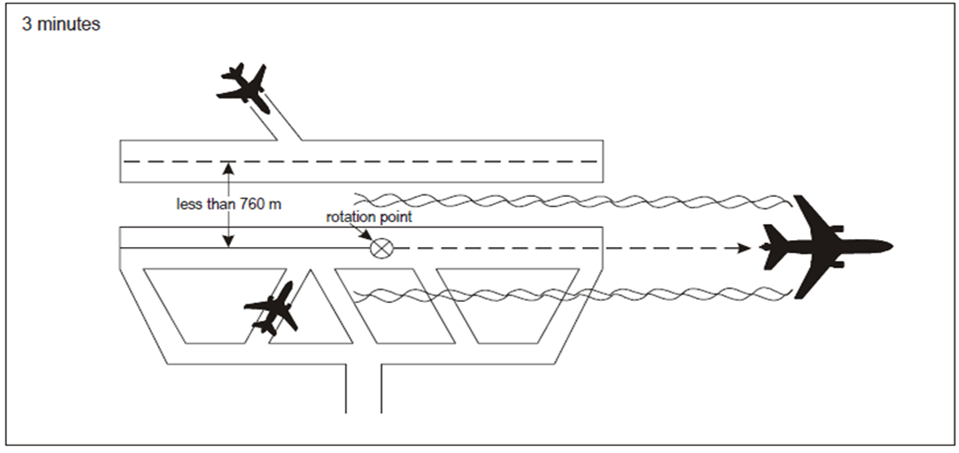 Figure 45: 3-minute wake turbulence separation for following aircraft
AMC3 ATS.TR.220 Application of wake turbulence separation ED Decision 2020/008/R TIME-BASED WAKE TURBULENCE LONGITUDINAL SEPARATION MINIMA — DEPARTING AIRCRAFT (a) A separation minimum of 3 minutes should be applied for a LIGHT or MEDIUM aircraft and 2 minutes for a HEAVY aircraft taking off behind a SUPER aircraft when the aircraft are using: (1) the same runway; (2) parallel runways separated by less than 760 m (2 500 ft); (3) crossing runways if the projected flight path of the second aircraft will cross the projected flight path of the first aircraft at the same altitude or less than 300 m (1 000 ft) below; and (4) parallel runways separated by 760 m (2 500 ft) or more if the projected flight path of the second aircraft will cross the projected flight path of the first aircraft at the same altitude or less than 300 m (1 000 ft) below. (b) A separation minimum of 4 minutes should be applied for a LIGHT or MEDIUM aircraft when taking off behind an SUPER aircraft from: (1) an intermediate part of the same runway; or (2) an intermediate part of a parallel runway separated by less than 760 m (2 500 ft). (c) A separation minimum of 2 minutes should be applied between a LIGHT or MEDIUM aircraft taking off behind a HEAVY aircraft or a LIGHT aircraft taking off behind a MEDIUM aircraft when the aircraft are using: (1) the same runway (see Figure 43); (2) parallel runways separated by less than 760 m (2 500 ft) (see Figure 43); (3) crossing runways if the projected flight path of the second aircraft will cross the projected flight path of the first aircraft at the same altitude or less than 300 m (1 000 ft) below (see Figure 44); and (4) parallel runways separated by 760 m (2 500 ft) or more if the projected flight path of the second aircraft will cross the projected flight path of the first aircraft at the same altitude or less than 300 m (1 000 ft) below (see Figure 44). ![Aviation.Bot AI suggestion, not from EASA source: [Image caption skipped for debugging]](/static/files/file_gqs63YSDadR/image056.png) Figure 43: 2-minute separation for following aircraft ![Aviation.Bot AI suggestion, not from EASA source: [Image caption skipped for debugging]](/static/files/file_gqs63YSDadR/image057.png) Figure 44: 2-minute wake turbulence separation for crossing aircraft (d) A separation minimum of 3 minutes should be applied (see Figure 45) between a LIGHT or MEDIUM aircraft when taking off behind a HEAVY aircraft or a LIGHT aircraft when taking off behind a MEDIUM aircraft from: (1) an intermediate part of the same runway; or (2) an intermediate part of a parallel runway separated by less than 760 m (2 500 ft). ![Aviation.Bot AI suggestion, not from EASA source: [Image caption skipped for debugging]](/static/files/file_gqs63YSDadR/image058.png) Figure 45: 3-minute wake turbulence separation for following aircraft