Light
Dark
System
Log In
Loading...
Compare / EASA/
Incorporated Amendments
/
Compare & Highlight Differences
GM1 ATS.TR.210(c)(2)(ii) Operation of air traffic control service
Available versions for ERULES-1963177438-17231
ED Decision 2020/008/R
found in: ATM/ANS Provision of Services (2017/373) (Feb 2023)
From
ATM/ANS Provision ... (Mar 2025)
ATM/ANS Provision ... (Feb 2023)
From section
To
ATM/ANS Provision ... (Mar 2025)
ATM/ANS Provision ... (Feb 2023)
To section
No visible text changes
0 removals
0 additions
View
Rich
Plain
Sync scrolling
Share
From
Show details
Hide details
To
Show details
Hide details
Version
Show side by side
GM1 ATS.TR.210(c)(2)(ii) Operation of air traffic control service ED Decision 2020/008/R PROCEDURAL CONTROL — LATERAL SEPARATION APPLICATION (a) Lateral separation should be applied so that the distance between those portions of the intended routes for which the aircraft are to be laterally separated is never less than an established distance to account for navigational inaccuracies plus a specified buffer. This buffer should be determined by the air traffic services provider and approved by the competent authority and included in the lateral separation minima as an integral part thereof. (b) Lateral separation of aircraft is obtained by requiring operation on different routes or in different geographical locations as determined by visual observation, by the use of navigation aids or by the use of RNAV equipment. (c) Where a route flown by an aircraft involves a specified turn which will result in the minimum lateral separation being infringed, another type of separation or another minimum shall be established prior to the aircraft commencing the turn (see Figures 41 and 42). (d) For flyover waypoints, aircraft are required to first fly over the waypoint before executing the turn. After the turn, the aircraft may either navigate to join the route immediately after the turn or navigate to the next defined waypoint before rejoining the route. This will require additional lateral separation on the overflown side of the turn (See Figure 41). ![Aviation.Bot AI suggestion, not from EASA source: [Image caption skipped for debugging]](/static/files/file_gqs63YSDadR/image054.png) Figure 41: Turn over flyover waypoint and turn at fly-by waypoint ![Aviation.Bot AI suggestion, not from EASA source: [Image caption skipped for debugging]](/static/files/file_gqs63YSDadR/image055.png) Figure 42: Fixed radius transition (FRT) and radius arc to a Fix (RF) turn
GM1 ATS.TR.210(c)(2)(ii) Operation of air traffic control service ED Decision 2020/008/R PROCEDURAL CONTROL — LATERAL SEPARATION APPLICATION (a) Lateral separation should be applied so that the distance between those portions of the intended routes for which the aircraft are to be laterally separated is never less than an established distance to account for navigational inaccuracies plus a specified buffer. This buffer should be determined by the air traffic services provider and approved by the competent authority and included in the lateral separation minima as an integral part thereof. (b) Lateral separation of aircraft is obtained by requiring operation on different routes or in different geographical locations as determined by visual observation, by the use of navigation aids or by the use of RNAV equipment. (c) Where a route flown by an aircraft involves a specified turn which will result in the minimum lateral separation being infringed, another type of separation or another minimum shall be established prior to the aircraft commencing the turn (see Figures 41 and 42). (d) For flyover waypoints, aircraft are required to first fly over the waypoint before executing the turn. After the turn, the aircraft may either navigate to join the route immediately after the turn or navigate to the next defined waypoint before rejoining the route. This will require additional lateral separation on the overflown side of the turn (See Figure 41). 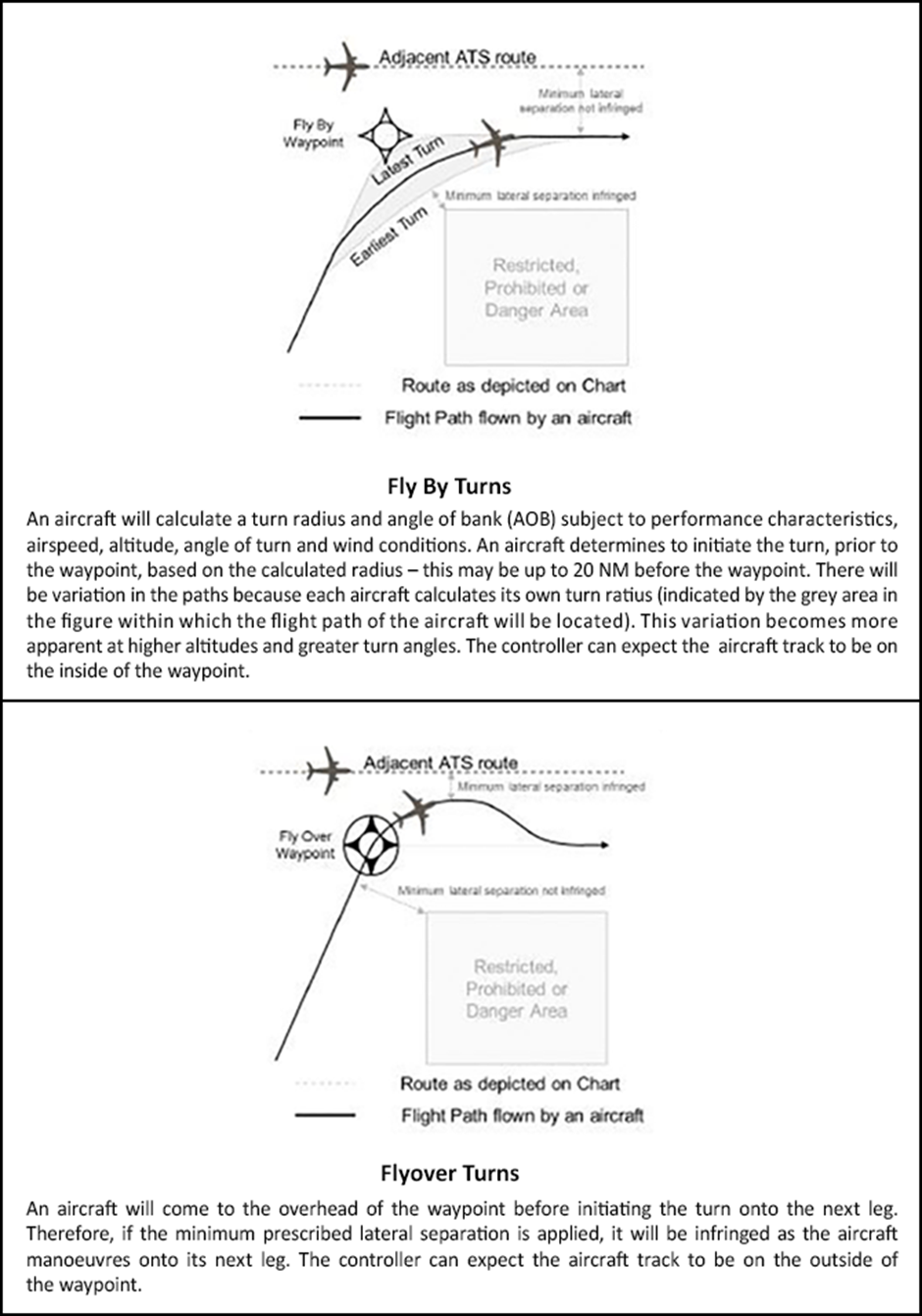 Figure 41: Turn over flyover waypoint and turn at fly-by waypoint 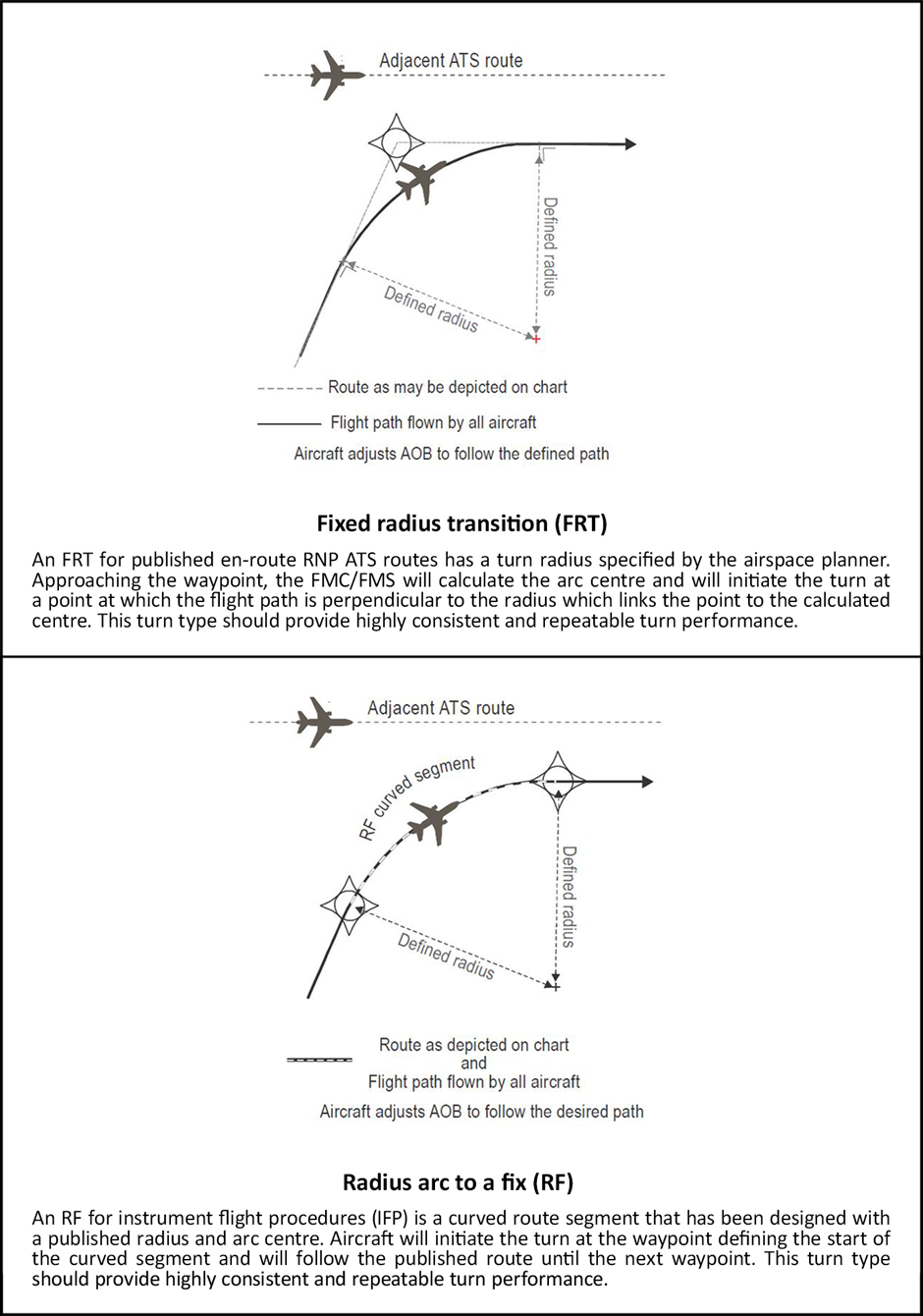 Figure 42: Fixed radius transition (FRT) and radius arc to a Fix (RF) turn