Light
Dark
System
Log In
Loading...
Compare / EASA/
Incorporated Amendments
/
Compare & Highlight Differences
AMC1 CAT.POL.H.205(e) Take-off
Available versions for ERULES-1963177438-12789
ED Decision 2014/015/R
found in: Air Operations (965/2012) Part-ARO Part-ORO Part-CAT Part-SPA Part-NCC Part-NCO Part-SPO (Sep 2023)
From
Air Operations Rev... (Mar 2026)
Air Operations (96... (Feb 2025)
Air Operations (96... (Sep 2023)
From section
To
Air Operations Rev... (Mar 2026)
Air Operations (96... (Feb 2025)
Air Operations (96... (Sep 2023)
To section
No visible text changes
0 removals
0 additions
View
Rich
Plain
Sync scrolling
Share
From
Show details
Hide details
To
Show details
Hide details
Version
Show side by side
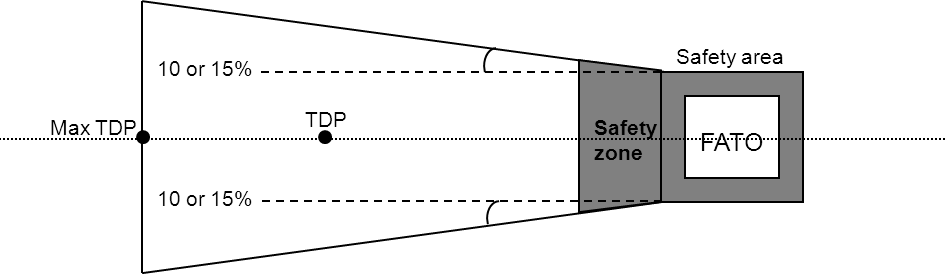
AMC1 CAT.POL.H.205(e) Take-off ED Decision 2014/015/R OBSTACLE CLEARANCE IN THE BACKUP AREA (a) The requirement in [CAT.POL.H.205](#_DxCrossRefBm318086479)(e) has been established in order to take into account the following factors: (1) in the backup: the pilot has few visual cues and has to rely upon the altimeter and sight picture through the front window (if flight path guidance is not provided) to achieve an accurate rearward flight path; (2) in the rejected take-off: the pilot has to be able to manage the descent against a varying forward speed whilst still ensuring an adequate clearance from obstacles until the helicopter gets in close proximity for landing on the FATO; and (3) in the continued take-off; the pilot has to be able to accelerate to VTOSS (take-off safety speed for Category A helicopters) whilst ensuring an adequate clearance from obstacles. (b) The requirements of [CAT.POL.H.205](#_DxCrossRefBm318086479)(e) may be achieved by establishing that: (1) in the backup area no obstacles are located within the safety zone below the rearward flight path when described in the AFM (see Figure 1, in the absence of such data in the AFM, the operator should contact the manufacturer in order to define a safety zone);or (2) during the backup, the rejected take-off and the continued take-off manoeuvres, obstacle clearance is demonstrated to the competent authority. Figure 1 Rearward flight path 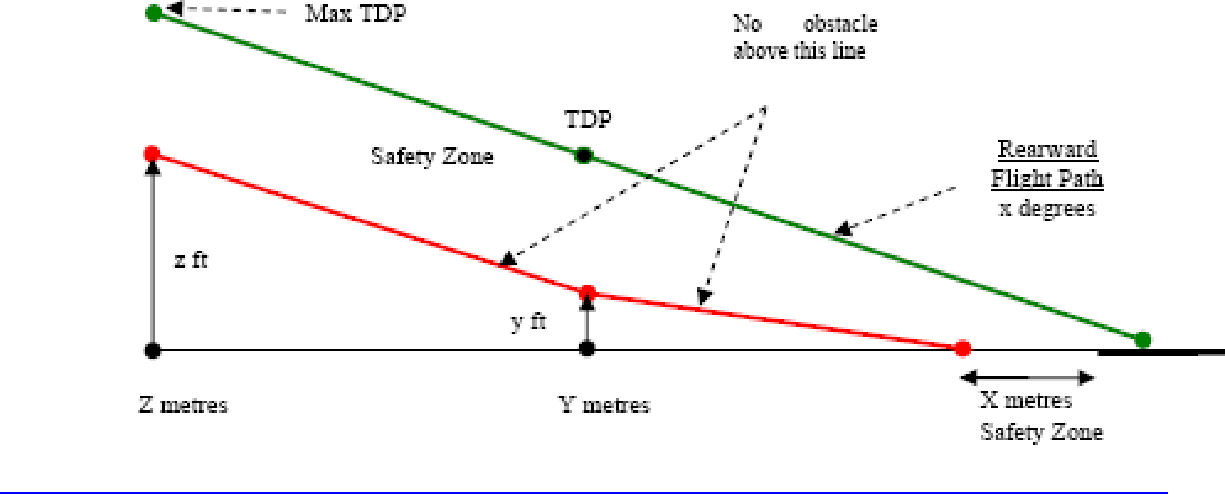 (c) An obstacle, in the backup area, is considered if its lateral distance from the nearest point on the surface below the intended flight path is not further than: (1) half of the minimum FATO (or the equivalent term used in the AFM) width defined in the AFM (or, when no width is defined 0.75 D, where D is the largest dimension of the helicopter when the rotors are turning); plus (2) 0.25 times D (or 3 m, whichever is greater); plus (3) 0.10 for VFR day, or 0.15 for VFR night, of the distance travelled from the back of the FATO (see Figure 2). Figure 2 Obstacle accountability 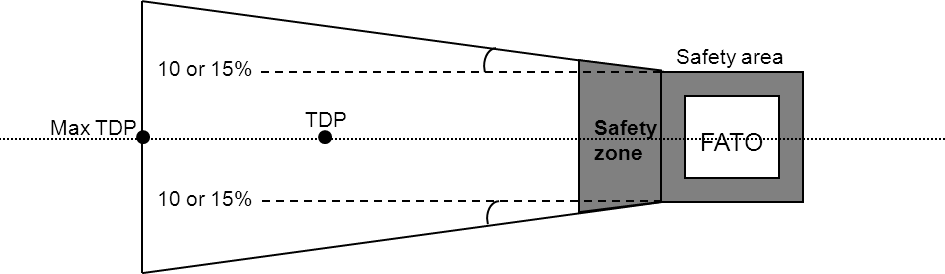
AMC1 CAT.POL.H.205(e) Take-off ED Decision 2014/015/R OBSTACLE CLEARANCE IN THE BACKUP AREA (a) The requirement in [CAT.POL.H.205](#_DxCrossRefBm927678859)(e) has been established in order to take into account the following factors: (1) in the backup: the pilot has few visual cues and has to rely upon the altimeter and sight picture through the front window (if flight path guidance is not provided) to achieve an accurate rearward flight path; (2) in the rejected take-off: the pilot has to be able to manage the descent against a varying forward speed whilst still ensuring an adequate clearance from obstacles until the helicopter gets in close proximity for landing on the FATO; and (3) in the continued take-off; the pilot has to be able to accelerate to VTOSS (take-off safety speed for Category A helicopters) whilst ensuring an adequate clearance from obstacles. (b) The requirements of [CAT.POL.H.205](#_DxCrossRefBm927678859)(e) may be achieved by establishing that: (1) in the backup area no obstacles are located within the safety zone below the rearward flight path when described in the AFM (see Figure 1, in the absence of such data in the AFM, the operator should contact the manufacturer in order to define a safety zone);or (2) during the backup, the rejected take-off and the continued take-off manoeuvres, obstacle clearance is demonstrated to the competent authority. Figure 1 Rearward flight path 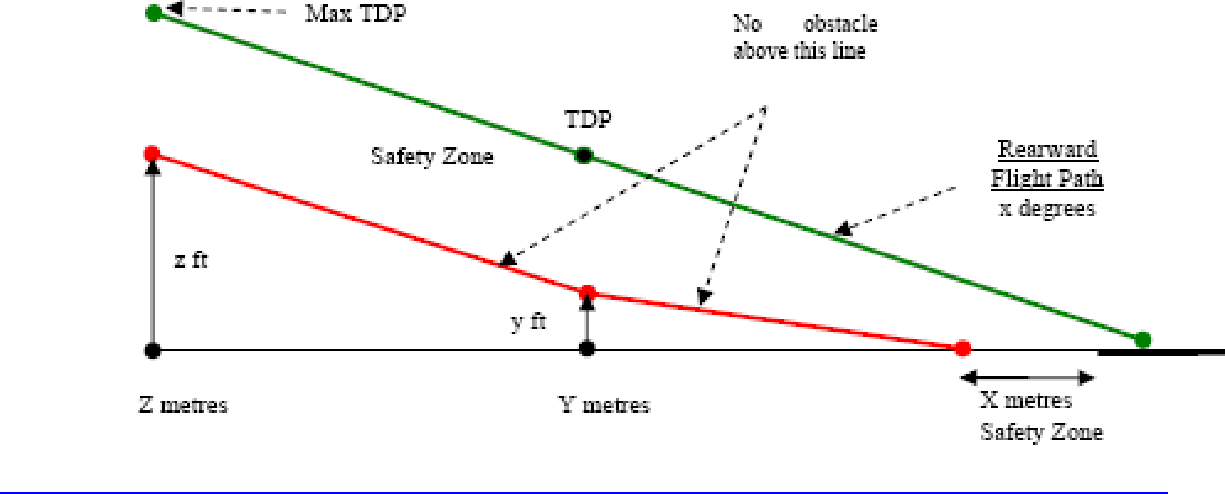 (c) An obstacle, in the backup area, is considered if its lateral distance from the nearest point on the surface below the intended flight path is not further than: (1) half of the minimum FATO (or the equivalent term used in the AFM) width defined in the AFM (or, when no width is defined 0.75 D, where D is the largest dimension of the helicopter when the rotors are turning); plus (2) 0.25 times D (or 3 m, whichever is greater); plus (3) 0.10 for VFR day, or 0.15 for VFR night, of the distance travelled from the back of the FATO (see Figure 2). Figure 2 Obstacle accountability 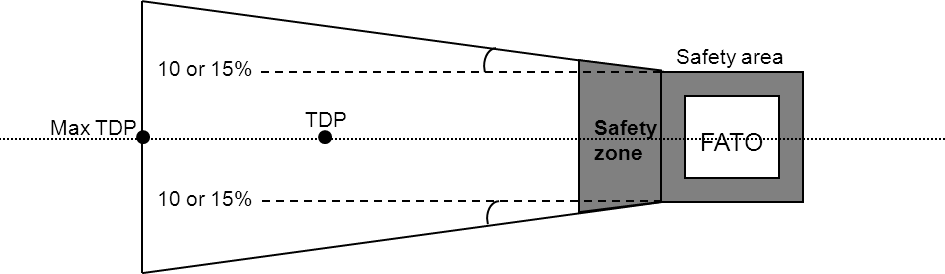
##### AMC1 CAT.POL.H.205(e) Take-off *ED Decision 2014/015/R* **OBSTACLE CLEARANCE IN THE BACKUP AREA** (a) The requirement in [CAT.POL.H.205](#_DxCrossRefBm523088415)(e) has been established in order to take into account the following factors: (1) in the backup: the pilot has few visual cues and has to rely upon the altimeter and sight picture through the front window (if flight path guidance is not provided) to achieve an accurate rearward flight path; (2) in the rejected take-off: the pilot has to be able to manage the descent against a varying forward speed whilst still ensuring an adequate clearance from obstacles until the helicopter gets in close proximity for landing on the FATO; and (3) in the continued take-off; the pilot has to be able to accelerate to VTOSS (take-off safety speed for Category A helicopters) whilst ensuring an adequate clearance from obstacles. (b) The requirements of [CAT.POL.H.205](#_DxCrossRefBm523088415)(e) may be achieved by establishing that: (1) in the backup area no obstacles are located within the safety zone below the rearward flight path when described in the AFM (see Figure 1, in the absence of such data in the AFM, the operator should contact the manufacturer in order to define a safety zone);or (2) during the backup, the rejected take-off and the continued take-off manoeuvres, obstacle clearance is demonstrated to the competent authority. ***Figure 1*** Rearward flight path 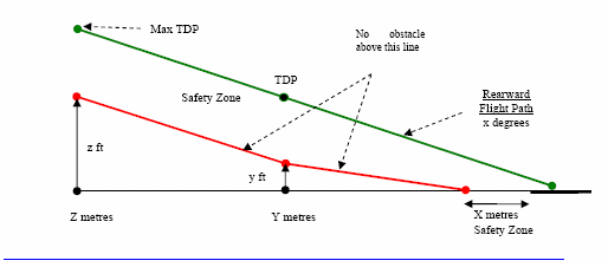 (c) An obstacle, in the backup area, is considered if its lateral distance from the nearest point on the surface below the intended flight path is not further than: (1) half of the minimum FATO (or the equivalent term used in the AFM) width defined in the AFM (or, when no width is defined 0.75 D, where D is the largest dimension of the helicopter when the rotors are turning); plus (2) 0.25 times D (or 3 m, whichever is greater); plus (3) 0.10 for VFR day, or 0.15 for VFR night, of the distance travelled from the back of the FATO (see Figure 2). ***Figure 2*** Obstacle accountability