Light
Dark
System
Log In
Loading...
Compare / EASA/
Incorporated Amendments
/
Compare & Highlight Differences
AMC1 CAT.POL.A.415 En-route - OEI
Available versions for ERULES-1963177438-12716
ED Decision 2014/015/R
found in: Air Operations (965/2012) Part-ARO Part-ORO Part-CAT Part-SPA Part-NCC Part-NCO Part-SPO (Sep 2023)
From
Air Operations Rev... (Mar 2026)
Air Operations (96... (Feb 2025)
Air Operations (96... (Sep 2023)
From section
To
Air Operations Rev... (Mar 2026)
Air Operations (96... (Feb 2025)
Air Operations (96... (Sep 2023)
To section
No visible text changes
0 removals
0 additions
View
Rich
Plain
Sync scrolling
Share
From
Show details
Hide details
To
Show details
Hide details
Version
Show side by side
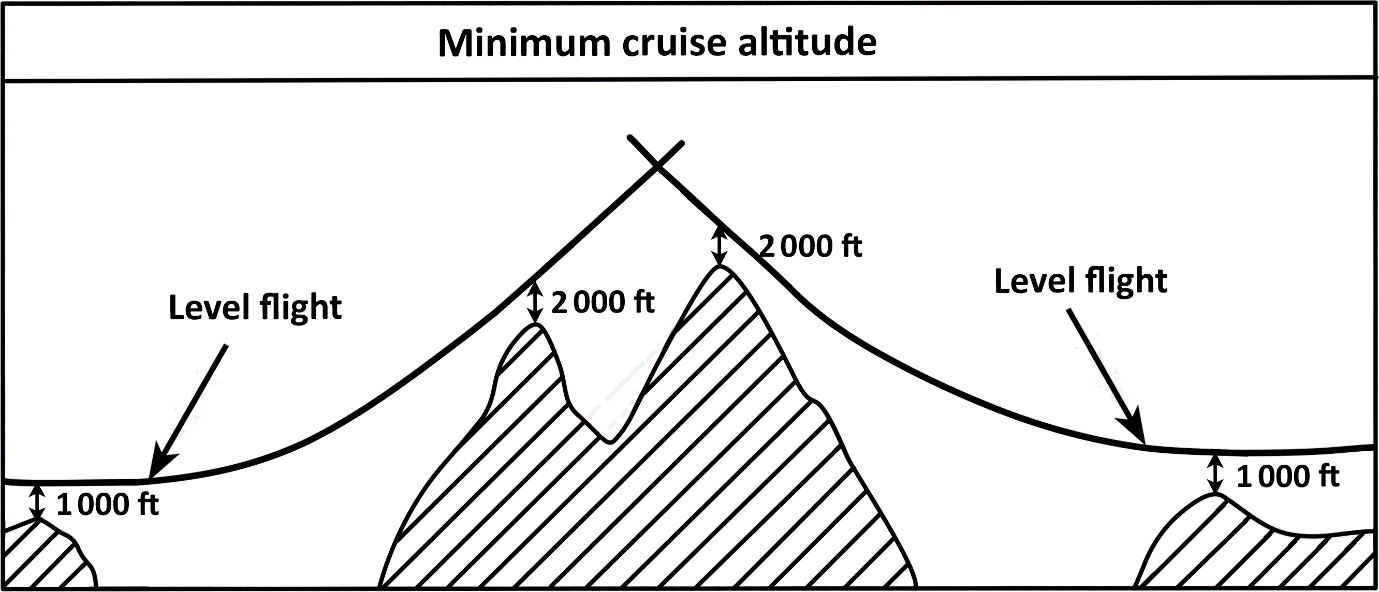
AMC1 CAT.POL.A.415 En-route – OEI ED Decision 2014/015/R ROUTE ANALYSIS The high terrain or obstacle analysis should be carried out by making a detailed analysis of the route using contour maps of the high terrain, and plotting the highest points within the prescribed corridor width along the route. The next step is to determine whether it is possible to maintain level flight with OEI 1 000 ft above the highest point of the crossing. If this is not possible, or if the associated weight penalties are unacceptable, a drift down procedure must be evaluated, based on engine failure at the most critical point, and must show obstacle clearance during the drift down by at least 2 000 ft. The minimum cruise altitude is determined from the drift down path, taking into account allowances for decision making, and the reduction in the scheduled rate of climb (See Figure 1). Figure 1 Intersection of the drift down paths 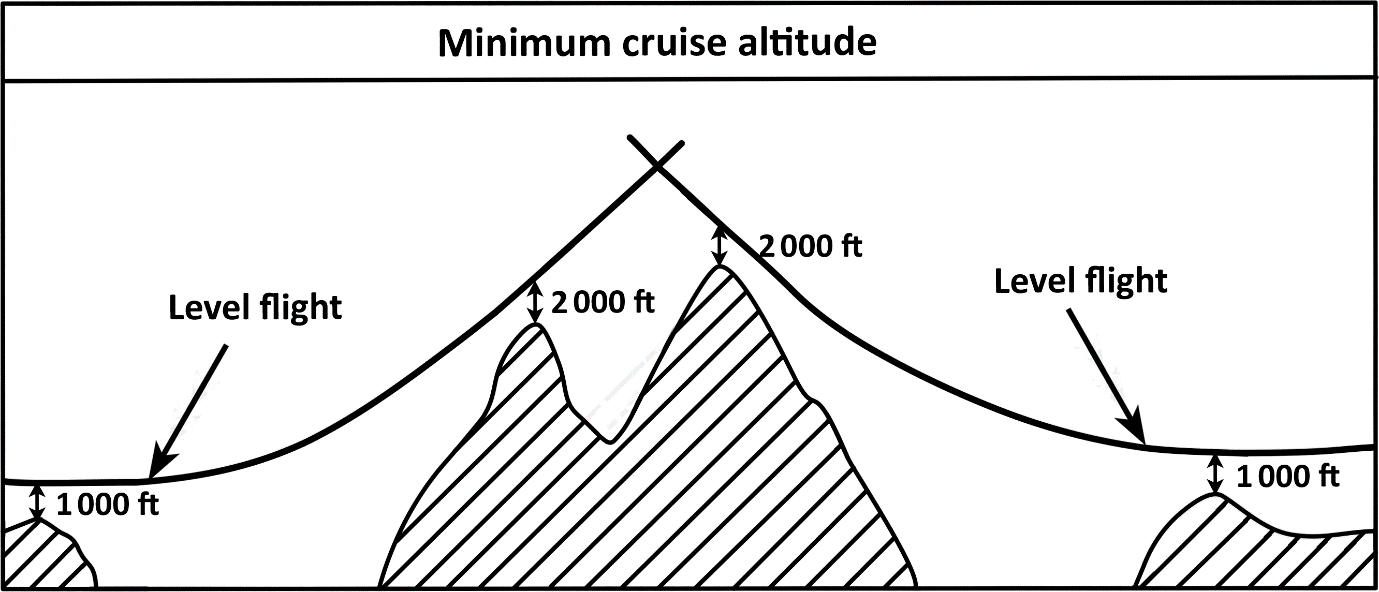
AMC1 CAT.POL.A.415 En-route – OEI ED Decision 2014/015/R ROUTE ANALYSIS The high terrain or obstacle analysis should be carried out by making a detailed analysis of the route using contour maps of the high terrain, and plotting the highest points within the prescribed corridor width along the route. The next step is to determine whether it is possible to maintain level flight with OEI 1 000 ft above the highest point of the crossing. If this is not possible, or if the associated weight penalties are unacceptable, a drift down procedure must be evaluated, based on engine failure at the most critical point, and must show obstacle clearance during the drift down by at least 2 000 ft. The minimum cruise altitude is determined from the drift down path, taking into account allowances for decision making, and the reduction in the scheduled rate of climb (See Figure 1). Figure 1 Intersection of the drift down paths 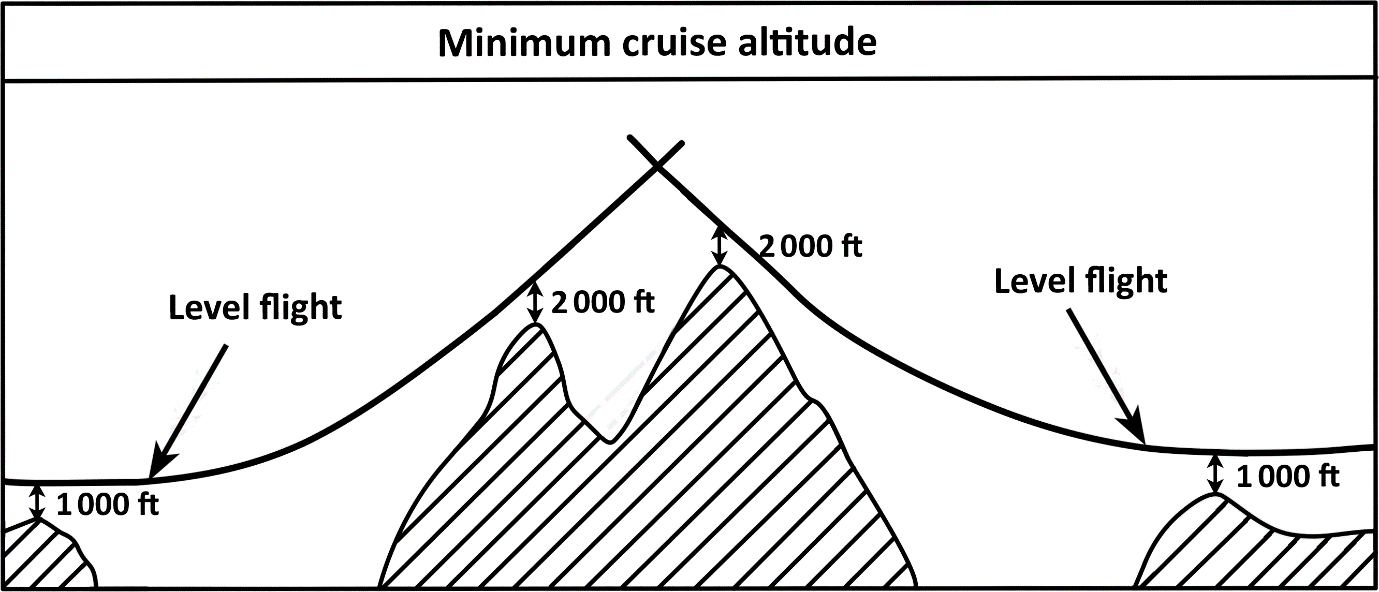
##### AMC1 CAT.POL.A.415 En-route – OEI *ED Decision 2014/015/R* **ROUTE ANALYSIS** The high terrain or obstacle analysis should be carried out by making a detailed analysis of the route using contour maps of the high terrain, and plotting the highest points within the prescribed corridor width along the route. The next step is to determine whether it is possible to maintain level flight with OEI 1 000 ft above the highest point of the crossing. If this is not possible, or if the associated weight penalties are unacceptable, a drift down procedure must be evaluated, based on engine failure at the most critical point, and must show obstacle clearance during the drift down by at least 2 000 ft. The minimum cruise altitude is determined from the drift down path, taking into account allowances for decision making, and the reduction in the scheduled rate of climb (See Figure 1). ***Figure 1*** Intersection of the drift down paths