Light
Dark
System
Log In
Loading...
Compare / EASA/
Incorporated Amendments
/
Compare & Highlight Differences
CS HPT-DSN.F.520 Heliport identification marking
Available versions for ERULES-1963177438-12339
ED Decision 2019/012/R
found in: Aerodromes (139/2014) Part-ADR.AR Part-ADR.OR Part-ADR.OPS CS-ADR-DSN CS-HPT-DSN (Dec 2024)
From
Easy Access Rules ... (Mar 2026)
Aerodromes (139/20... (Dec 2024)
Aerodromes (139/20... (Jun 2023)
From section
To
Easy Access Rules ... (Mar 2026)
Aerodromes (139/20... (Dec 2024)
Aerodromes (139/20... (Jun 2023)
To section
No visible text changes
0 removals
0 additions
View
Rich
Plain
Sync scrolling
Share
From
Show details
Hide details
To
Show details
Hide details
Version
Show side by side
CS HPT-DSN.F.520 Heliport identification marking ED Decision 2019/012/R (a) Applicability: Heliport identification markings should be provided at a heliport. (b) Location: (1) For runway-type FATOs: A heliport identification marking should be located in the FATO and when used in conjunction with FATO designation markings, should be displayed at each end of the FATO (see Figure F-2). (2) For all FATOs except runway-type FATOs: (i) A heliport identification marking should be located at or near the centre of the FATO (see Figure F-1). (ii) On a FATO which contains a TLOF, a heliport identification marking should be located in the FATO so that the position of it coincides with the centre of the TLOF. (c) Characteristics: (1) A heliport identification marking should consist of a letter ‘H’, white in colour. The dimensions of the ‘H’ marking should be no less than those shown in Figure F-3. (2) Where the ‘H’ marking is used for a runway-type FATO, its dimensions should be increased by a factor of 3 (see Figures F-2 and F-3). (3) A heliport identification marking should be oriented with the cross arm of the ‘H’ at right angles to the preferred final approach direction. 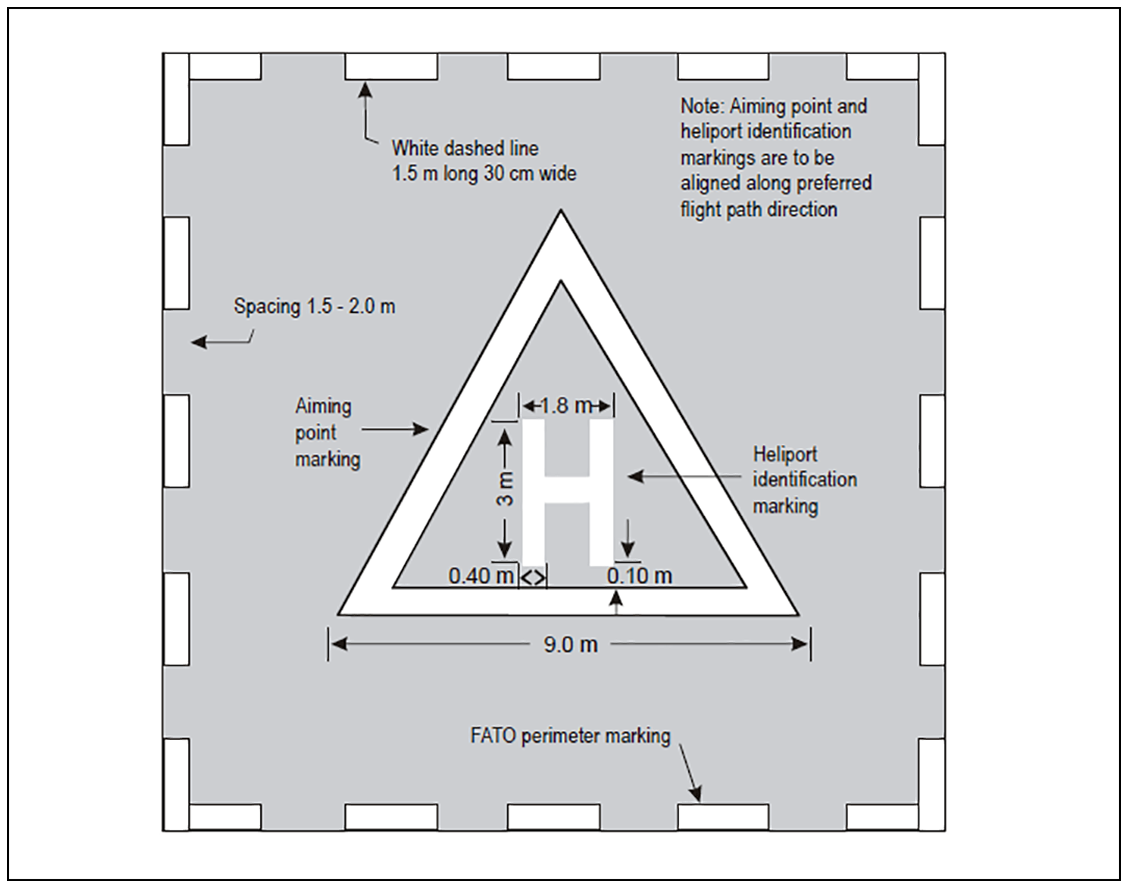 **Note:** The aiming point, heliport identification and FATO perimeter markings are white and may be edged with a 10 cm black border to improve contrast Figure F-1. Combined heliport identification, aiming point and FATO perimeter marking 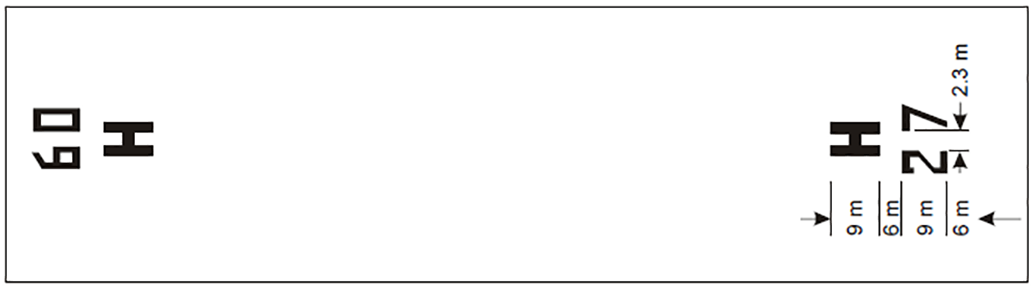 Figure F-2. FATO designation marking and heliport identification marking for a runway-type FATO 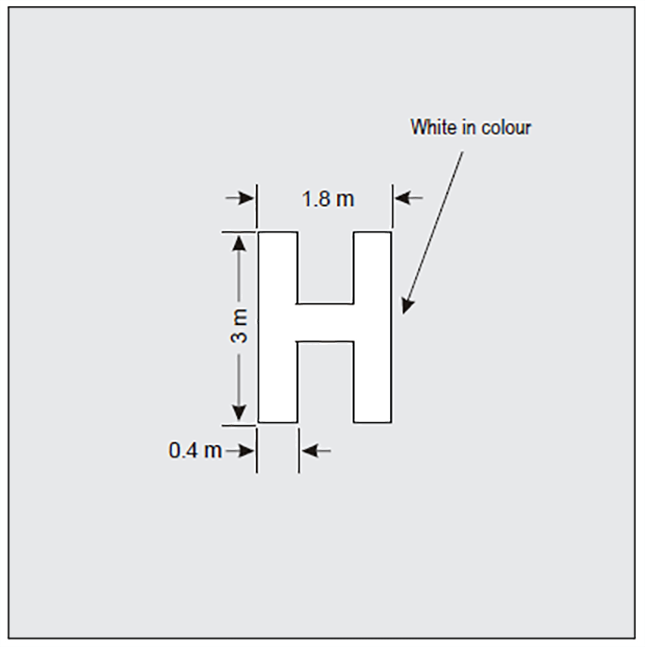 Figure F-3. Heliport identification marking
CS HPT-DSN.F.520 Heliport identification marking ED Decision 2019/012/R (a) Applicability: Heliport identification markings should be provided at a heliport. (b) Location: (1) For runway-type FATOs: A heliport identification marking should be located in the FATO and when used in conjunction with FATO designation markings, should be displayed at each end of the FATO (see Figure F-2). (2) For all FATOs except runway-type FATOs: (i) A heliport identification marking should be located at or near the centre of the FATO (see Figure F-1). (ii) On a FATO which contains a TLOF, a heliport identification marking should be located in the FATO so that the position of it coincides with the centre of the TLOF. (c) Characteristics: (1) A heliport identification marking should consist of a letter ‘H’, white in colour. The dimensions of the ‘H’ marking should be no less than those shown in Figure F-3. (2) Where the ‘H’ marking is used for a runway-type FATO, its dimensions should be increased by a factor of 3 (see Figures F-2 and F-3). (3) A heliport identification marking should be oriented with the cross arm of the ‘H’ at right angles to the preferred final approach direction. 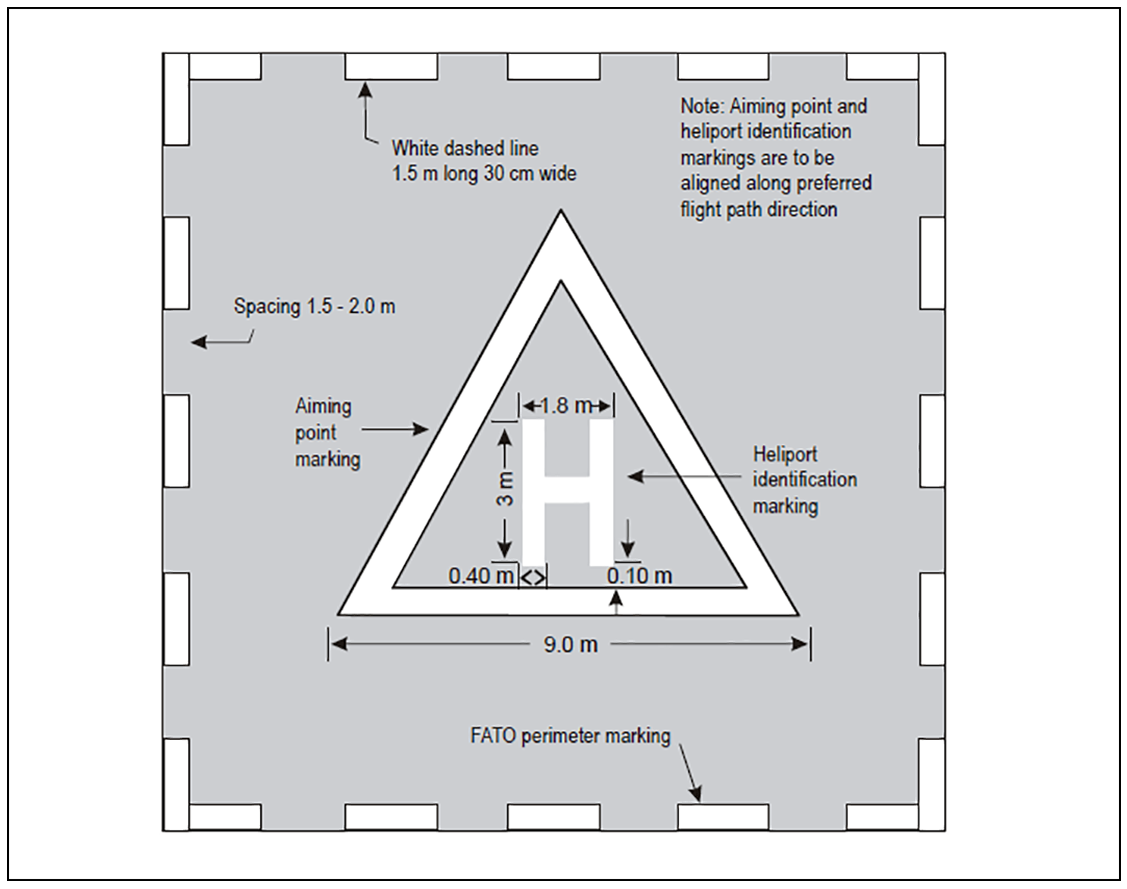 **Note:** The aiming point, heliport identification and FATO perimeter markings are white and may be edged with a 10 cm black border to improve contrast Figure F-1. Combined heliport identification, aiming point and FATO perimeter marking 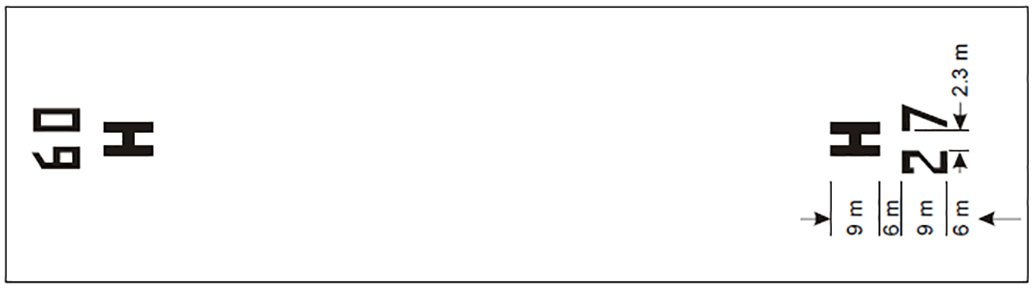 Figure F-2. FATO designation marking and heliport identification marking for a runway-type FATO 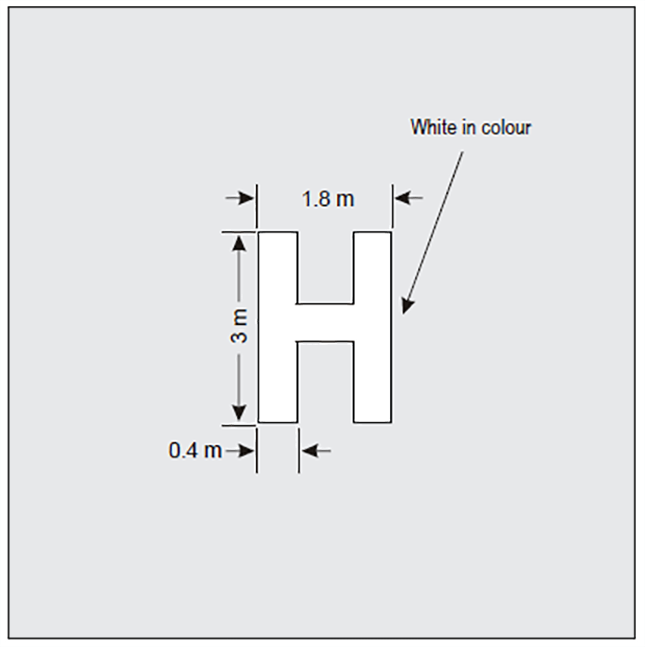 Figure F-3. Heliport identification marking
#### CS HPT-DSN.F.520 Heliport identification marking *ED Decision 2019/012/R* (a) Applicability: Heliport identification markings should be provided at a heliport. (b) Location: (1) For runway-type FATOs: A heliport identification marking should be located in the FATO and when used in conjunction with FATO designation markings, should be displayed at each end of the FATO (see Figure F-2). (2) For all FATOs except runway-type FATOs: (i) A heliport identification marking should be located at or near the centre of the FATO (see Figure F-1). (ii) On a FATO which contains a TLOF, a heliport identification marking should be located in the FATO so that the position of it coincides with the centre of the TLOF. (c) Characteristics: (1) A heliport identification marking should consist of a letter ‘H’, white in colour. The dimensions of the ‘H’ marking should be no less than those shown in Figure F-3. (2) Where the ‘H’ marking is used for a runway-type FATO, its dimensions should be increased by a factor of 3 (see Figures F-2 and F-3). (3) A heliport identification marking should be oriented with the cross arm of the ‘H’ at right angles to the preferred final approach direction. 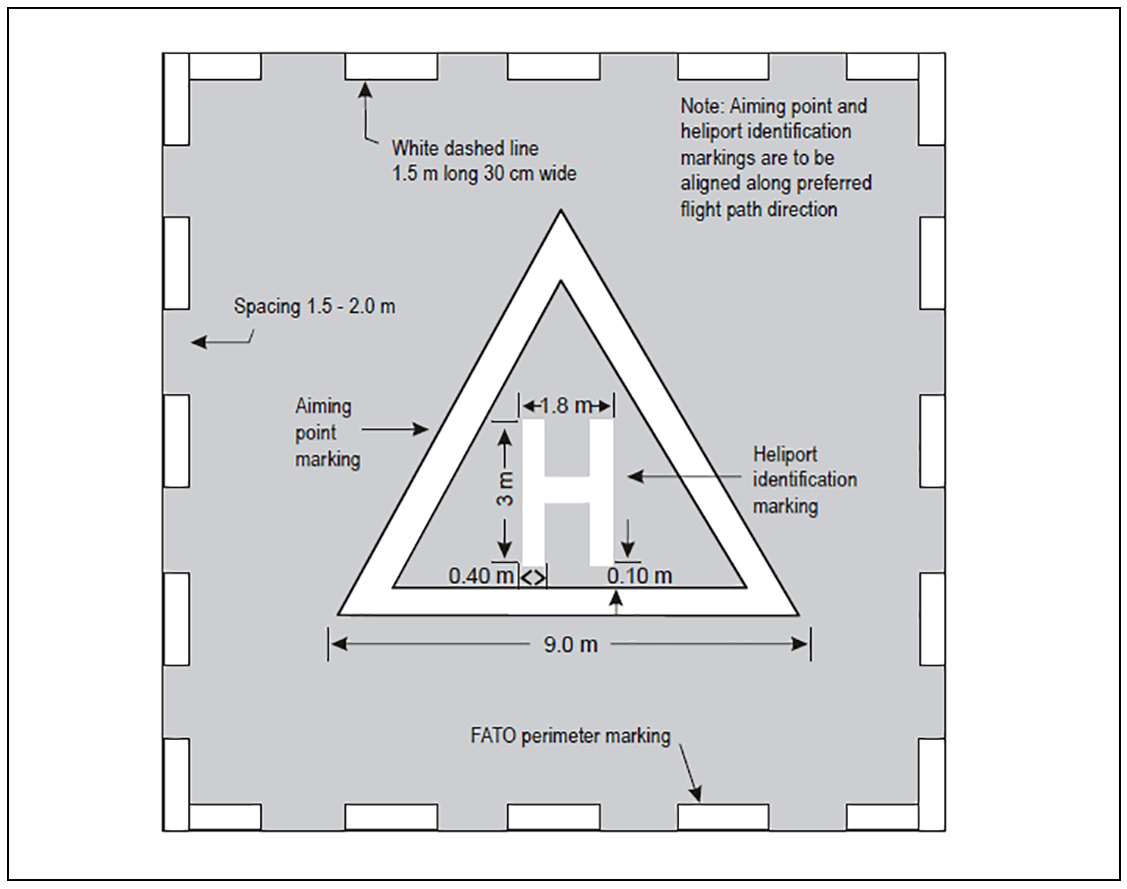 **Note:** The aiming point, heliport identification and FATO perimeter markings are white and may be edged with a 10 cm black border to improve contrast ***Figure F-1. Combined heliport identification, aiming point and FATO perimeter marking*** 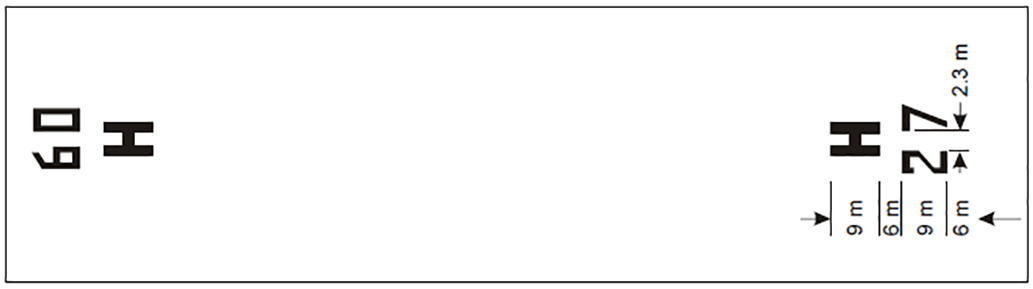 ***Figure F-2. FATO designation marking and heliport identification marking for a runway-type FATO*** 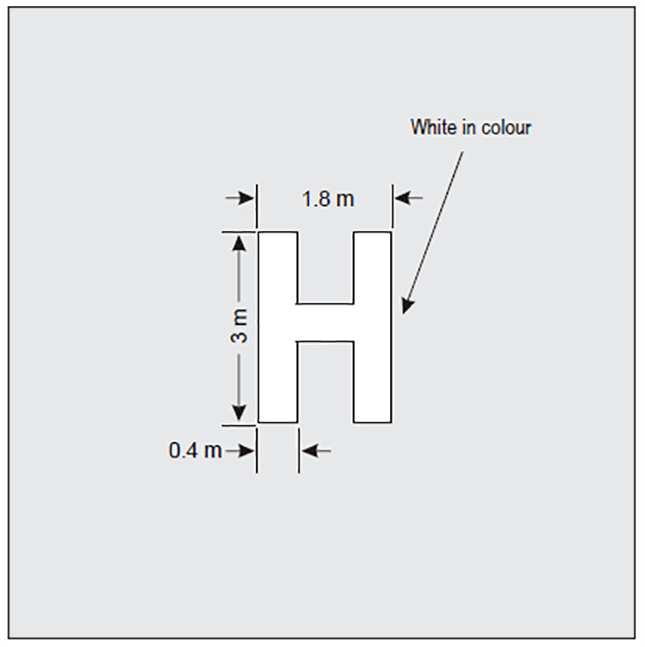 ***Figure F-3. Heliport identification marking***