Light
Dark
System
Log In
Loading...
Compare / EASA/
Incorporated Amendments
/
Compare & Highlight Differences
GM5 ORA.ATO.230(a) Training manual and operations manual
Available versions for ERULES-1963177438-11178
ED Decision 2018/001/R
found in: Aircrew (1178/2011) Part-FCL Part-MED Part-CC Part-ARA Part-ORA Part-DTO (Dec 2024)
From
Aircrew (1178/2011... (Nov 2025)
Aircrew (1178/2011... (Dec 2024)
Aircrew (1178/2011... (Aug 2023)
From section
To
Aircrew (1178/2011... (Nov 2025)
Aircrew (1178/2011... (Dec 2024)
Aircrew (1178/2011... (Aug 2023)
To section
No visible text changes
0 removals
0 additions
View
Rich
Plain
Sync scrolling
Share
From
Show details
Hide details
To
Show details
Hide details
Version
Show side by side
GM5 ORA.ATO.230(a) Training manual and operations manual ED Decision 2018/001/R INSTRUCTIONAL SYSTEMS DESIGN (a) The instructional systems design (ISD) provides a systematic and iterative process for course design based on educational best practices. There are several effective ISD models in use today, with the analyse, design, develop, implement and evaluate (ADDIE) framework being generic to all. The purpose of using ISD to design training courses is to facilitate the students’ efficient and effective acquisition of knowledge and skills based on current training needs. (b) To provide evidence of the effective use of the ISD methodology in the design and continued development of their course(s), an ATO may use documentation and records that relate to the ISD phases. (d) ADDIE model example. The ‘analysis’, ‘design’, ‘development’, ‘implementation’ and ‘evaluation’ phases of the ADDIE model are shown below with brief phase descriptions. ![Aviation.Bot AI suggestion, not from EASA source: [Image caption skipped for debugging]](/static/files/file_9JKOJCH3CSC/image015.png)
GM5 ORA.ATO.230(a) Training manual and operations manual ED Decision 2018/001/R INSTRUCTIONAL SYSTEMS DESIGN (a) The instructional systems design (ISD) provides a systematic and iterative process for course design based on educational best practices. There are several effective ISD models in use today, with the analyse, design, develop, implement and evaluate (ADDIE) framework being generic to all. The purpose of using ISD to design training courses is to facilitate the students’ efficient and effective acquisition of knowledge and skills based on current training needs. (b) To provide evidence of the effective use of the ISD methodology in the design and continued development of their course(s), an ATO may use documentation and records that relate to the ISD phases. (d) ADDIE model example. The ‘analysis’, ‘design’, ‘development’, ‘implementation’ and ‘evaluation’ phases of the ADDIE model are shown below with brief phase descriptions. 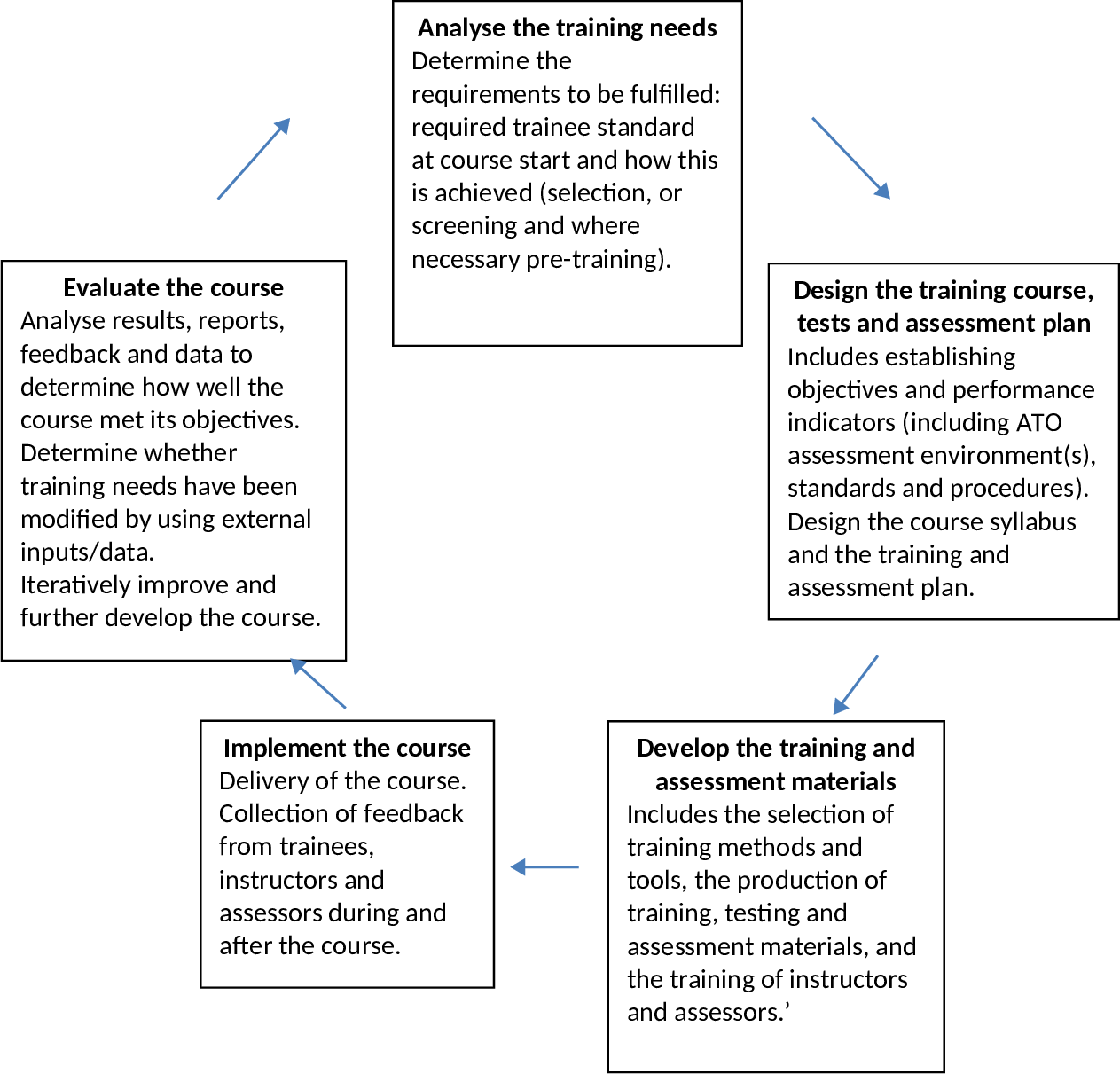
##### GM5 ORA.ATO.230(a) Training manual and operations manual *ED Decision 2018/001/R* **INSTRUCTIONAL SYSTEMS DESIGN** (a) The instructional systems design (ISD) provides a systematic and iterative process for course design based on educational best practices. There are several effective ISD models in use today, with the analyse, design, develop, implement and evaluate (ADDIE) framework being generic to all. The purpose of using ISD to design training courses is to facilitate the students’ efficient and effective acquisition of knowledge and skills based on current training needs. (b) To provide evidence of the effective use of the ISD methodology in the design and continued development of their course(s), an ATO may use documentation and records that relate to the ISD phases. (d) ADDIE model example. The ‘analysis’, ‘design’, ‘development’, ‘implementation’ and ‘evaluation’ phases of the ADDIE model are shown below with brief phase descriptions.