MOC VTOL.2225 Component Loading
Conditions
n/a
1. Engine Torque
(a) For turbine engines, CS 27.361(a) Amdt. 6 is accepted as a means of compliance.
(b) For reciprocating engines, CS 27.361(b) Amdt. 6 is accepted as a means of compliance.
(c) For electrical engines, the limit torque should not be less than the highest of:
(1) The torque imposed by sudden engine stoppage due to malfunction or structural failure (such as rotor jamming), and
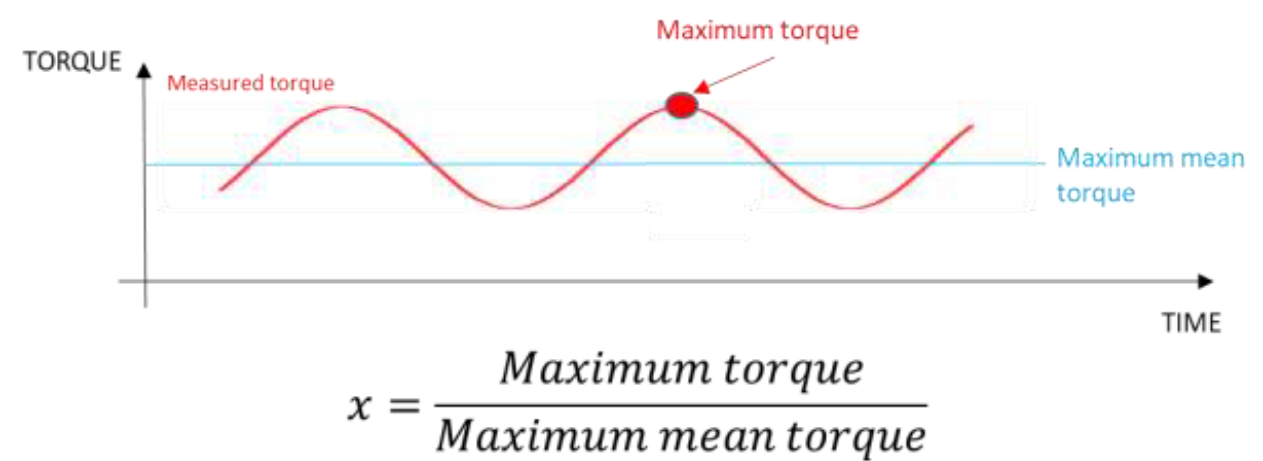
(2) The mean torque multiplied by one of the following factors:
(i) 1.25 for engines for which torque oscillations as a function of time are shown to be negligible, i.e. in the same range as a turbine engine
(ii) 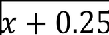

2. Unsymmetrical loads for horizontal aerodynamic surfaces
(a) CS 27.427 Amdt. 6 is accepted as a means of compliance for horizontal aerodynamic surfaces that do not have installed lift/thrust units.
(b) In case of a load distribution deviation from CS 27.427 (b) Amdt. 6 and for designs with lift/thrust units installed on the horizontal aerodynamic surface, the applicant is expected to provide the rationale justifying that the selected load distribution conservatively addresses the limit flight load conditions of MOC VTOL.2215. Combinations of unsymmetrical loads, within the design envelope, should be considered including those resulting from asymmetric wing slip-stream effects, lift/thrust unit asymmetric thrust, propeller or lift/thrust unit wake effects and unsymmetrical control surface forces, as applicable. Dedicated flight load and/or wind tunnel measurements should be performed to confirm the suitability of the proposed criteria.
3. Outboard fins or winglets
(a) If outboard fins or winglets are included on the horizontal surfaces or wings, the horizontal surfaces or wings should be designed for their maximum load in combination with loads induced by the fins or winglets and moment or forces exerted on horizontal surfaces or wings by the fins or winglets.
(b) The endplate effects of outboard fins or winglets should be taken into account in applying the flight conditions of MOC VTOL.2215 to the vertical surfaces.
(c) If outboard fins or winglets extend above and below the horizontal surface, the critical vertical surface loading (the maximum load per unit area as determined under MOC VTOL.2215) should be applied as follows:
(1) For configurations where there is no possible influence of the lift/thrust unit wake on the outboard fin or winglet:
(iii) The part of the vertical surfaces above the horizontal surface, with 80% of that loading applied to the part below the horizontal surface; and
(iv) The part of the vertical surfaces below the horizontal surface, with 80% of that loading applied to the part above the horizontal surface;
(2) For configurations with possible influence of the lift/thrust unit wake on the outboard fin or winglet a conservative loading distribution should be determined, supported by flight load and/or wind tunnel measurement.
4. Special Devices
CS 23.459 Amdt. 4 is accepted as a means of compliance.