ED Decision 2003/13/RM
(a) When winglets are installed the sailplane must be designed for -
(1) The side loads due to maximum sideslip angle of the winglet at VA;
(2) Loads resulting from gusts acting perpendicularly to the surface of the winglet at VB and VD;
(3) Mutual interaction effects of winglets and wing on aerodynamic loads;
(4) Hand forces on the winglets; and
(5) Loads due to wingtip landing as specified in CS 22.501, if the winglet can touch the ground. (See AMC 22.375(a))
(b) In the absence of more rational analysis the loads must be computed as follows:
(1) The lift at the winglets due to sideslip at VA –

where:


(2) The lift at the winglets due to lateral gust at VB and VD –
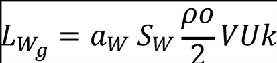
where:
U = lateral gust velocity at the values as described in CS 22.333(c)


The above-described load 

(3) Hand forces of 15 daN must be assumed to act at the tip of the winglet -
(i) In horizontal inboard and outboard direction parallel to the spanwise axis of the wing; and
(ii) In horizontal forward and backward direction parallel to the longitudinal axis of the fuselage.
In addition, the rigging loads as specified in CS 22.591 must be applied if the winglet plane is not normal to the plane of the wing.