GM1 IS.AR.200 Information security management system (ISMS)
ED Decision 2025/015/R
An information security management system (ISMS) is a systematic approach to establish, implement, operate, monitor, review, maintain and continuously improve the state of information security of an organisation. Its objective is to protect the information assets, such that the operational and safety objectives of an organisation can be reached in a risk-aware, effective and efficient manner.
Generally speaking, an ISMS establishes an information security risk management process, based upon the results of information security impact analyses, which basically determine its scope. If information security breaches may cause or contribute to aviation safety consequences, information security requirements need to limit the impact or influence of information security breaches on levels of aviation safety, which are deemed acceptable. Hence, all roles, processes, or information systems, which may cause or contribute to aviation safety consequences, are within the scope of Regulation (EU) 2023/203. The ISMS provides for means to decide on needed information security controls for all architectural layers (governance, business, application, technology, data) and domains (organisational, human, physical, technical). It further allows to manage the selection, implementation, and operation of information security controls. Finally, it allows to manage the governance, risk management and compliance (GRC) within the ISMS scope.
The overall risk assessment considers safety consequences influenced by information security risks. These may emerge as threats, hazards, escalation factors that weaken barriers, or direct triggers of existing hazards. When conducting this assessment, both aspects, information security and safety need to be coordinated throughout the process. This ensures mutual understanding of the objectives and the implementation of preventive measures against of all types of threats or weaknesses, as well as mitigating measures.
The risk management process is thus based on aviation safety risk assessments and derived information security risk acceptance levels, which are designed to effectively treat and manage information security risks with a potential impact on aviation safety caused by threats exploiting vulnerabilities of information assets in aeronautical systems.
Interacting bow-ties is one possible way that allows for a higher-level and non-exhaustive illustration of how different disciplines of risk assessment may need to collaborate to establish a common risk perspective. The below Figure 1 from ICAO Doc 10204 ‘Manual on Aviation Information Security’ illustrates these interactions.
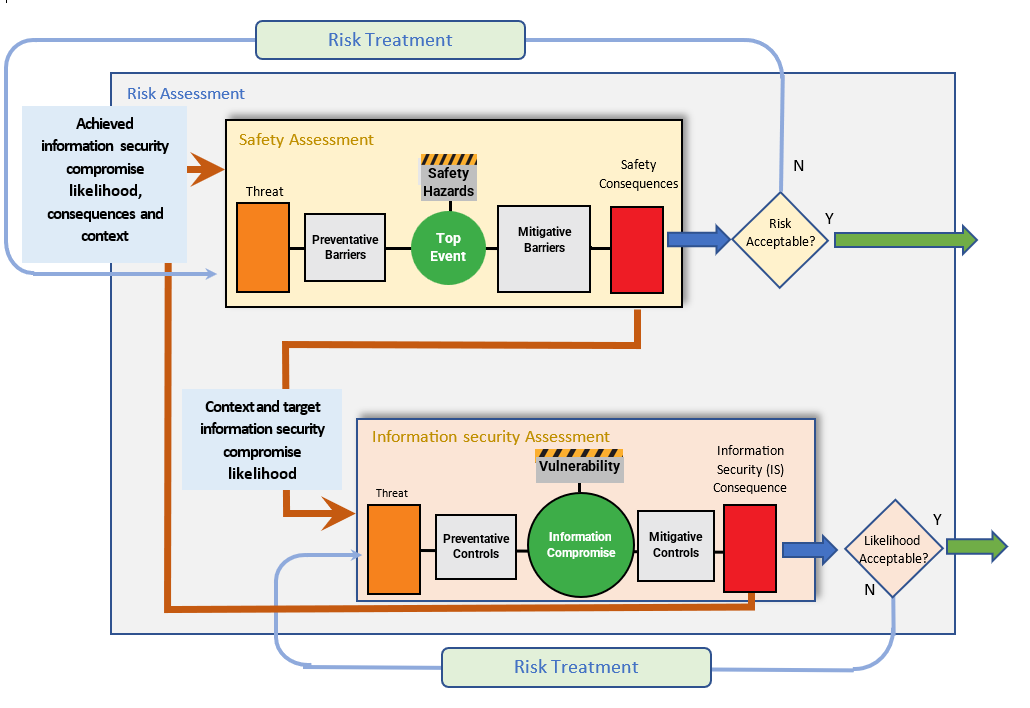
Figure 1: Bow-tie representation of management of aviation safety risks posed by information security threats
In the drawing, the term ‘context’ in the communication between the safety assessment process (SAP) and the information security assessment process (ISAP) carries slightly different notions, which need to be understood and distinguished.
In order to satisfy the safety requirements, the SAP will provide context information, such as:
— the architecture of the systems and the functional descriptions of the elements within the scope, including those related to the barriers. Systems should be understood as the dynamic interaction between people, processes, and products, or services;
— all identified relevant safety hazards;
— the top events and their relations (e.g. triggers) to those hazards.
In addition to context information, it provides the target likelihood of the related information security successful compromise. This target likelihood is commensurate with the safety objectives related to the severity of the safety consequence. However, it needs to be complemented to include information about the acceptable level of uncertainty, in order to be able to rely adequately on the results of the ISAP.
In turn, the ISAP will return context information such as:
— modification to the architecture of the systems and functional descriptions of the elements modified or added, whether those were safety barriers or other items;
— additional threats;
— potentially additional safety hazards;
— additional direct triggers of hazards;
— additional escalating factors affecting barriers.
In addition to context information, it provides the achieved likelihood of an information security successful compromise. While this likelihood is consistent with the safety objectives set by the SAP, the achieved level of uncertainty also needs to be considered.
The interaction between SAP and ISAP is iterative and continues until the safety risk is acceptable, i.e. the target likelihood of the related information security successful compromise has been achieved. The interaction can start from safety consequences identified through the SAP that fall within the scope of the ISMS risk analysis, or from existing information security assessments.
ISMS implementation and maintenance
An ISMS, as defined in this Regulation, employs the perspectives of governance, risk and compliance, and an approach that combines the safety risk and performance dimensions to determine the information security controls that are appropriate to and compliant with the specific context and can effectively provide the level of protection required to achieve the aviation safety objectives by:
— Governance perspective refers to providing management direction and leadership aimed to achieve the entity’s own overarching objectives:
— leadership and commitment of the senior management defining and ensuring the close involvement of the management and a ‘top-down’ ISMS implementation
— information security and safety objectives aligned and consistent with the entity’s business objectives and monitored by, e.g., management reviews
— information security policies stating the principles and objectives to be achieved
— roles, responsibilities, competencies and resources required for an effective ISMS
— effective, target-group-oriented communication to internal and external stakeholders
— Risk perspective refers to a key aspect of an ISMS in an aviation safety context according to this Regulation, and serves as a basis for transparent decision-making and prioritisation of controls and risk treatment options. It further refers to the assessment, treatment and monitoring of information security risks in support of the management of aviation safety risks for the key processes and information assets upon which they depend. This includes protection requirements, risk exposure, attitude towards risks and risk acceptance criteria, methods and industry standards.
— Compliance perspective refers to the compliance with regulatory, legal and contractual requirements. This includes:
— this Regulation,
— the entity’s own policies and standards and may further include international or industry standards adopted by the entity from ISO, EUROCAE, etc.
This perspective comprises the definition, implementation and maintenance of the required information security provisions whose effectiveness and compliance should be regularly monitored and assured by, e.g., (internal) audits.
Based on these perspectives, we may identify the following processes and subject areas that have been shown to be relevant for the establishment of an effective ISMS. These ISMS processes and subject areas can be summarised as follows:
(a) context establishment defining the scope, interfaces, dependencies and requirements of interested parties;
(b) leadership and commitment of the senior management;
(c) information security and safety objectives;
(d) information security policies;
(e) roles, responsibilities, competencies and resources required for an effective ISMS;
(f) communication to internal and external stakeholders to achieve a sufficient level of information security awareness and training of all involved parties;
(g) information security risk management including risk assessment and treatment;
(h) information security incident management establishing processes for the handling of information security incidents and vulnerabilities;
(i) performance & effectiveness monitoring, measurement and evaluation;
(j) internal audits and management reviews;
(k) corrections and corrective actions;
(l) continuous improvement;
(m) relationship with suppliers;
(n) documentation, record-keeping, and evidence collection.
Additional critical success factors for the implementation and operation of an ISMS include the following:
— The ISMS should be integrated with the entity’s processes and overall management structure or even — at least partially, with safeguards for their respective integrity, and as reasonably applicable — with an overarching management system comprising information security, aviation safety and quality management.
— Information security has to be considered at an early stage in the overall design of processes and procedures, of systems and of information security controls, to be seamlessly integrated, for maximum effectiveness, minimal functional interference and optimised cost. None of these benefits can be achieved by integrating it later.
— The risk management process determines appropriate characteristics of preventive controls to reach and maintain acceptable risk levels.
— The incident management process ensures that the organisation detects, reacts and responds to information security incidents in a timely manner. This is achieved by defining responsibilities, procedures, scenarios and response plans in advance to ensure a coordinated, targeted and efficient response.
— Continuous monitoring and reassessment are undertaken and improvements are made in response.
The above-mentioned core components are related to the requirements in this Regulation, for which Figure 2 provides a high-level depiction of the aspects that are more prominent in the implementation phase and those that characterise the operational phase, as well as the review and possible improvement, if the functions do not perform as planned.
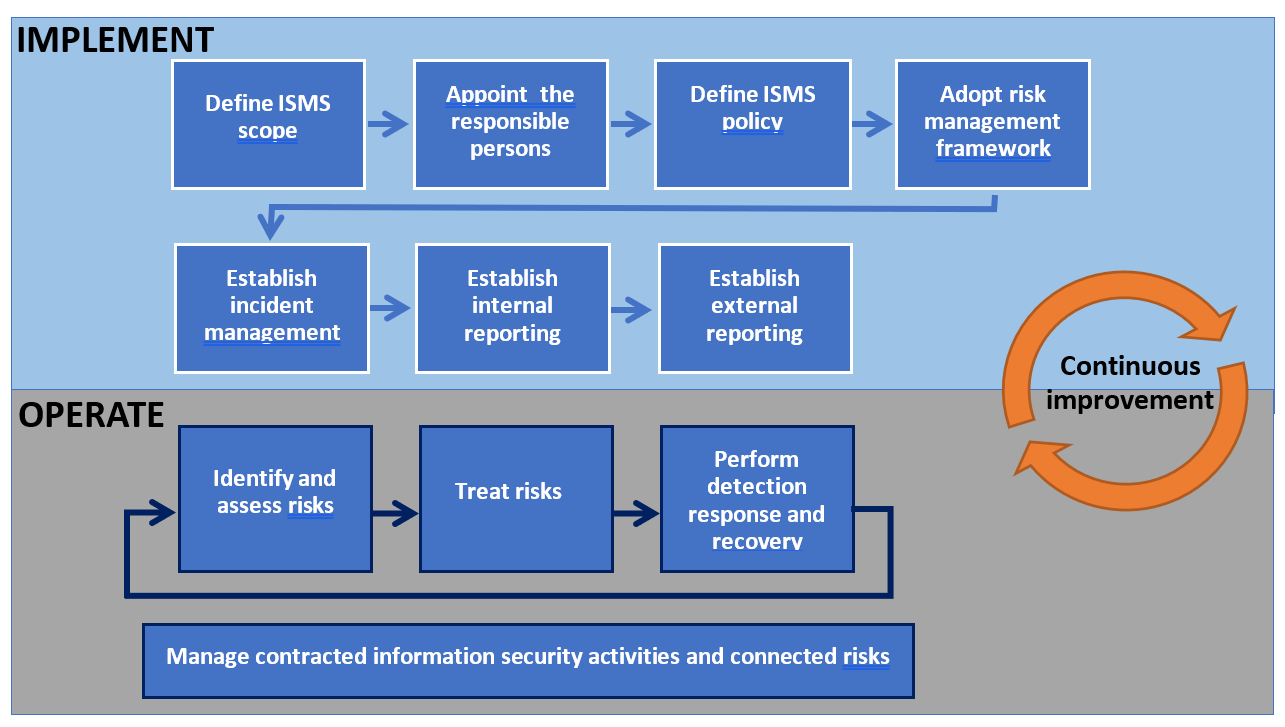
Figure 2: Representation of the Part-IS requirements from an ISMS’s life cycle perspective
Plan-Do-Check-Act approach
The Plan-Do-Check-Act (PDCA) refers to a process approach that is often used to establish, implement, operate, monitor, review and improve management systems. Figure 3 depicts the PDCA applied to an ISMS.
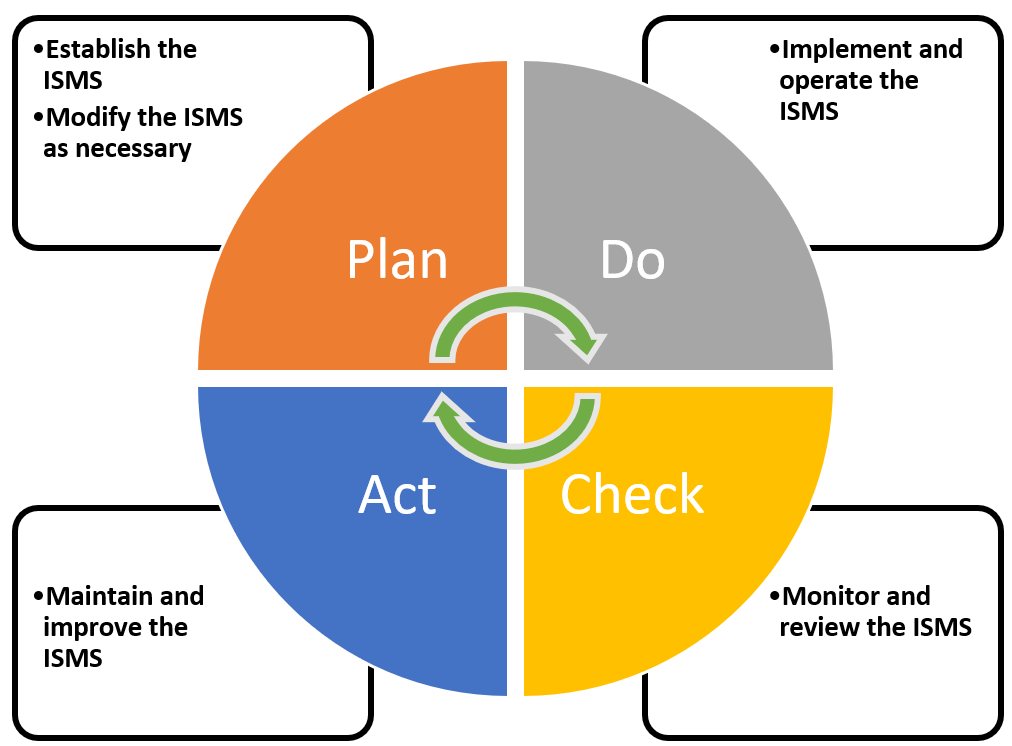
Figure 3: Plan-Do-Check-Act approach applied to an ISMS
Benefits of an ISMS
The benefits of a management system operating in a dynamic, uncertain or unpredictable risk environment are realised in the long term only when the organisation improves existing controls, processes and solutions based on the assessments of risks, performance and maturity as well as the learnings from incidents, audits, non-conformities and their root causes. A successful adoption and deployment of an ISMS allows an entity to:
— achieve greater assurance to the management and interested parties that its information assets are adequately protected against threats on a continual basis;
— increase its trustworthiness and credibility providing confidence to interested parties that information security risks with an impact on aviation safety are adequately managed;
— increase the resilience of the entity’s key processes against unauthorised electronic interactions and maintains the entity’s ability to decide and act;
— support the timely detection of control gaps, vulnerabilities or deficiencies aimed to prevent information security incidents or at least to minimise their impact;
— detect and timely react to changes in the entity’s environment including system architecture and threat landscape or the adoption of new technologies;
— provide a foundation for effective and efficient implementation of a comprehensive information security strategy in times of digital transformation, increasing interconnectivity of systems, emerging information security threats and new technologies.
Relation to ISO/IEC 27001
The international standard ISO/IEC 27001 is a widely adopted standard for ISMS which specifies generic requirements for establishing, implementing, maintaining and continually improving an ISMS. It also includes requirements for the assessment and treatment of information security risks. The requirements are applicable to all entities, regardless of type, size or nature. The conformity of an ISMS with the ISO/IEC 27001 standard can be certified by an accredited certification body. ISO/IEC 27001 is compatible with other management system standards (quality, safety, etc.) that have also adopted the structure and terms defined in Annex SL to ISO/IEC Directives, Part 1, Consolidated ISO Supplement. This compatibility allows an entity to operate a single management system that meets the requirements of multiple management system standards.
ISO/IEC 27001 allows entities to define their own scope of audit and their own organisational risk appetite. This, in turn, leads to information security requirements that provide the ISMS with criteria for the acceptability of information security risks in line with the entity’s risk appetite (see Figure4).
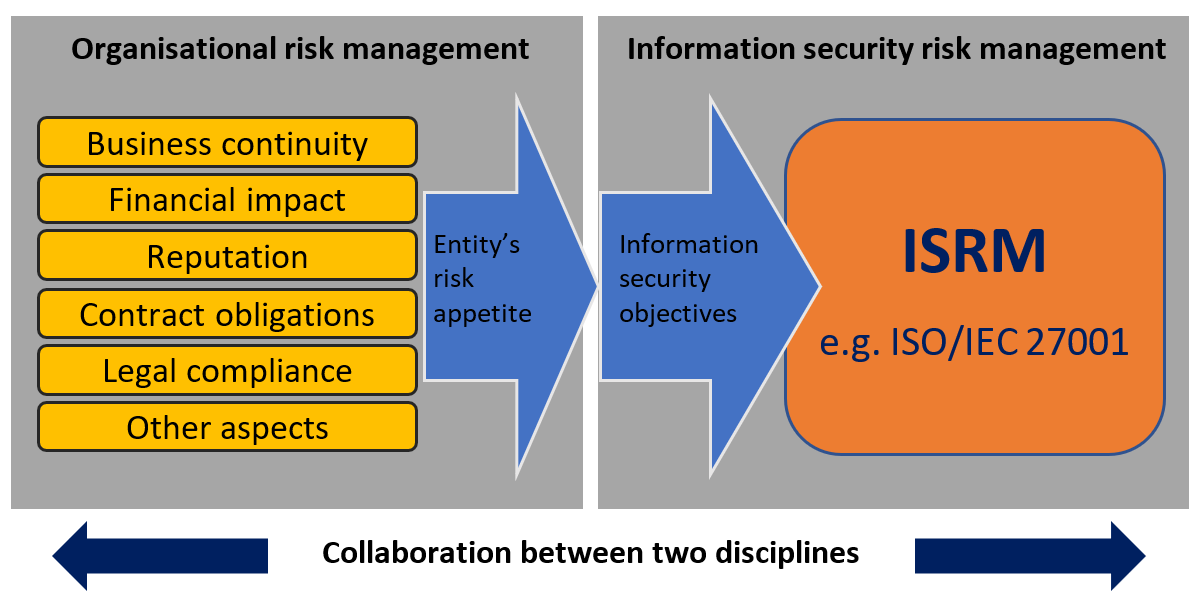
Figure 4: Relation between the entity’s risk appetite and the information security objectives
The requirements for an ISMS specified by this Regulation are in most parts consistent and aligned with ISO/IEC 27001; however, this Regulation introduces provisions specific to the context of aviation safety. If an ISO/IEC 27001-based ISMS is already operated by an entity for a different scope and context, it can be adapted and extended to the scope and context of this Regulation in a straightforward manner based on an analysis of the scope and the gaps. In order to take credit from ISO/IEC 27001 certifications to achieve compliance with Part-IS, aviation safety needs to be included in the organisational risk management, with the relevant risk acceptance level determined by the applicable regulation (see Figure 5). Therefore, careful determination of the scope of the ISMS related to aviation safety risks is needed, as it might differ from the one related to the other organisational risks. To allow demonstration of compliance with Regulation (EU) 2023/203, careful delineation between aspects of the ISMS related to aviation safety risks and other organisational risks may be required. This could have an influence upon the decision to integrate ISMSs.
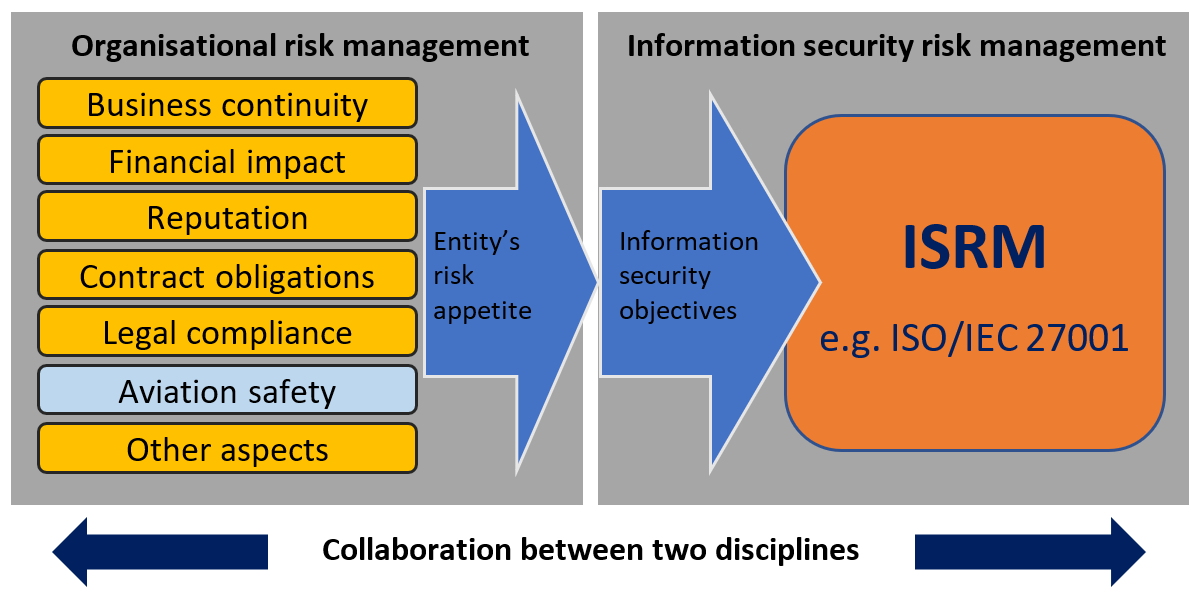
Figure 5: Introduction of aviation safety aspects in the entity’s risk appetite
PART-IS versus ISO/IEC 27001:2022 cross reference table
For a mapping between the Part-IS provisions and the clauses and associated controls in ISO/IEC 27001:2022, refer to Appendix IV.