Appendix B – Examples of methods to establish and monitor
static‑source errors (group aircraft only)
ED Decision 2022/008/R
1 Introduction
Two examples showing the method establish and monitor static source errors are presented below.
2 Example 1
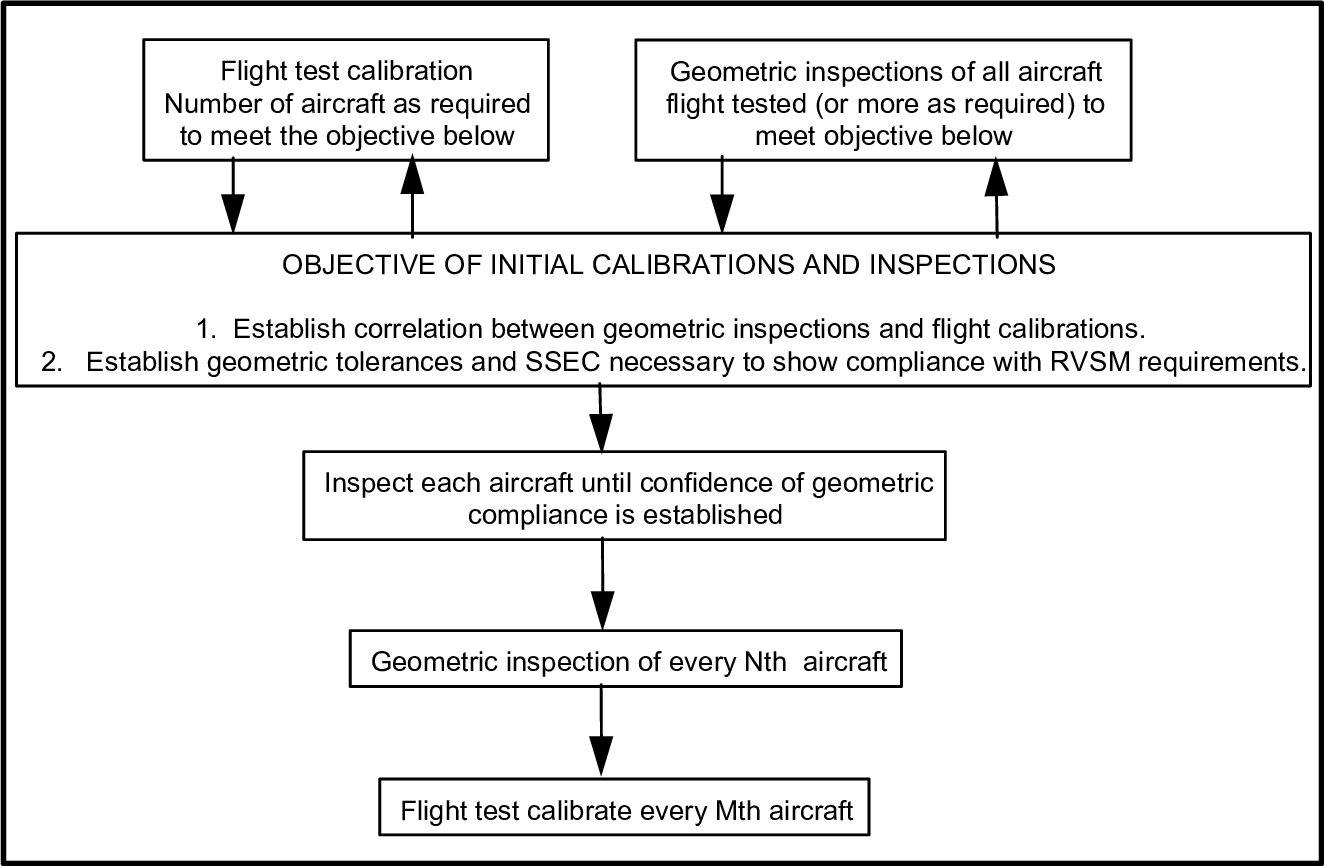
One process for showing compliance with RVSM criteria is shown in Figure 1. Figure 1 illustrates how those flight test calibrations and geometric inspections will be performed on a given number of aircraft. The flight calibrations and inspections will continue until a correlation between the two is established. Geometric tolerances and SSEC will be established to satisfy RVSM criteria. For aircraft being manufactured, every Nth aircraft will be inspected in detail and every Mth aircraft will be flight test calibrated, where 'N' and 'M' are determined by the aircraft constructor and agreed to by the competent authority.
The data generated by 'N' inspections and 'M' flight calibrations can be used to track the mean and three standard deviation values to ensure continued compliance of the model with the criteria of CS ACNS.E.RVSM.035.
As additional data are acquired, they should be reviewed to determine if it is appropriate to change the values of N and M as indicated by the quality of the results obtained.
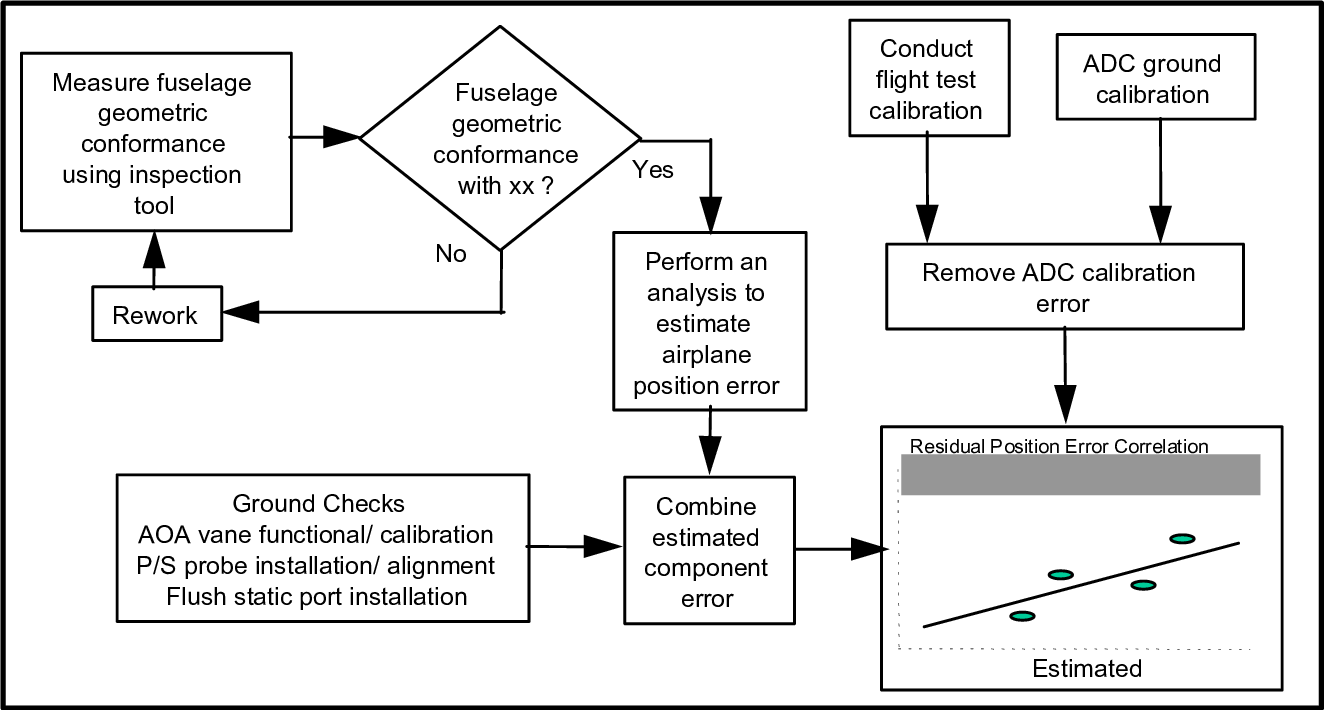
There are various ways in which the flight test and inspection data might be used to establish the correlation. The example shown in Figure 2 is a process in which each of the error sources for several aeroplanes is evaluated based on bench tests, inspections and analysis. Correlation between these evaluations and the actual flight test results would be used to substantiate the method.
The method illustrated in Figures 1 and 2 is appropriate for new models since it does not rely on any pre-existing data base for the group.
3 Example 2
Figure 3 illustrates that flight test calibrations should be performed on a given number of aircraft and consistency rules for air data information between all concerned systems verified. Geometric tolerances and SSEC should be established to satisfy the criteria. A correlation should be established between the design tolerances and the consistency rules. For aircraft being manufactured, air data information for all aircraft should be checked for consistency in cruise conditions and every Mth aircraft should be calibrated, where M is determined by the manufacturer and agreed to by the responsible authority. The data generated by the M flight calibrations should be used to track the mean and three standard deviation values to ensure continued compliance of the group with the criteria of CS ACNS.E.RVSM.035.
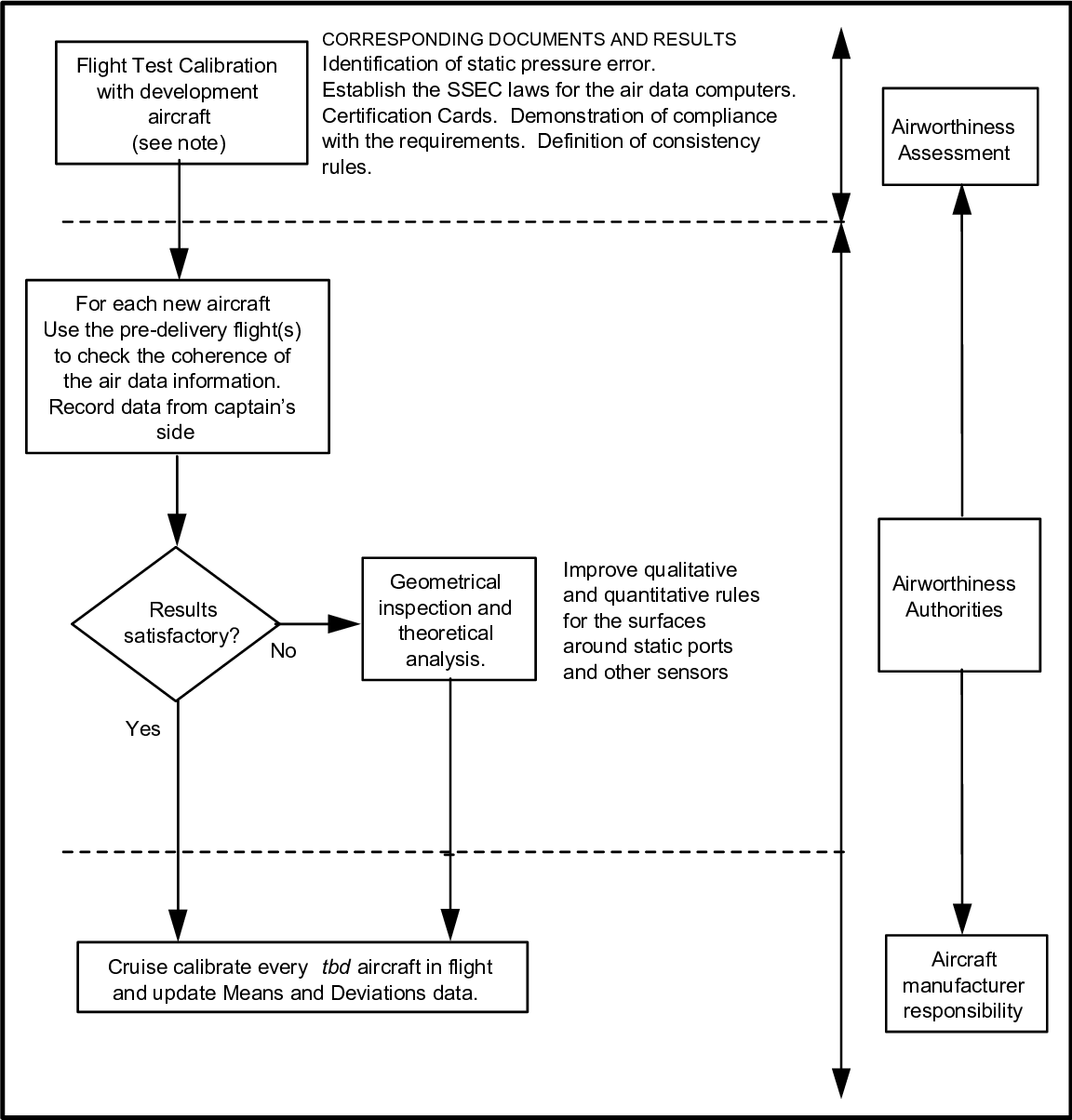
Note: The flight test installation chosen to get the calibration data
will need to have an accuracy compatible with the level of performance to be
demonstrated and an analysis of this accuracy will need to be provided. Any
possible degradation of this accuracy will need to be monitored and corrected
during the flight test period.
[Issue: CS-ACNS/4]