CS
HPT-DSN.C.210 Helicopter air taxiways and helicopter air
taxi-routes
ED Decision 2019/012/R
(a) General: A helicopter air taxiway should
be designed so as to permit the movement of a helicopter above the surface at
a height normally associated with ground effect and at ground speed less than
37 km/h (20 kt).
(b) Characteristics:
(1) The width of a helicopter air taxiway
should be at least two times the largest width of the undercarriage (UCW) of
the helicopters that the helicopter air taxiway is intended to serve (see
Figure C-2).
(2) The surface of a helicopter air taxiway
should be static load-bearing.
(3) The slopes of the surface of a helicopter
air taxiway should not exceed the slope landing limitations of the helicopters
the helicopter air taxiway is intended to serve.
(4) The transverse slope of a helicopter air
taxiway should not exceed 10 per cent.
(5) The longitudinal slope of a helicopter air
taxiway should not exceed 7 per cent.
(6) A helicopter air taxiway should be centred
on a helicopter air taxi-route.
(7) A helicopter air taxi-route should extend
symmetrically on each side of the centre line for a distance at least equal to
the largest overall width of the helicopters it is intended to serve.
(8) No fixed object should be permitted above
the surface on an air taxi-route, except for frangible objects, which, because
of their function, must be located there.
(9) No mobile object should be permitted on an
air taxi-route during helicopter movements.
(10) Objects above ground level whose function
requires them to be located on a helicopter air taxi route should not:
(i) be located at a distance of less than
1 m from the edge of the helicopter air taxiway, or at a distance of less
than 0.5 times the largest overall width of the helicopter for which the
helicopter air taxi-route is designed from the centre line of the helicopter
air taxiway, whichever is greater; and
(ii) penetrate a plane originating at a height
of 25 cm above the plane of the helicopter air taxiway, and sloping
upwards and outwards at a gradient of 5 per cent, at a distance of 1 m
from the edge of the helicopter air taxiway, or at a distance of 0.5 times the
largest overall width of the helicopter for which the helicopter air
taxi-route is designed from the centreline of the helicopter air taxiway,
whichever is lower.
(11) The surface of a helicopter air taxi-route
should be resistant to the effect of rotor downwash.
(12) The surface of a helicopter air taxi-route
should provide ground effect.
(13) For simultaneous operations, the helicopter
air taxi-routes should not overlap.
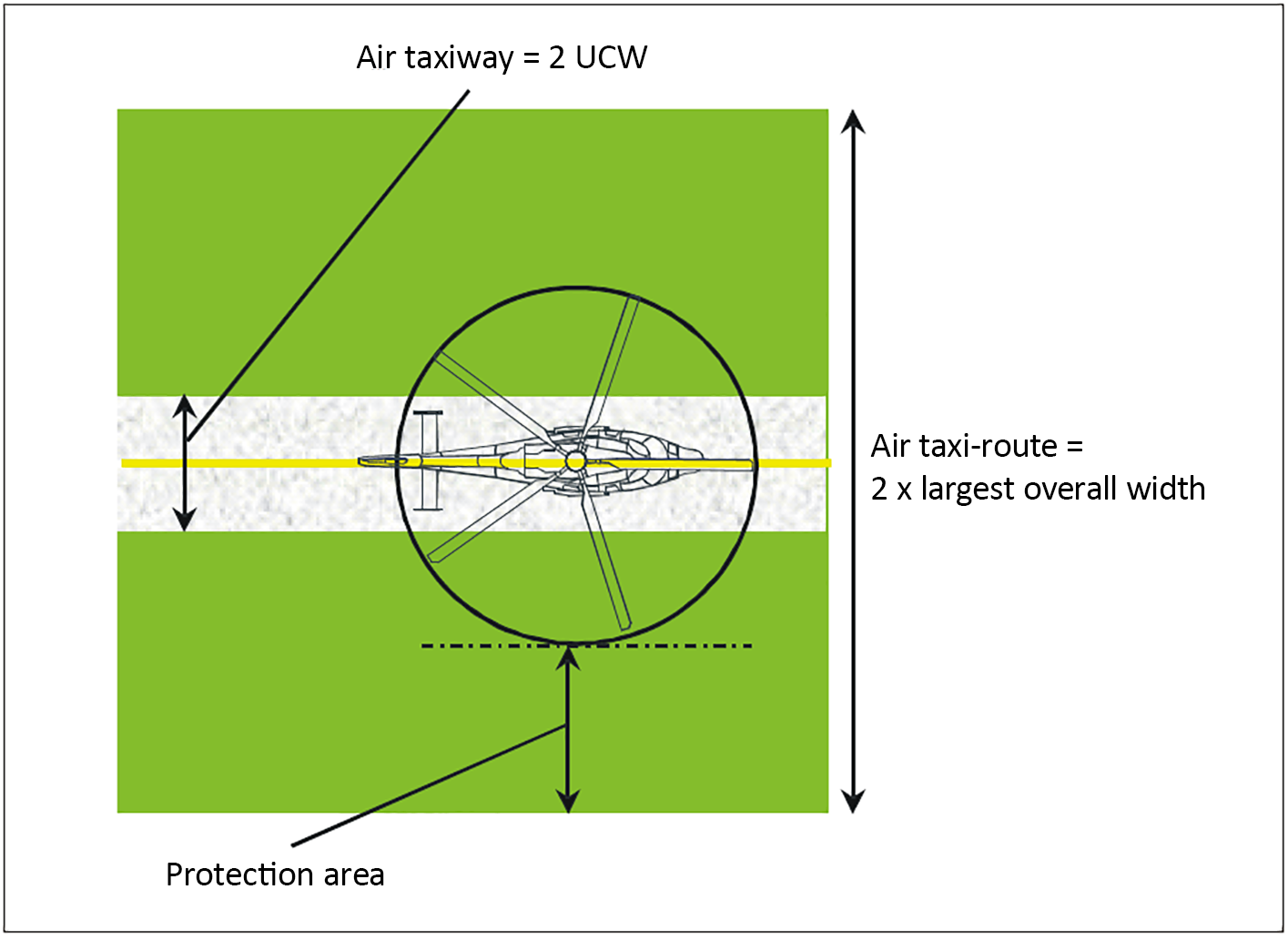
Figure C-2. Helicopter air taxi-route/taxiway