AMC4 ATS.TR.210(c)(2)(i) Operation of air traffic control service
ED Decision 2020/008/R
PROCEDURAL
SEPARATION — LONGITUDINAL SEPARATION MINIMA BASED ON DISTANCE USING DISTANCE
MEASURING EQUIPMENT (DME) AND/OR GNSS — AIRCRAFT CLIMBING OR DESCENDING
Longitudinal separation minima based on distance using distance measuring equipment (DME) AND/OR GNSS should be established between aircraft climbing or descending, as follows:
(a) Aircraft on the same track
19 km (10 NM) while vertical separation does not exist, provided:
(1) each aircraft utilises:
(i) the same ‘on-track’ DME station when both aircraft are utilising DME; or
(ii) an ‘on-track’ DME station and a collocated waypoint when one aircraft is utilising DME and the other is utilising GNSS; or
(iii) the same waypoint when both aircraft are utilising GNSS; and
(2) one aircraft maintains a level while vertical separation does not exist; and
(3) separation is established by obtaining simultaneous DME and/or GNSS readings from the aircraft (see Figures 27 and 28).
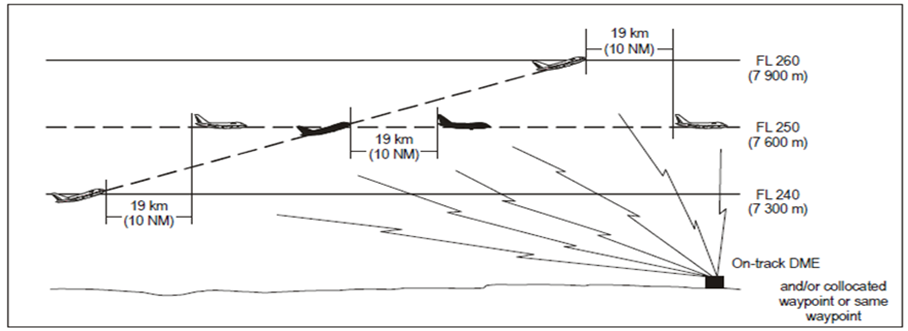
Figure 27: 19 km (10 NM) DME and/or GNSS-based separation between aircraft climbing and on the same track
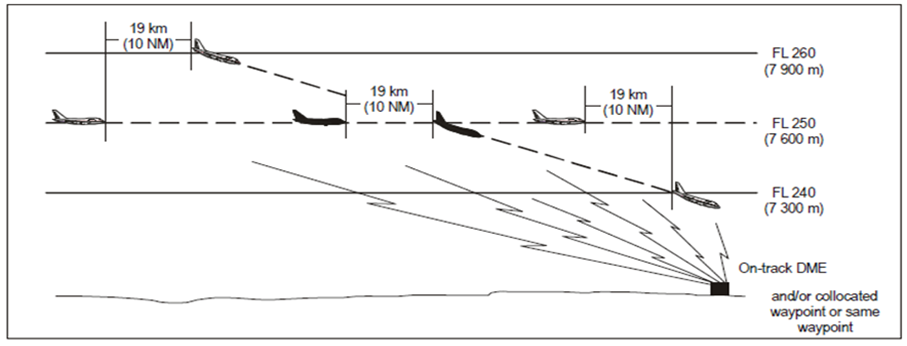
Figure 28: 19 km (10 NM) DME and/or GNSS-based separation between aircraft descending and on the same track
(b) Aircraft on reciprocal tracks
Aircraft utilising on-track DME and/or collocated waypoint or same waypoint may be cleared to climb or descend through the levels occupied by other aircraft utilising on-track DME and/or collocated waypoint or same waypoint, provided that it has been positively established that the aircraft have passed each other and are at least 10 NM apart, or such other value determined by the air traffic services provider and approved by the competent authority.